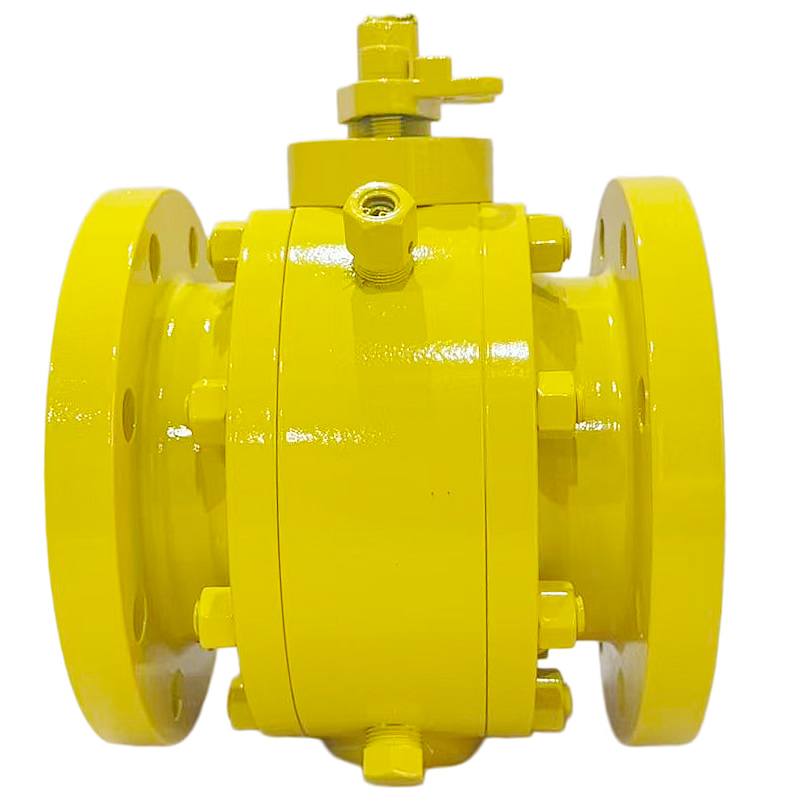
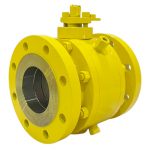
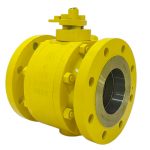
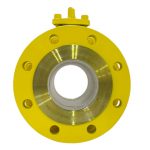
API 6D ASME B16.34 API 607 CE 4” 150LB A105 Carbon Steel Body PTFE Soft Seated RF Flanged Floating Ball Valve
Product Attribute: Port Size: DN15~DN600 Pressure Rating: Class 150~Class 600 Design Standards: API 6D, ASME B16.34, API 608, ASME B16.5, ASME B16.10 Body Material: A105, LF2, WCB, CF8, CF8M Seat Material: PTFE, RTFE, PEEK, Soft Seal End Connections: RF Flanged, Butt Weld, Socket Weld Operation: Manual, Gear, Pneumatic, Electric Sealing Type: Soft Seal, Fire‑safe Design Test Standards: API 598, API 607, ISO 5208 Certifications: ISO 9001, API Q1, CE
The TIANYU 4” 150LB floating ball valve stands as a precision-engineered, cost-effective fluid control solution tailored for a wide range of industrial pipeline applications, delivering reliable isolation, bubble-tight shutoff, and long-term operational efficiency in low-to-medium pressure systems. With a nominal size of 4” (DN100), this valve is optimized for medium-flow pipeline networks, balancing robust structural integrity with compact, lightweight design for easy installation and maintenance across municipal, commercial, and industrial infrastructure. Rated for a pressure class of 150LB, it operates reliably at a maximum working pressure of 1.96 MPa (285 PSI), making it the ideal choice for general-purpose fluid control applications where consistent performance, leak prevention, and cost efficiency are top priorities.
The valve body is constructed from A105 carbon steel (ASTM A105), a premium forged carbon steel material renowned for its exceptional mechanical strength, impact resistance, and machinability in industrial valve manufacturing. Conforming to ASTM A105 standards, A105 exhibits a minimum tensile strength of 485 MPa, a yield strength of 250 MPa, and excellent ductility, enabling it to withstand cyclic pressure fluctuations, thermal shocks, and mechanical stress in 150LB class pipeline systems. This material choice ensures the valve maintains structural integrity over extended service life, even in harsh outdoor or industrial operating environments, while its weldability and machinability simplify installation, retrofitting, and maintenance in existing pipeline networks. A105 carbon steel also offers excellent corrosion resistance when coated with industrial epoxy or paint, making it suitable for use in water, oil, gas, and general process fluid applications.
Complementing the robust A105 carbon steel body, the valve seat is fabricated from PTFE (Polytetrafluoroethylene), a high-performance fluoropolymer renowned for its exceptional chemical resistance, low friction, and sealing capabilities in soft-seated valve applications. PTFE exhibits near-universal chemical compatibility, resisting degradation from acids, alkalis, solvents, hydrocarbons, and a wide range of industrial process fluids, making it suitable for contact with potable water, natural gas, crude oil, and mild to moderate corrosive chemicals. The soft-seated design achieves bubble-tight shutoff compliant with ANSI/FCI Class VI, minimizing leakage to prevent product loss, environmental contamination, and safety hazards, while PTFE’s self-lubricating properties reduce friction between the ball and seat, extending service life and ensuring smooth operation over thousands of cycles. PTFE also offers excellent thermal stability, maintaining sealing performance across a temperature range of -40°C to 200°C, making it suitable for both low-temperature and moderate high-temperature applications.
For seamless integration into industrial pipeline systems, the valve features a raised face (RF) flanged connection design compliant with ASME B16.5 standards. Flanged connections provide a secure, leak-proof interface, allowing for easy assembly and disassembly during maintenance or system upgrades, even in 150LB class service. The standardized flange dimensions, bolt patterns, and raised face finish ensure interoperability with global piping systems, reducing installation time and costs while ensuring compatibility with existing infrastructure. The RF face design provides a reliable gasket seal, even under pressure fluctuations, further enhancing the valve’s leak-tight performance in general-purpose industrial applications.
Actuation is delivered by a manual lever handle, designed to provide intuitive, responsive control over valve positioning with minimal operating torque. The lever handle incorporates a positive-locking mechanism to prevent accidental operation, ensuring the valve remains in the desired position even under vibration or external forces. The ergonomic design of the handle reduces operator fatigue during frequent adjustments, while the compact footprint ensures compatibility with space-constrained installations. A visual position indicator is integrated into the handle assembly, providing clear, at-a-glance confirmation of the valve’s open/closed status, reducing the risk of operator error and enhancing operational safety in industrial pipeline systems.
At the core of the valve’s functionality is the floating ball design, a proven configuration for low-to-medium pressure applications that relies on fluid pressure to seat the ball against the downstream seat, ensuring a tight, bi-directional seal. Unlike trunnion mounted ball valves, which are designed for high-pressure service, floating ball valves offer a simpler, more cost-effective solution for 150LB class applications, delivering reliable sealing performance with minimal maintenance requirements. The floating ball design also enables a full-bore flow path, minimizing pressure drop and turbulence, optimizing flow efficiency, and reducing energy consumption in pipeline systems.
II. Design Features & Functional Advantages
The TIANYU 4” 150LB floating ball valve incorporates innovative design elements that elevate its performance, reliability, and operational efficiency beyond conventional isolation valves, addressing the unique challenges of general-purpose industrial fluid control applications.
At the core of its design excellence is the floating ball configuration, which delivers reliable, bi-directional sealing in low-to-medium pressure applications. The floating ball is suspended within the valve body, with no fixed trunnion support, allowing fluid pressure to push the ball against the downstream seat, creating a tight, bubble-tight seal. This design ensures consistent sealing performance regardless of pressure fluctuations, making it ideal for 150LB class pipeline systems where pressure variations are common. The floating ball design also enables a full-bore flow path, ensuring unobstructed fluid flow and minimizing pressure drop, which is critical for energy efficiency in pipeline systems. The ball is precision-machined from A105 carbon steel or stainless steel, lapped and polished to a surface finish of Ra ≤ 0.8 μm, ensuring optimal sealing performance with the PTFE seat assembly and reducing friction between the ball and seat, extending service life.
API 6D ASME B16.34 API 607 CE 4” 150LB A105 Carbon Steel Body PTFE Soft Seated RF Flanged Floating Ball Valve
The soft-seated design, utilizing PTFE seats, delivers exceptional sealing performance and chemical resistance in general-purpose industrial applications. PTFE’s self-lubricating properties reduce friction between the ball and seat, minimizing wear and extending service life, while its chemical resistance ensures compatibility with a wide range of industrial fluids, including water, oil, gas, and mild corrosive chemicals. The soft-seated design achieves bubble-tight shutoff compliant with ANSI/FCI Class VI, minimizing leakage even at low pressures or with viscous fluids, ensuring optimal performance in critical isolation applications. The PTFE seats are also replaceable, allowing for easy maintenance and extending the valve’s service life without full replacement, reducing long-term operational costs.
The A105 carbon steel body is engineered for durability and structural integrity in 150LB class service, with a robust forged construction that enhances material density and mechanical properties. The forging process eliminates internal defects such as porosity or inclusions, which could compromise structural integrity in industrial applications. The body’s streamlined internal geometry minimizes pressure drop and turbulence, optimizing flow efficiency and reducing energy consumption in high-throughput systems. The body’s robust construction, combined with the A105 carbon steel material, enables it to withstand external loads, including mechanical stress and vibration, making it suitable for harsh industrial environments such as refineries, chemical plants, and pipeline transmission systems. The bolted body and bonnet design allows for easy access to internal components, simplifying maintenance and component replacement without removing the valve from the pipeline—critical for general-purpose industrial systems where downtime must be minimized.
The manual lever handle design offers a balance of simplicity, reliability, and operational efficiency. The handle is precision-machined from high-strength carbon steel, ensuring compatibility with the valve’s 150LB class requirements and providing exceptional strength and rigidity. The positive-locking mechanism on the handle prevents accidental operation, ensuring the valve remains in the desired position, while the visual position indicator provides clear feedback to operators, reducing the risk of human error. The handle’s compact design makes it suitable for installation in space-constrained environments, such as skid-mounted systems and modular process units, while its ergonomic shape reduces operator fatigue during frequent adjustments. The handle is also coated with a durable, corrosion-resistant finish, ensuring long-term performance in outdoor and industrial environments.
Safety and environmental protection are integrated into every design detail, starting with the anti-blowout stem design. The stem is machined with a circumferential groove that engages with a retaining ring in the body bore, preventing the stem from being ejected from the body even if the primary packing seal fails under pressure—eliminating a major safety hazard in industrial pipeline systems. The multi-layer stem packing system features PTFE V-rings with graphite backup rings, providing a low-friction seal that eliminates fugitive emissions and meets ISO 15848-1 (TA-Luft) and EPA Method 21 requirements for low-emission valves. The packing gland is live-loaded with Belleville washers, maintaining constant packing compression even as the packing settles or wears, ensuring long-term emission control without the need for frequent re-tightening. The valve also incorporates a fire-safe design compliant with API 607 and API 6FA standards, as the metal-to-metal backup seal between the ball and body maintains integrity in the event of a fire, preventing catastrophic fluid release and minimizing fire propagation.
The valve’s modular design enables easy maintenance and component replacement, with the seats, ball, and stem accessible without removing the valve from the pipeline. This reduces downtime and maintenance costs, making it an ideal choice for general-purpose industrial pipeline systems where operational continuity is essential. The stem packing is also accessible from the bonnet, enabling easy replacement of packing rings without disassembling the valve, further enhancing the valve’s maintainability and service life. The valve is also engineered with a full-bore flow path, ensuring unobstructed fluid flow and minimizing pressure drop, which is critical for energy efficiency in pipeline systems.
III. Manufacturing Process & Quality Assurance
The production of the TIANYU 4” 150LB floating ball valve adheres to the most rigorous manufacturing processes and quality control protocols in the industry, aligning with API 6D, ASME B16.34, API 607, and ISO 9001:2015 standards to ensure every valve meets or exceeds design specifications and global industry requirements. From raw material procurement to final factory testing, every step of the manufacturing process is controlled and documented, with a focus on precision, consistency, and reliability—critical for a valve designed for general-purpose industrial applications.
Raw Material Procurement & Inspection
Raw materials for the valve—A105 carbon steel billets and PTFE polymer—are sourced exclusively from approved, ISO 9001-certified suppliers with a proven track record of producing high-quality materials for the industrial valve industry. All raw materials are accompanied by a mill test certificate (MTC) that verifies chemical composition, mechanical properties, and compliance with ASTM A105 (for A105 carbon steel) and proprietary PTFE material specifications. Upon receipt, the raw materials undergo rigorous incoming inspection in TIANYU’s state-of-the-art quality control laboratory, including:
Chemical composition analysis via optical emission spectroscopy (OES) to verify compliance with ASTM standards, ensuring the A105 carbon steel contains the correct carbon, manganese, and alloy content for mechanical strength;
Mechanical property testing (tensile strength, yield strength, elongation, hardness) via universal testing machine (UTM) and Brinell hardness tester, verifying the material’s ability to withstand 150LB class pressure and mechanical stress;
Non-destructive testing (NDT) including ultrasonic testing (UT) and magnetic particle testing (MPT) to detect internal and surface defects, ensuring no material flaws that could compromise structural integrity;
For PTFE, additional testing to verify chemical resistance, wear resistance, and thermal stability, ensuring compliance with soft-seated valve requirements.
Any raw material that fails to meet the specified requirements is rejected and returned to the supplier, ensuring only high-quality materials are used in production.
Body & Ball Fabrication
The valve body and bonnet are manufactured using a hot-forging process, where A105 carbon steel billets are heated to high temperatures (1100-1200°C) and shaped under extreme pressure using precision dies. This process enhances material density, eliminates internal defects such as porosity or inclusions, and improves mechanical properties, including tensile strength and impact resistance—critical for 150LB class industrial service. After forging, the body undergoes normalization heat treatment (900-920°C) followed by air cooling, to refine its microstructure and relieve internal stresses, ensuring consistent performance across the component. The body is then machined to precise dimensions using CNC lathes and milling machines, with critical surfaces such as the ball cavity, stem bore, and flange faces finished to a roughness of Ra ≤ 3.2 μm to ensure proper sealing and alignment.
The ball is manufactured from A105 carbon steel or 304 stainless steel, using a precision forging process followed by CNC turning and milling to achieve the required spherical shape and dimensional accuracy. The ball is then lapped and polished to a surface finish of Ra ≤ 0.8 μm, ensuring optimal sealing performance with the PTFE seat assembly. After machining, the ball undergoes heat treatment to enhance its mechanical properties and corrosion resistance, ensuring long-term performance in industrial applications.
Seat & Stem Production
The PTFE seats are fabricated from high-grade PTFE polymer, which is molded and machined to precise dimensions using CNC lathes and milling machines. The sealing surface is polished to a roughness of Ra ≤ 0.8 μm, ensuring a tight, leak-proof seal with the ball surface. Each seat undergoes dimensional inspection and material testing to verify compliance with chemical resistance and wear resistance specifications. The stem is machined from A105 carbon steel or stainless steel using CNC lathes, with critical surfaces such as the sealing area and thread finished to tight tolerances to ensure compatibility with the packing system and ball connection. The stem is also machined with an anti-blowout groove, ensuring compliance with safety standards and preventing stem ejection under pressure.
Assembly & Testing
The valve assembly process is conducted in a controlled, clean environment to prevent contamination of internal components, with skilled technicians following detailed, step-by-step assembly work instructions that align with API 6D and ISO 9001 standards. The assembly process is highly structured, with each step verified and documented to ensure quality and traceability:
The body is mounted on a precision assembly fixture to ensure alignment of all internal components;
The PTFE seat assemblies are installed into the body seat pockets, with the seat springs compressed to ensure constant contact with the ball;
The ball is lowered into the body, ensuring proper alignment with the seats;
The stem is inserted through the bonnet packing and connected to the ball via a square drive or keyed connection;
The bonnet is bolted to the body using high-strength alloy steel bolts (ASTM A193 B7) torqued to the specified value using a calibrated torque wrench, ensuring uniform bolt load and a secure seal;
The stem packing system is installed, with the packing gland torqued to the specified value to eliminate fugitive emissions;
The manual lever handle is mounted to the valve, and the stem is connected to the handle drive shaft;
The visual position indicator is calibrated to align with the ball’s open/closed position, and all moving parts are lubricated with a high-performance, PTFE-compatible grease.
During assembly, critical dimensions and clearances are verified using precision measurement tools, including coordinate measuring machines (CMMs), dial indicators, and calipers, to ensure compliance with design specifications.
Factory Testing & Certification
Before leaving the factory, every TIANYU 4” 150LB floating ball valve undergoes a comprehensive series of performance tests in accordance with API 6D, API 598, API 607, and ISO 5208 standards, with all test results documented in a factory test certificate (FTC) provided with each valve. The testing program includes:
Shell Test: A hydrostatic pressure test conducted at 1.5 times the rated 150LB pressure (2.94 MPa) for a minimum of 30 seconds, to verify the body’s structural integrity and no visible leakage or deformation;
Seat Test (Hydrostatic): A hydrostatic pressure test of the seat assemblies at 1.1 times the rated pressure for both upstream and downstream flow directions, to verify compliance with ANSI/FCI Class VI leakage standards (bubble-tight shutoff);
Seat Test (Pneumatic): A pneumatic pressure test at 0.69 MPa (100 PSI) to verify the soft-seal’s integrity in low-pressure applications;
Operational Test: A functional test of the manual lever handle to verify smooth opening and closing, accurate position indication, and positive locking;
Fugitive Emission Test: A test of the stem packing system in accordance with ISO 15848-1, to verify emissions are below the specified limit (≤ 100 ppm for Class A);
Fire-Safe Test: A third-party fire test in accordance with API 607 and API 6FA to verify the metal-to-metal backup seal maintains integrity after fire exposure.
Only valves that pass all tests are certified and released for shipment, with the FTC including all test results, material certifications, and compliance standards for full traceability.
Quality Management System
TIANYU maintains a certified quality management system (QMS) compliant with ISO 9001:2015 and API Q1, the oil and gas industry’s premier quality standard for manufacturing facilities. The QMS covers all aspects of the manufacturing process, from raw material procurement to final delivery, with a focus on continuous improvement, customer satisfaction, and compliance with global industry standards. The QMS is supported by a team of experienced quality assurance (QA) engineers who conduct regular internal audits, process reviews, and supplier audits to ensure compliance, and a document control system that maintains all manufacturing, testing, and certification records for a minimum of 7 years—meeting the traceability requirements of the industrial valve industry.
IV. Application Scenarios & Industry Relevance
The TIANYU 4” 150LB floating ball valve is a versatile, cost-effective fluid control solution designed to meet the demands of a wide range of industrial applications, with a particular focus on oil and gas, chemical processing, water treatment, power generation, and general industrial pipeline systems—where reliable isolation, bubble-tight shutoff, and cost efficiency are critical. Its robust design, premium materials, and compliance with global industry standards make it a trusted choice for general-purpose pipeline systems where operational safety, environmental protection, and minimal downtime are key priorities.
Oil & Gas Midstream (Transmission & Distribution)
In the midstream oil and gas sector, including natural gas distribution lines, crude oil transmission lines, and storage terminals, the valve is used for mainline isolation, block valve stations, and storage tank inlet/outlet control. The 4” size is ideal for medium-flow transmission and distribution pipelines, while the 150LB pressure rating is well-suited for pipeline operating pressures. The valve’s PTFE soft-seated design delivers bubble-tight shutoff, preventing product loss and environmental contamination—critical for cross-country pipeline systems and natural gas distribution networks. The floating ball design’s reliable sealing under pressure transients ensures consistent performance, while the fire-safe design is critical for block valve stations and storage terminals where fire risk is high. The manual lever handle enables easy on-site operation, while the visual position indicator reduces the risk of operator error, making it suitable for remote pipeline locations and urban distribution networks.
Chemical Processing
In chemical processing plants, the valve is used to isolate and control the flow of corrosive chemicals, acids, alkalis, and solvents, ensuring safe handling and processing of hazardous materials. The PTFE seats offer exceptional chemical resistance, maintaining reliable sealing performance even with aggressive chemicals, while the A105 carbon steel body provides structural strength and durability, making it suitable for general-purpose chemical process applications. The soft-seated design achieves bubble-tight shutoff, preventing cross-contamination between process streams and ensuring compliance with environmental regulations. The manual lever handle enables precise flow control, while the valve’s modular design allows for easy maintenance and component replacement, minimizing downtime for critical process systems where production interruptions are costly.
Water Treatment & Municipal Infrastructure
In water treatment plants and municipal water distribution systems, the valve is used to regulate the flow of raw water, treated water, and wastewater, ensuring efficient operation of filtration, disinfection, and distribution systems. The PTFE seats are compatible with potable water and chlorinated water, while the A105 carbon steel body resists corrosion from water and wastewater, ensuring long-term performance in municipal infrastructure. The soft-seated design delivers bubble-tight shutoff, preventing water loss and ensuring efficient operation of water distribution systems. The manual lever handle enables easy operation for municipal maintenance crews, while the valve’s compact design makes it suitable for installation in water treatment plants and underground pipeline vaults.
Power Generation
In power generation facilities, including thermal power plants (coal, natural gas), combined cycle power plants, and biomass power plants, the valve is used for isolation and control of cooling water lines, feedwater systems, and fuel gas lines. The 4” size is ideal for medium-flow cooling water and feedwater systems, while the 150LB pressure rating handles the operating pressures of these systems. The A105 carbon steel body resists corrosion from cooling water and steam, while the PTFE seats provide reliable sealing performance in water and fuel gas applications. The soft-seated design delivers bubble-tight shutoff, preventing water loss and ensuring efficient plant operation. The manual lever handle enables precise control, while the fire-safe feature enhances safety in boiler and turbine areas.
General Industrial & Commercial Applications
In general industrial and commercial applications, including manufacturing facilities, HVAC systems, and commercial building plumbing, the valve is used for isolation and control of water, air, and process fluids. The A105 carbon steel body provides structural strength and durability, while the PTFE seats offer reliable sealing performance in general-purpose fluid applications. The manual lever handle enables easy operation for facility maintenance crews, while the valve’s compact design makes it suitable for installation in space-constrained commercial and industrial environments. The valve’s cost-effectiveness and reliability make it the ideal choice for general-purpose fluid control applications where performance and value are top priorities.
The TIANYU 4” 150LB floating ball valve is a cost-effective, reliable fluid control solution for general industrial applications, combining A105 carbon steel’s structural strength with PTFE’s bubble-tight sealing performance. Its floating ball design delivers bi-directional sealing and minimal pressure drop, while the manual lever handle ensures intuitive, responsive operation. Certified to API 6D, ASME, and CE standards, and backed by ISO 9001/API Q1 quality assurance, it excels in oil and gas, chemical processing, water treatment, and power generation, delivering consistent performance, regulatory compliance, and long-term value for medium-flow, low-to-medium pressure pipeline systems worldwide.
API 609 ASME B16.34 CE DN100 150LB WCB Body Cr13 Seat Wafer Type Metal Hard Seal Single Plate Check Valve Product Overview In modern industrial fluid …