
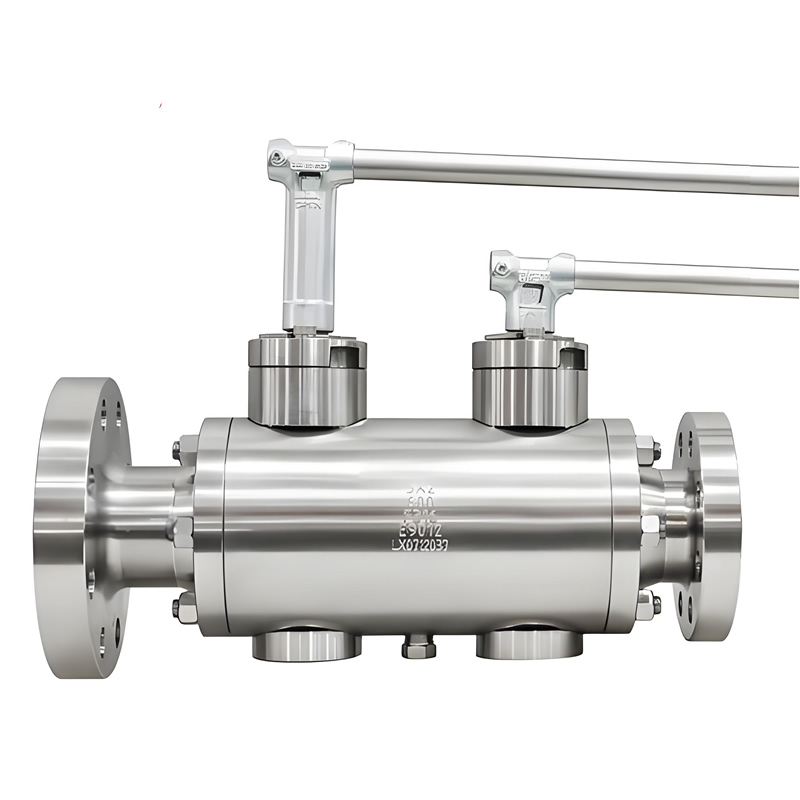
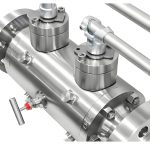
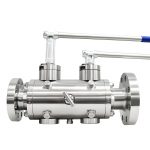
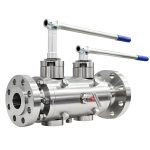
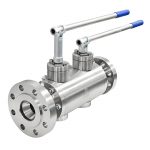
TIANYU Stainless/Duplex Steel (F304/F316/F51) Flanged Lever/Gear/Pneumatic/Electric Double Block and Bleed (DBB) Ball Valve: API 6D/608 Compliant, Class 150-2500LB DN15-DN300 Valve for Oil, Gas, Chemical, Marine & Sanitary Industrial Flow Control
I. Product Overview
II. Key Attribute Specifications
A. Dimensional & Pressure-Temperature Parameters
- Port Size: DN15 to DN300 (1/2″ to 12″), spanning small instrumentation lines (DN15 for sampling systems in chemical plants) to large-scale process pipelines (DN300 for offshore oil transmission). Two port configurations are available:
- Full Port: The valve’s internal bore matches the pipeline diameter, minimizing pressure drop (Cv values up to 1200 for DN300) and enabling pipeline pigging/cleaning—critical for high-flow applications like natural gas distribution or treated water transport.
- Reduced Port: A smaller bore (≈80% of pipeline diameter) for cost-sensitive, low-flow scenarios (e.g., chemical dosing lines), balancing efficiency and affordability.
- Pressure Rating: Class 150 to Class 2500LB (PN16 to PN420), covering industrial pressure needs from low to ultra-high:
- Class 150/PN16: Suitable for municipal water, low-pressure air, or mild chemical lines.
- Class 300-600/PN25-PN64: Ideal for medium-pressure applications (e.g., refinery fuel lines, power plant cooling water).
- Class 900-2500/PN100-PN420: Designed for ultra-high-pressure systems (e.g., offshore wellheads, high-pressure chemical reactors).
Hydrostatic testing follows API 598: 1.5× rated pressure for the valve shell (body/bonnet) and 1.1× rated pressure for seats; pneumatic testing (0.6MPa) verifies bubble-tight sealing.
- Temperature Range: Dependent on seal and material selection:
- Soft Seal (PTFE/RPTFE): -20℃ to 200℃, suitable for ambient to moderately heated media (e.g., chilled chemicals, industrial oil).
- Metal Seal (Stellite 6): -196℃ to 425℃, enabling cryogenic service (e.g., LNG) and high-temperature applications (e.g., steam auxiliary lines in power plants).
- Duplex Steel (F51): Maintains ductility and corrosion resistance down to -40℃, making it ideal for cold marine environments.
B. Material Composition
- Valve Body & Bonnet:
- F304 (ASTM A351 CF8): 18-20% chromium, 8-10.5% nickel—offers general corrosion resistance to water, air, mild acids (acetic acid), and alkalis (sodium bicarbonate). Ideal for food/pharmaceutical and municipal applications.
- F316 (ASTM A351 CF8M): 16-18% chromium, 10-12% nickel, 2-3% molybdenum—enhanced resistance to chlorides (seawater, brine) and aggressive chemicals (sulfuric acid, chlorine). Suitable for coastal, chemical, and offshore use.
- F51 (ASTM A890 Gr. 5A, Duplex 2205): 21-23% chromium, 4.5-6.5% nickel, 3-3.5% molybdenum—combines high strength (tensile strength ≥620MPa) with exceptional resistance to stress corrosion cracking (SCC) and pitting. Perfect for offshore oil/gas and marine environments.
- Optional Materials: WCB (ASTM A216, carbon steel) for high-temperature service (up to 425℃); 316L (low-carbon 316) for welded systems to avoid sensitization; Hastelloy C276 for extreme corrosion (e.g., concentrated acids).
- Ball: Solid material matching the body (F304/F316/F51) with a precision-ground surface finish (Ra ≤0.2μm) to ensure uniform seal contact. For high-wear applications (e.g., slurry lines), the ball is hard-faced with Stellite 6 (cobalt-chromium alloy, hardness ≥58 HRC) to extend service life by 3-5 times.
- Seal Materials:
- PTFE (Polytetrafluoroethylene): Chemically inert to nearly all media, low friction (coefficient ≤0.1), and ANSI/FCI Class VI leakage performance. Suitable for general service (-20℃~200℃).
- RPTFE (Reinforced PTFE): PTFE blended with carbon/glass fiber for enhanced dimensional stability and wear resistance—ideal for high-cycle applications (e.g., batch processing).
- PPL (Poly-Phenylene Sulfide): Heat-resistant up to 260℃, suitable for moderately high-temperature media (e.g., hot oil).
- Metal Seal (Stellite 6): For ultra-high temperatures (-196℃~425℃) or abrasive media, forming a metal-to-metal seal (ANSI/FCI Class IV) that withstands fire and thermal shock.
- Valve Stem:
- F316 Stainless Steel: For F304/F316 body valves—resists corrosion and mechanical wear.
- 17-4PH Precipitation-Hardened Stainless Steel: For F51/Duplex valves—offers higher strength (yield strength ≥1100MPa) and anti-blowout design to prevent stem ejection under pressure.
The stem is polished (Ra ≤0.4μm) to reduce friction and equipped with PTFE-impregnated packing for stem sealing, minimizing fugitive emissions.
- Gaskets & Fasteners:
- Gaskets: Spiral-wound gaskets (stainless steel with graphite filler) for body-bonnet sealing—resist thermal cycling and pressure fluctuations. RTJ gaskets (ring-type joint) are optional for Class 900+ high-pressure systems.
- Fasteners: 304/316 stainless steel (for F304/F316 valves) or alloy steel (A193 B7/B16 for Class 600+ systems)—torqued to ASME B18.2.1 specifications to ensure uniform clamping force.
C. Connection & Operational Features
- End Connections:
- Flanged Ends: ASME B16.5 (1/2″-24″) or ASME B16.47 (24″-12″) with three face types:
- Flat Face (FF): For low-pressure (Class 150) applications (e.g., municipal water) to prevent gasket damage from over-tightening.
- Raised Face (RF): Standard for Class 300-600—provides a narrow sealing surface to concentrate clamping force, ensuring leak-tightness in medium-pressure systems.
- Ring Type Joint (RTJ): For Class 900-2500—uses a metal ring gasket to form a metal-to-metal seal, ideal for ultra-high-pressure/high-temperature systems (e.g., offshore wellheads).
- Optional Connections: Butt-weld (BW, ASME B16.9) for high-pressure/high-temperature lines; socket-weld (SW, ASME B16.11) for small sizes (DN15-DN50); NPT thread for instrumentation lines.
- Flanged Ends: ASME B16.5 (1/2″-24″) or ASME B16.47 (24″-12″) with three face types:
- Operation Modes:
- Manual Lever: For small sizes (DN15-DN80)—enables quick quarter-turn (90°) operation, suitable for low-frequency use (e.g., emergency isolation). Levers are made of aluminum alloy or stainless steel, with ergonomic grips for ease of use.
- Manual Gear: For medium-to-large sizes (DN100-DN300)—reduces torque requirements by 5-10 times via worm-gear reduction, allowing single-person operation of large valves. Gear housings are cast iron or aluminum, with grease fittings for lubrication.
- Pneumatic Actuation: Optional double-acting or spring-return designs (aluminum alloy housing):
- Double-Acting: Uses compressed air (4-6 bar) for both opening and closing—fast cycle times (5-30 seconds for DN300) ideal for high-cycle applications (e.g., chemical batch processing).
- Spring-Return: Provides fail-safe operation (auto-close/auto-open) during air supply loss—critical for safety-critical systems (e.g., oil refinery fuel lines). Equipped with position indicators and limit switches for status feedback.
- Electric Actuation: Optional multi-turn or quarter-turn designs (IP67/IP68 rated):
- Quarter-Turn Electric Actuators: For ball valves—integrate with SCADA/DCS systems via 4-20mA analog signals or Modbus protocol, enabling remote monitoring and precise control.
- Explosion-Proof Electric Actuators: ATEX/IECEx certified for hazardous zones (Zone 1/2 for gas, Zone 21/22 for dust)—suitable for oil/gas and chemical facilities.
- Safety & Control Features:
- Fire-Safe Design: API 607/6FA compliant—if non-metallic seals burn in a fire, the metal ball and body form a secondary metal-to-metal seal, preventing catastrophic media leakage.
- Anti-Static Device: A conductive spring between the ball and stem discharges static electricity (resistance ≤10Ω), mitigating explosion risks in flammable media (e.g., natural gas).
- Lockable Handle/Gear: Prevents unauthorized operation—critical for process-critical lines (e.g., pharmaceutical API manufacturing).
- Position Feedback: Optional limit switches (for on-off status) or 4-20mA transmitters (for continuous position monitoring)—enables real-time process control and troubleshooting.
D. Certifications & Compliance
- Industry Standards: API 6D (pipeline valves), API 608 (floating ball valves), ASME B16.34 (valve dimensions), ASME B16.5 (flanges), API 598 (testing), ISO 17292 (industrial valves), BS 5351 (UK), DIN 3357 (Germany), JIS B2071 (Japan).
- Quality & Environmental Certifications: ISO 9001 (quality management), ISO 14001 (environmental management), ISO 45001 (occupational health & safety).
- Hazardous Environment Certifications: ATEX (EU), IECEx (global), NEC (US) for explosion-proof actuators; SIL 2/3 (per IEC 61508) for safety-instrumented systems (SIS) in oil/gas plants.
- Sanitary Certifications: FDA (US) for food-grade materials (F304/F316 with PTFE seals); 3A (US) and EHEDG (EU) for pharmaceutical applications—ensuring product purity and hygiene.
- Corrosion Certifications: NACE MR0175/ISO 15156 for sour service (H₂S-containing media)—valid for F316/F51 materials, preventing sulfide stress cracking (SSC).
III. Feature Description
A. Double Block and Bleed (DBB) Design: The Gold Standard for Safety
- Dual Independent Sealing: Two distinct seals (upstream and downstream) isolate the media from both sides of the valve. If one seal fails (e.g., due to wear or chemical degradation), the second seal maintains isolation—preventing toxic or flammable media leakage. In a chemical plant handling chlorine gas, this dual-seal design reduces the risk of fatal leaks by 90% compared to single-seal valves.
- Pressure Bleed Port: A 1/4″ or 1/2″ FNPT bleed port between the two seals allows technicians to vent residual pressure from the valve cavity before maintenance. For example, in an offshore oil wellhead, the bleed port releases trapped hydrocarbons (at up to 2500LB pressure) safely, enabling valve inspection without shutting down the entire well—saving up to 100 hours of downtime per year.
- Cross-Contamination Prevention: In batch-processing industries (e.g., pharmaceuticals, food & beverage), the DBB design prevents residual media from mixing with new batches. For a pharmaceutical plant manufacturing APIs, this ensures compliance with GMP standards and avoids costly product recalls due to contamination.
B. Material Performance: Tailored to Corrosive & High-Stress Environments
- F304 Stainless Steel: The workhorse for general corrosion resistance. In a municipal water treatment plant, an F304 DBB valve maintains integrity for over 10 years, resisting rust from chlorinated water—outperforming carbon steel valves (which corrode within 3-5 years) and reducing replacement costs by 60%.
- F316 Stainless Steel: The solution for chloride-rich environments. In a coastal desalination plant, an F316 valve resists pitting corrosion from seawater, whereas an F304 valve would develop pits within 2 years. Its molybdenum content also makes it suitable for chemical plants handling hydrochloric acid or sodium hypochlorite.
- F51 Duplex Steel: The choice for high-strength, corrosion-resistant applications. In an offshore wind farm’s seawater cooling system, F51’s combination of high tensile strength (≥620MPa) and chloride resistance ensures the valve withstands wave-induced vibration and saltwater exposure—service life exceeds 15 years, compared to 8 years for F316.
C. ANSI/FCI Class VI Sealing: Zero Leakage for Compliance & Efficiency
- Precision-Ground Ball: A mirror-like surface finish (Ra ≤0.2μm) ensures uniform contact with the seal, eliminating gaps that cause leakage.
- Spring-Loaded Seats: PTFE/RPTFE seats are pre-loaded with stainless steel springs to compensate for thermal expansion and wear, maintaining sealing pressure over thousands of cycles.
- Metal-to-Metal Backup: For high-temperature applications, Stellite 6 metal seals provide ANSI/FCI Class IV leakage, ensuring reliability even if soft seals degrade.
- Environmental Compliance: Reduces fugitive emissions of hydrocarbons or chemicals to below EPA (US) and REACH (EU) limits—avoiding fines of up to $100,000 per violation for oil/gas facilities.
- Energy Savings: For a DN300 natural gas valve, Class VI sealing prevents annual losses of 500+ cubic meters of gas—translating to $1,500+ in annual savings.
- Sanitary Assurance: In food processing, zero leakage ensures no product contamination, meeting FDA standards for juice, dairy, and beverage production.
D. Versatile Actuation: Adaptable to Manual & Automated Systems
- Manual Lever: Ideal for small, low-frequency applications (e.g., laboratory sampling lines). A 90° quarter-turn operation allows quick on-off control, with a visual position indicator (open/closed) for easy verification.
- Manual Gear: Essential for large valves (DN100+) where high torque is required. A worm-gear reducer reduces torque by 8 times—enabling a single technician to operate a DN300 Class 600 valve, which would otherwise require 2-3 people with a lever.
- Pneumatic Actuation: The preferred choice for high-cycle, semi-automated systems. In a chemical plant’s batch reactor feed line, a double-acting pneumatic actuator opens/closes the valve in 15 seconds, matching the reactor’s 1-hour batch cycle—reducing manual labor by 80% compared to lever operation. Spring-return pneumatic actuators add a critical safety layer: in the event of air supply failure, the valve auto-closes to prevent media spillage (e.g., in a gasoline blending system).
- Electric Actuation: The future of smart process control. Electric actuators with 4-20mA signals integrate seamlessly with SCADA/DCS systems, enabling remote monitoring and precise control. For example, in a cross-country natural gas pipeline, operators in a central control room can adjust valve position to regulate flow based on demand—eliminating the need for on-site personnel and reducing operational costs by 30%. Explosion-proof electric actuators further expand usability to hazardous zones (e.g., oil refinery vapor recovery units).
E. Fire-Safe & Anti-Static Design: Reliability in Hazardous Environments
- Fire-Safe Compliance (API 607/6FA): In the event of a fire, non-metallic seals (PTFE/RPTFE) burn or melt—but the valve’s metal ball and body form a secondary metal-to-metal seal. Testing per API 6FA involves heating the valve to 1020℃ (1868℉) for 30 minutes, then cooling it to ambient temperature. The valve must maintain ANSI/FCI Class IV leakage during and after the test. For an offshore oil platform, this feature prevents massive oil spills during a fire, mitigating environmental damage and regulatory penalties.
- Anti-Static Protection: Static electricity builds up on the ball during operation (due to media flow and friction). A conductive spring between the ball and stem creates a path to ground (resistance ≤10Ω), discharging static before it can ignite flammable media (e.g., propane, gasoline). In a chemical plant’s solvent storage area, this feature eliminates the risk of spark-induced explosions—a leading cause of industrial accidents.
F. Flanged Connection: Installation Flexibility & Maintenance Ease
- Secure Sealing: The bolted flange design distributes clamping force evenly across the gasket, ensuring leak-tightness even under vibration (e.g., from pumps or compressors). In a power plant’s turbine cooling water system, flanged valves maintain sealing integrity despite constant pipeline vibration—unlike threaded valves, which often loosen and leak over time.
- Easy Installation & Retrofitting: Flanges align with standard pipeline components, reducing installation time by 40% compared to welded valves. For a municipal water main upgrade, flanged DBB valves can be installed without cutting existing pipelines, minimizing service disruptions to residents.
- Simplified Maintenance: The valve can be disassembled (bonnet removed) for seat replacement or stem packing adjustment without removing it from the pipeline. In a pharmaceutical plant, this allows maintenance to be completed in 2 hours—compared to 8 hours for a welded valve, which requires cutting and re-welding.
- Global Compatibility: ASME B16.5/47 flanges are recognized worldwide, ensuring the valve integrates with pipelines from North America, Europe, Asia, and the Middle East. This interchangeability reduces inventory costs for multinational companies, which can standardize on a single valve model across global facilities.


IV. Manufacturing Processes
A. Raw Material Inspection & Preparation
- Chemical Composition Verification: Stainless steel/duplex steel billets are tested via spectral analysis (X-ray fluorescence, XRF) to confirm elemental content (e.g., Cr, Ni, Mo). For F51 duplex steel, this ensures chromium content stays within 21-23% to maintain corrosion resistance; for F316, molybdenum is verified at 2-3% to prevent chloride pitting.
- Mechanical Property Testing: Tensile, impact, and hardness tests are performed per ASTM standards:
- Tensile Testing: F304 must achieve a minimum tensile strength of 515MPa; F51 requires ≥620MPa to ensure high-pressure durability.
- Impact Testing: Charpy V-notch tests at -40℃ (for F51) confirm ductility, preventing brittle fracture in cold environments.
- Hardness Testing: Rockwell hardness (HRC) tests ensure Stellite 6 hard-facing reaches ≥58 HRC for wear resistance.
- Non-Destructive Testing (NDT):
- Ultrasonic Testing (UT): Detects internal defects (porosity, cracks) in billets—critical for high-pressure Class 1500+ valves, where internal flaws can cause catastrophic failure.
- Magnetic Particle Testing (MPI): For ferrous materials (WCB, 42CrMo) to identify surface cracks in forgings or castings.
- Seal Material Validation: PTFE/RPTFE seals are tested for compression set (≤20% after 70℃/22h) and chemical resistance (immersion in target media for 1000 hours with no degradation). FDA-compliant seals undergo additional purity testing to ensure no toxic leachables.
B. Casting & Forging (Body/Bonnet Production)
- Investment Casting (Lost-Wax Casting): Used for F304/F316/F51 stainless steel/duplex steel components—ideal for complex geometries (e.g., DBB bleed port) and tight tolerances:
- Pattern Making: Wax patterns are injection-molded to match the valve’s final shape, with additional wax “risers” to prevent shrinkage defects.
- Shell Building: The wax pattern is dipped in ceramic slurry (silica/alumina) and coated with sand, forming a rigid ceramic shell. The shell is dried and fired at 1000℃ to melt and remove the wax (lost-wax process).
- Casting: Molten stainless steel/duplex steel (1500-1600℃) is poured into the ceramic shell. After solidification, the shell is broken away, and the casting is cleaned via shot blasting to remove residual ceramic.
- Heat Treatment:
- Solution Annealing: For F304/F316/F51—heated to 1010-1120℃, then water-quenched to restore corrosion resistance and relieve internal stress. This step is critical for F51 duplex steel, as it ensures a balanced ferrite-austenite microstructure (50-60% ferrite) to prevent SCC.
- Normalizing: For WCB carbon steel—heated to 900-950℃, air-cooled to improve machinability and strength.
- Sand Casting: Used for WCB carbon steel components (large sizes DN200+)—a cost-effective method for simple geometries:
- Mold Making: Sand mixed with a binder is packed around a wooden or metal pattern, creating a mold cavity.
- Casting: Molten WCB (1450℃) is poured into the mold. After cooling, the mold is broken apart, and the casting is cleaned.
- Forging: Optional for ultra-high-pressure Class 1500-2500 valves—forged bodies (ASTM A182) offer higher density and strength than castings, reducing the risk of internal defects in critical applications (e.g., wellheads).
C. Precision Machining
- Body Machining:
- CNC Turning: The outer diameter, flange faces, and body bore are turned to ASME B16.34 dimensions. Flange faces are machined to flatness tolerance ≤0.05mm/m and surface finish Ra ≤3.2μm—critical for gasket seating.
- CNC Milling: The DBB bleed port (1/4″-1/2″ FNPT) is milled and tapped, with thread accuracy verified via NPT gauges (Class 2A/2B). The seat pockets (where seals are installed) are machined to a depth tolerance of ±0.02mm to ensure proper seal compression.
- Ball Machining:
- Turning & Grinding: Solid metal blanks are turned to the target diameter, then precision-ground using a centerless grinder to achieve a surface finish of Ra ≤0.2μm. The ball’s sphericity is controlled to ≤0.005mm—ensuring uniform contact with the seat.
- Hard-Facing (Optional): For high-wear applications, Stellite 6 is applied to the ball’s sealing surface via plasma transfer arc (PTA) welding. The welded surface is then ground to restore sphericity and achieve Ra ≤0.4μm.
- Stem Machining:
- CNC Turning: The stem is turned to the required diameter, with a precision-machined “anti-blowout” shoulder to prevent ejection under pressure.
- Polishing: The stem’s outer surface is polished to Ra ≤0.4μm using a buffing wheel—reducing friction between the stem and packing, and minimizing fugitive emissions.
- Quality Checks During Machining:
- Coordinate Measuring Machine (CMM): Used to verify critical dimensions (e.g., flange thickness, bleed port position) to within ±0.01mm.
- Surface Roughness Tester: Confirms Ra values for the ball, stem, and flange faces—ensuring compliance with sealing requirements.
D. Component Assembly
- Seal Installation:
- Soft Seals (PTFE/RPTFE): Seals are precision-cut to match the seat pocket dimensions, then press-fitted into the body. A stainless steel spring is placed behind the seal to provide constant preload—compensating for thermal expansion and wear over time.
- Metal Seals (Stellite 6): Seats are welded to the body’s seat pocket, then ground to match the ball’s sphericity.
- Ball & Stem Assembly:
- The ball is inserted into the body, and the stem is aligned with the ball’s stem slot. A drive key is installed to ensure torque transfer between the stem and ball.
- The stem packing (PTFE-impregnated graphite) is installed in the bonnet’s packing gland—compressed to form a leak-tight seal around the stem. The packing gland is torqued to ASME specifications to avoid over-compression (which causes stem binding) or under-compression (which causes leakage).
- Bonnet Installation:
- A spiral-wound gasket is placed between the body and bonnet. The bonnet is secured with high-strength bolts, torqued in a cross-pattern to ensure uniform clamping force—preventing uneven gasket compression and leakage.
- Actuator Mounting:
- Manual Lever/Gear: Levers are bolted to the stem via a spline or keyway; gear operators are mounted via an ISO 5211 adapter flange, with laser alignment to ensure coaxiality (stem runout ≤0.05mm)—preventing binding during operation.
- Pneumatic/Electric Actuators: Actuators are mounted to the valve via ISO 5211 flanges. The actuator’s drive shaft is connected to the valve stem, and limit switches are calibrated to stop actuation at fully open/closed positions—preventing seal damage from over-travel.
E. Quality Testing & Certification
- Hydrostatic Testing:
- Shell Test: The valve body is filled with water, and pressure is increased to 1.5× rated pressure (e.g., 3.0MPa for Class 150). The pressure is held for 30 minutes—no leakage, sweating, or deformation is allowed.
- Seat Test: Water is applied to the upstream/downstream ports at 1.1× rated pressure (e.g., 2.2MPa for Class 150). The bleed port is opened to check for leakage—ANSI/FCI Class VI requires no visible bubbles for liquid media.
- Pneumatic Testing: For gas service valves—air or nitrogen is applied at 0.6MPa. Leakage is measured using a bubble counter—Class VI allows ≤0.1×DN mm³/min (e.g., ≤0.015 mm³/min for DN15).
- Fire-Safe Testing (API 6FA): For valves with fire-safe requirements:
- The valve is mounted in a test rig and exposed to a propane fire (1020℃) for 30 minutes.
- During and after the fire, the valve is tested for leakage at 1.1× rated pressure—must maintain Class IV leakage.
- Anti-Static Testing: A multimeter measures resistance between the ball and body—must be ≤10Ω to ensure static discharge.
- Fugitive Emissions Testing (ISO 15848-1): For valves in oil/gas applications—using a hydrocarbon detector, emissions are measured at the stem and body-bonnet joint. Class BH (the strictest level) requires ≤100 ppmv for methane—ensuring compliance with environmental regulations.
- Operational Testing: The valve is cycled 100 times (open/close) to verify:
- Smooth operation with no binding.
- Consistent torque (variation ≤10% across cycles).
- Correct actuation (limit switches trigger at fully open/closed positions for automated valves).
- Non-Destructive Testing (NDT):
- Liquid Penetrant Testing (PT): For welds (e.g., body-bonnet joints) to detect surface cracks.
- Radiographic Testing (RT): For Class 1500+ valves to inspect internal welds (e.g., seat welds) for defects.
F. Final Inspection & Documentation
- Visual Inspection: The valve is inspected for surface defects (scratches, dents), proper marking (size, pressure rating, material, serial number), and compliance with ASME B16.34. Marking is permanent (engraved or laser-etched) for traceability.
- Documentation: Each valve is accompanied by a comprehensive Technical Dossier including:
- Material Test Reports (MTRs) for all components (per ASTM standards).
- Hydrostatic/Pneumatic Test Reports (per API 598).
- Fire-Safe/Anti-Static/Fugitive Emissions Test Certificates (if applicable).
- API 6D/ASME B16.34 Compliance Certificates.
- Installation, Operation, and Maintenance (IOM) Manual—providing torque values, maintenance intervals, and troubleshooting guidelines.
- Packaging: Valves are packaged in export-grade plywood crates lined with moisture-absorbing desiccants to prevent rust during shipping. Flange faces are protected with plastic caps; stems are lubricated with food-grade grease (for sanitary applications) or high-temperature grease (for industrial use).
V. Product Advantages
A. Enhanced Operational Safety
B. Extended Service Life
- Corrosion Resistance: F316/F51 materials resist pitting, crevice corrosion, and SCC—service life in coastal/offshore applications exceeds 15 years, compared to 5-8 years for carbon steel valves.
- Wear Resistance: Stellite 6 hard-facing on the ball extends service life in abrasive media (e.g., slurry lines) by 3-5 times—reducing replacement frequency and downtime.
- Seal Durability: Spring-loaded PTFE/RPTFE seals compensate for wear and thermal expansion, maintaining Class VI leakage for 5-7 years before requiring replacement—twice as long as non-spring-loaded seals.
C. Environmental Compliance & Energy Savings
- Low Fugitive Emissions: ISO 15848-1 Class BH compliance reduces VOC/hydrocarbon emissions to below global regulatory limits (e.g., EU Industrial Emissions Directive). For a refinery with 100 DN200 valves, this translates to annual emissions reductions of 50+ tons of CO₂ equivalent—supporting sustainability goals.
- Reduced Pressure Drop: Full-port design minimizes pressure drop by up to 30% compared to reduced-port valves. For a DN300 natural gas pipeline, this reduces pump/compressor energy consumption by 15-20%—annual savings of $12,000+ per valve.
D. Versatility & Global Compatibility
- Material Flexibility: F304/F316/F51/WCB options cover nearly all industrial media—from potable water to sour crude oil. Optional exotic alloys (Hastelloy, Inconel) address ultra-extreme corrosion.
- Drive Adaptability: Manual/ pneumatic/electric actuation suits diverse operational needs—from remote offshore platforms (pneumatic) to smart factories (electric with IoT connectivity).
- Global Standards Compliance: API 6D, ASME B16.5, and ATEX/IECEx certifications ensure the valve integrates with pipelines in North America, Europe, Asia, and the Middle East—eliminating the need for regional-specific models and reducing inventory costs.
E. Cost-Effective Total Lifecycle Performance
- Reduced Installation Costs: One DBB valve replaces 2-3 separate valves (block + bleed), cutting piping, labor, and hardware expenses by 40%.
- Lower Maintenance Costs: Extended service life and easy in-line maintenance reduce downtime by 60%—critical for continuous-process industries (e.g., chemical plants, where unplanned downtime costs $10,000+ per hour).
- Avoided Penalties: Compliance with safety and environmental regulations prevents fines of up to $100,000 per violation—common in oil/gas and chemical sectors.
VI. Product Applications
A. Oil & Gas Industry
- Upstream (Exploration & Production):
- Wellheads & Christmas Trees: Class 1500-2500/F51 DBB valves with metal seals (Stellite 6) isolate high-pressure crude oil (up to 42MPa) and natural gas. NACE MR0175 compliance ensures resistance to H₂S-induced SCC.
- Chemical Injection Lines: DN15-DN50/F316 valves with PTFE seals regulate corrosion inhibitors and scale removers—preventing cross-contamination between chemicals.
- Midstream (Transmission & Storage):
- Pipeline Isolation: DN100-DN300/F316 DBB valves with full port and electric actuation control natural gas flow in cross-country pipelines. The bleed port allows safe pressure release before pigging operations.
- LNG Terminals: DN50-DN200/F51 valves with metal seals (-196℃~200℃) handle cryogenic LNG, ensuring leak-tightness and fire safety.
- Downstream (Refining & Petrochemical):
- Hydrocracker Units: Class 600/F316 DBB valves isolate H₂S-rich process streams—dual seals prevent toxic leaks, and anti-static features reduce explosion risks.
- Fuel Blending Lines: DN80-DN150/F304 valves with pneumatic actuation enable quick batch changes—Class VI sealing prevents cross-contamination between gasoline, diesel, and jet fuel.
B. Chemical Processing
- Acid/Alkali Handling: DN25-DN100/F316 DBB valves with PTFE seals regulate sulfuric acid (98%), hydrochloric acid (37%), and sodium hydroxide (50%)—PTFE’s chemical inertness ensures no seal degradation.
- Pharmaceutical API Manufacturing: DN15-DN50/F316L valves with FDA-compliant PTFE seals and polished surfaces (Ra ≤0.8μm) prevent product contamination. The DBB design ensures no residual API mixes with new batches, complying with GMP standards.
- Polymer Production: DN100-DN200/F51 valves with metal seals handle high-temperature monomers (e.g., ethylene, propylene) up to 300℃—fire-safe design mitigates risks from flammable monomers.
C. Marine & Offshore Engineering
- Offshore Wind Farms: DN80-DN150/F51 DBB valves with BW ends manage seawater cooling systems for turbines—F51’s chloride resistance prevents pitting, and flanged connections resist vibration.
- Shipbuilding: DN50-DN200/F316 valves with lever actuation control fuel oil, ballast water, and cooling water in commercial ships. Anti-static features reduce explosion risks in engine rooms.
- Offshore Platforms: Class 900-1500/F51 DBB valves with RTJ flanges isolate production fluids (crude oil, natural gas)—fire-safe design ensures reliability during deck fires.
D. Power Generation
- Thermal Power Plants: DN100-DN300/WCB DBB valves with metal seals regulate steam (up to 425℃) in boiler feedwater and turbine auxiliary lines. Full-port design minimizes pressure drop, reducing pump energy consumption.
- Nuclear Power Plants (Auxiliary Systems): DN50-DN150/F316 DBB valves with electric actuation control cooling water and chemical dosing—Class VI sealing prevents radioactive fluid leakage (in non-core systems).
- Renewable Energy (Biomass): DN80-DN200/F304 valves with PTFE seals handle biomass-derived syngas—preventing corrosion from acidic byproducts.
E. Water & Wastewater Treatment
- Municipal Water Distribution: DN150-DN300/F304 DBB valves with FF flanges regulate potable water flow—F304’s corrosion resistance maintains water quality, and the bleed port allows pressure release before maintenance.
- Desalination Plants: DN100-DN250/F316 DBB valves with BW ends handle seawater and brine—molybdenum content resists chloride pitting, ensuring long service life.
- Industrial Wastewater: DN50-DN150/F316 valves with PTFE seals manage corrosive effluents (e.g., from metal plating or textile dyeing)—preventing leakage of toxic chemicals into the environment.
F. Food & Beverage Industry
- Dairy Processing: DN25-DN80/F316 DBB valves with polished surfaces (Ra ≤0.8μm) and FDA-compliant EPDM seals regulate milk, cheese, and yogurt flow—Class VI sealing prevents product contamination.
- Beverage Production: DN50-DN100/F304 valves with lever actuation control juice, soda, and beer flow—easy disassembly for CIP (Clean-in-Place) systems ensures hygiene.
- Edible Oil Refining: DN80-DN150/F316 valves with PTFE seals handle vegetable oil and biodiesel—resisting oxidation and ensuring product purity.
VII. Customization
- Material Customization: 316L (low-carbon for welding), Hastelloy C276 (extreme corrosion), LCB (low-temperature carbon steel, -46℃), or WC6 (high-temperature alloy, 540℃) for specialized media/temperatures.
- Pressure/Temperature Extension: Class 4500/PN760 for ultra-high-pressure wellheads; metal seals with extended temperature range (-196℃~540℃) for LNG or steam applications.
- Drive Customization: Smart electric actuators with IoT connectivity (Modbus TCP/IP) for remote monitoring; explosion-proof pneumatic actuators (ATEX Zone 0) for highly flammable environments.
- Connection Customization: NPT/SW for small instrumentation lines; custom flange standards (JIS B2220, DIN 2543) for regional compatibility.
- Seal Customization: Food-grade EPDM (FDA 21 CFR 177.2600) for dairy/beverage; perfluoroelastomer (FFKM) for high-temperature chemicals (320℃).
- Certification Customization: SIL 3 for safety-instrumented systems (SIS); 3A/EHEDG for pharmaceutical/sanitary applications; NACE MR0175 for sour service.
RELATED
-
API 6D ASME B16.34 CE DN400 PN80 LF2 Carbon Steel Body 321 Stainless Steel Ball Full Welded Manual Light Stem Hard Seated Ball Valve
I. Product Overview & Core Specifications The TIANYU full welded ball valve stands as a high-performance fluid control component engineered for cr…
BALL VALVE 03/24/2026 -
API 6D ASME B16.34 CE 2” 600LB A105 Carbon Steel Body DEVLON Soft Seated RF Flanged Connection Manual Handle DBB Double Block and Bleed Ball Valve
I. Product Overview & Core Specifications The TIANYU DBB double block and bleed ball valve is a precision-engineered fluid control solution purpos…
BALL VALVE 03/18/2026 -
API 6D ASME B16.34 CE DN200/DN300/DN400 PN80 LF2 Carbon Steel Body 321 Stainless Steel Ball Full Welded Manual Stem Hard Seated Ball Valve
API 6D ASME B16.34 CE DN200/DN300/DN400 PN80 LF2 Carbon Steel Body 321 Stainless Steel Ball Full Welded Manual Stem Hard Seated Ball Valve is a premium high-pressure fluid control solution engineered for critical industrial applications, blending LF2 carbon steel’s structural strength with 321 stainless steel’s corrosion resistance and Stellite 6 hard seats’ durability. Its full welded design eliminates leak points, while the manual light stem ensures precise, reliable operation. Certified to API 6D, ASME, and CE standards, and backed by ISO 9001/API Q1 quality assurance, it excels in oil and gas transmission, petrochemical refining, and power generation. Fire-safe, low-emission, and maintainable, it delivers zero-leakage performance, regulatory compliance, and long-term value for large-flow, high-pressure pipeline systems worldwide.
BALL VALVE 03/17/2026 -
API 600 EN 12516 CE DN80 PN10 WCB Carbon Steel Body EPDM Soft Seated Flanged Connection Pneumatic Actuated Diaphragm Valve
I. Product Overview & Core Specifications The TIANYU pneumatic actuated diaphragm valve stands as a robust, precision-engineered fluid control sol…
Diaphragm Valve 03/17/2026 -
API 600 EN 12516 CE DN40 PN10 WCB Carbon Steel Body EPDM Soft Seated Flanged Connection Pneumatic Actuated Diaphragm Valve
I. Product Overview & Core Specifications The TIANYU pneumatic actuated diaphragm valve represents a precision-engineered fluid control solution t…
Diaphragm Valve 03/17/2026 -
API 6D ANSI CLASS300 CE NACE MR0175 DN300 CF8/CF8M Stainless Steel 2PC Flanged Trunnion Mounted Ball Valve
API 6D ANSI CLASS300 CE NACE MR0175 DN300 CF8/CF8M Stainless Steel 2PC Flanged Trunnion Mounted Ball Valve by TIANYU I. Product Overview & Core Sp…
BALL VALVE 03/05/2026