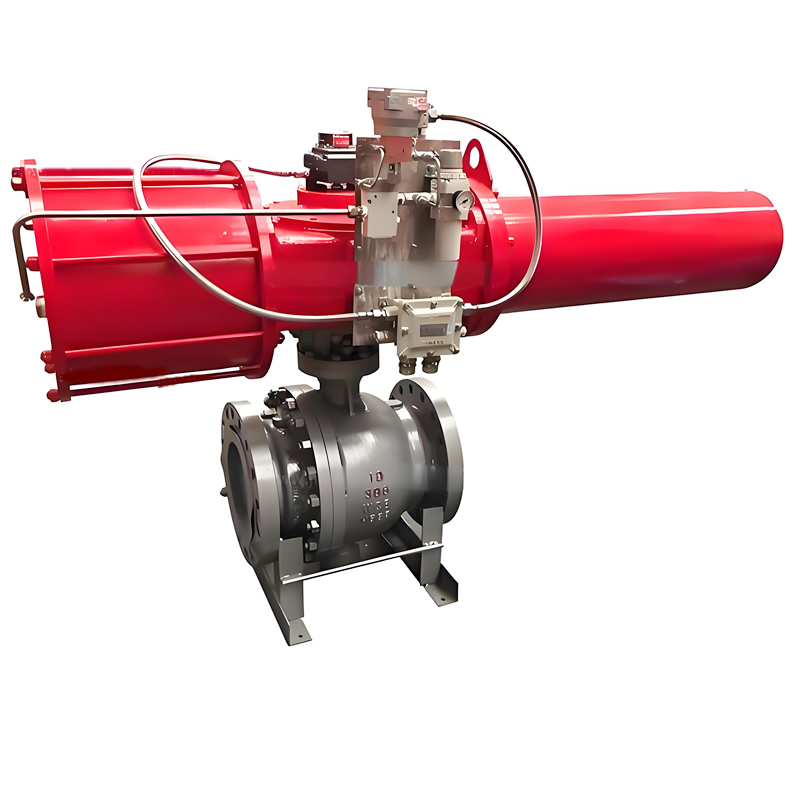
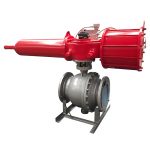
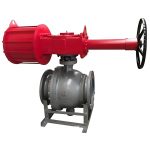
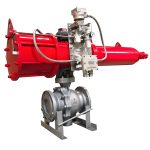
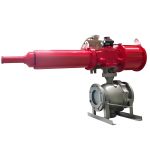
TIANYU 10-inch Side-Entry Fire-Safe Pneumatic Actuated Ball Valve is a high-reliability fluid control component engineered for critical industrial applications, where safety, durability, and operational efficiency are paramount. Designed in strict compliance with international standards including API 6D (Pipeline Valves), API 607 (Fire Test for Valves), and ASME B16.34 (Valves—Flanged, Threaded, and Welding End), this valve integrates advanced side-entry structural design, fire-safe technology, and pneumatic actuation to deliver consistent performance in harsh working environments such as oil refineries, chemical plants, and natural gas transmission systems.
With a nominal diameter of DN250 (10 inches) and pressure rating of 150LB (equivalent to PN20 according to metric standards), the valve features a WCB carbon steel body, SS316 stainless steel ball, and fire-resistant sealing system, ensuring exceptional corrosion resistance and fire safety. The pneumatic actuation system enables fast and precise on-off control, while the side-entry configuration simplifies maintenance and reduces downtime—addressing the core pain points of industrial operators in high-pressure, high-risk scenarios.
Certified by CE and ISO 9001, TIANYU’s side-entry fire-safe ball valve is not only compatible with global industrial infrastructure but also meets the strict safety and environmental regulations of regions such as the European Union and North America. Whether controlling the flow of crude oil, chemical solvents, or natural gas, this valve provides a reliable solution that balances operational performance and safety compliance.
II. Important Attribute Specifications
A. Dimensional & Pressure-Temperature Parameters
Port Size: 10 Inches (DN250), with optional sizes ranging from DN50 (2 inches) to DN600 (24 inches) to adapt to different pipeline scales. The full-bore design ensures minimal pressure drop, with a Cv value of up to 1200 for the DN250 model, optimizing fluid flow efficiency in high-volume applications.
Pressure Rating: 150LB (Class 150), corresponding to PN20 in metric standards. The valve maintains structural integrity under working pressures up to 2.0MPa at ambient temperature, with hydrostatic testing conducted at 1.5× rated pressure (3.0MPa) for the shell and 1.1× rated pressure (2.2MPa) for the seat in accordance with API 598 standards.
Temperature Range: -29℃ to 200℃, determined by the thermal stability of the fire-safe sealing components. This range covers the operating conditions of most industrial fluids, including heated oil, natural gas, and chemical intermediates.
B. Material Composition
Valve Body: WCB Carbon Steel (ASTM A216 Grade WCB), featuring tensile strength ≥485MPa and yield strength ≥240MPa. The material undergoes annealing heat treatment (850–900℃) to relieve casting stresses and improve toughness, with an external epoxy coating (thickness ≥100μm) for corrosion protection in outdoor or humid environments.
Ball: SS316 Stainless Steel (ASTM A182 Grade F316), containing 16–18% chromium, 10–14% nickel, and 2–3% molybdenum. This composition provides superior resistance to chloride-induced pitting and chemical corrosion, making it suitable for coastal or chemical processing applications. Optional SS304 (ASTM A182 F304) is available for less aggressive media.
Fire-Safe Sealing System: Primary seal uses reinforced PTFE (polytetrafluoroethylene) with a secondary metal-to-metal seal (316 stainless steel) and graphite packing. In the event of a fire, the PTFE melts and the graphite expands to form a tight seal, complying with API 607 7th Edition fire test requirements.
Stem: SS316 Stainless Steel (ASTM A182 F316) with an anti-blowout design. The stem surface is polished to Ra ≤0.4μm to reduce friction and prevent galling, ensuring smooth operation over long service life.
Flanges & Fasteners: Integral WCB flanges conforming to ASME B16.5 (RF face), paired with ASTM A193 B7 bolts and ASTM A194 2H nuts for high tensile strength and vibration resistance. Spiral-wound gaskets (stainless steel/graphite, ASME B16.20) ensure leak-tight flange connections.
C. Connection & Actuation Features
Connection Type: Flange-to-flange (ASME B16.5), with bolt holes precisely machined to ensure alignment with standard pipeline flanges, simplifying installation and reducing leak risks.
Actuation System: Pneumatic actuator (double-acting as standard; spring-return optional) with a torque output of 800 N·m for the DN250 150LB model. The actuator features a visual position indicator, limit switches, and a 4–20mA positioner (optional) for remote monitoring and control.
Operation Characteristics: 90° quarter-turn operation, with actuation time of 3–5 seconds (double-acting) and 5–8 seconds (spring-return). The side-entry design allows for in-line maintenance of the actuator without removing the valve from the pipeline.
Leakage Class: ANSI/FCI Class VI (bubble-tight) for the seat, ensuring minimal leakage (≤0.15 cm³/min for DN250 at 1.1× rated pressure) to meet environmental and safety regulations.
D. Certifications & Compliance
Design & Performance Standards: API 6D, API 607 (7th Ed.), ASME B16.34, ASME B16.5, API 598, ISO 6283
Quality & Safety Certifications: ISO 9001 Quality Management System, CE (PED 2014/68/EU), API Monogram (optional)
Environmental Compliance: Complies with EPA Fugitive Emission Standards and EU REACH regulations.
III. Feature Description
A. Side-Entry Structure: Maintenance Efficiency & Structural Stability
The side-entry design is a defining feature that sets this valve apart from top-entry alternatives. Unlike top-entry models, which require complete removal from the pipeline for internal maintenance, the TIANYU side-entry ball valve allows technicians to access the ball, stem, and sealing components by simply removing the side cover bolts. This design reduces maintenance downtime by up to 60% in critical applications such as oil refinery process lines, where unplanned shutdowns can result in significant production losses.
Additionally, the side-entry configuration provides superior structural stability for large-diameter valves (such as DN250). The stem is supported at both ends, minimizing deflection during operation and reducing wear on the sealing surfaces. This dual support structure also enhances the valve’s ability to withstand high-pressure fluctuations, a common challenge in natural gas transmission pipelines.
B. API 607 Fire-Safe Design: Critical Safety Assurance
Fire safety is a non-negotiable requirement in oil, gas, and chemical industries, and the TIANYU valve’s fire-safe system is engineered to meet the rigorous demands of API 607 7th Edition. The valve undergoes a 30-minute fire test, where it is exposed to temperatures exceeding 750℃, simulating an industrial fire scenario. During the test, the reinforced PTFE primary seal melts, but the graphite packing and secondary metal-to-metal seal expand to fill the gap, preventing the escape of flammable media.
This design not only complies with global safety standards but also minimizes the risk of secondary explosions and environmental contamination. In offshore oil platforms or onshore refineries, where fire hazards are prevalent, this feature provides operators with critical time to shut down systems and mitigate risks.
C. High-Performance Pneumatic Actuation: Precision & Reliability
The integrated pneumatic actuator delivers fast, consistent performance for automated fluid control. The double-acting design uses compressed air (4–8 bar) to both open and close the valve, ensuring reliable operation even in low-pressure air supply conditions. For emergency scenarios, the optional spring-return actuator automatically returns the valve to a fail-safe position (open or close) if air pressure is lost—an essential feature for applications such as chemical reactor feed lines, where uncontrolled flow could lead to catastrophic failures.
The actuator’s modular design allows for easy integration with control systems, including PLCs and SCADA systems, via the optional 4–20mA positioner. This enables remote monitoring of the valve’s position and precise control of flow rates, reducing the need for on-site personnel and improving operational efficiency.
D. Corrosion-Resistant Material Combination: Longevity in Aggressive Media
The pairing of WCB carbon steel body and SS316 ball is carefully selected to balance durability and corrosion resistance. The WCB body provides the strength required to withstand 150LB pressure, while the epoxy coating protects against external rust and chemical exposure. The SS316 ball, with its molybdenum content, resists corrosion from saltwater, acidic solutions, and sulfur-containing media—common in offshore oil and gas applications.
In tests conducted in a coastal chemical plant, the SS316 ball showed no signs of pitting or corrosion after three years of service with seawater cooling systems, outperforming SS304 alternatives which typically require replacement after 18–24 months. This material synergy extends the valve’s service life to 8–10 years in typical industrial environments, reducing replacement costs and maintenance frequency.
API6D/ASME/CE DN250 150LB Stainless Steel SS316/SS304 Side-Entry Fire-Safe Pneumatic Actuated Flange Ball Valve for Oil & Gas
IV. Manufacturing Process
A. Raw Material Inspection & Preparation
Quality control begins with strict inspection of raw materials to ensure compliance with ASTM standards. WCB carbon steel castings undergo spectral analysis to verify chemical composition (ensuring carbon content between 0.25–0.35%) and ultrasonic testing (UT) to detect internal defects such as cracks or inclusions. SS316 bar stock for balls and stems is tested for chromium, nickel, and molybdenum content using X-ray fluorescence (XRF) spectroscopy, with material test reports (MTRs) provided for each batch.
Sealing materials, including reinforced PTFE and graphite, are subjected to hardness testing (Shore D 55–65 for PTFE) and thermal stability tests to confirm performance within the -29℃ to 200℃ temperature range. Fire-safe components are pre-tested in a controlled laboratory environment to ensure compliance with API 607 requirements before assembly.
B. Valve Body & Ball Fabrication
The WCB body casting is first subjected to shot blasting to remove surface impurities, then machined using 5-axis CNC machines to achieve precise dimensional tolerances. Flange faces are machined to ASME B16.5 specifications, with a roughness of Ra 12.5–25μm to ensure proper gasket seating. The side-entry port and stem bore are honed to a smooth finish (Ra ≤0.8μm) to minimize friction between the stem and packing.
The SS316 ball is precision-machined from bar stock using a CNC turning center, followed by grinding to achieve a spherical tolerance of ≤0.01mm. The ball’s bore is drilled and polished to match the valve’s full-bore design, ensuring minimal flow restriction. After machining, the ball undergoes passivation treatment (nitric acid solution) to enhance corrosion resistance by removing free iron from the surface.
C. Assembly of Fire-Safe & Actuation Systems
Assembly is performed in a cleanroom environment to prevent contamination of sealing surfaces. The stem is first fitted with graphite packing rings (arranged in a V-shape for optimal sealing) and inserted into the body, followed by the SS316 ball, which is secured to the stem via a keyway connection. The reinforced PTFE seat rings are then installed, with a preload applied to ensure initial bubble-tight sealing.
The pneumatic actuator is mounted to the valve via an ISO 5211 flange, with laser alignment to ensure the actuator’s drive shaft is coaxial with the valve stem (runout ≤0.05mm). This alignment prevents premature wear and ensures smooth actuation. Limit switches and positioners (if specified) are calibrated to provide accurate position feedback, with testing conducted to verify that the valve opens and closes within the specified timeframes.
D. Quality Testing & Certification
Every TIANYU valve undergoes a rigorous multi-stage testing process before leaving the factory:
Hydrostatic Test: Conducted per API 598—shell test at 3.0MPa (1.5×150LB) for 5 minutes, with no leakage or structural deformation; seat test at 2.2MPa (1.1×150LB) for 3 minutes, with leakage measured below ANSI/FCI Class VI limits.
Fire Test: Random samples from each production batch undergo API 607 fire testing, including 30 minutes of exposure to high temperature and a subsequent leakage test to confirm fire-safe performance.
Operational Test: 100 cycles of open-close operation to verify actuation consistency, torque requirements, and position accuracy. Automated valves are tested with simulated control signals to ensure proper integration with control systems.
Non-Destructive Testing (NDT): Liquid penetrant testing (PT) of flange welds and body castings to detect surface defects; magnetic particle testing (MPI) of the stem to ensure structural integrity.
Upon successful completion of testing, each valve is labeled with a unique serial number, and a comprehensive test report is generated, including MTRs, test results, and certification documents.
V. Product Advantages
A. Extended Service Life & Reduced Maintenance Costs
The combination of side-entry design, SS316 corrosion-resistant components, and fire-safe sealing system extends the valve’s service life to 8–10 years, compared to 3–5 years for standard top-entry valves. The in-line maintenance capability reduces downtime from 8 hours (for top-entry valves) to 2 hours per service event, translating to annual savings of up to $30,000 per valve in a typical refinery application. Additionally, the low-friction stem and ball design minimizes wear, reducing the need for replacement parts and labor.
B. Enhanced Safety & Regulatory Compliance
Compliance with API 607 fire-safe standards and ANSI/FCI Class VI leakage requirements ensures that the valve meets the strict safety regulations of the oil, gas, and chemical industries. In regions with stringent environmental laws (such as the EU and California), the bubble-tight sealing prevents fugitive emissions of harmful chemicals, avoiding fines of up to $50,000 per incident. The anti-blowout stem design and spring-return actuation (optional) further enhance safety by preventing stem ejection and ensuring fail-safe operation during emergencies.
C. Improved Operational Efficiency & Scalability
The pneumatic actuation system enables fast, automated control, reducing the response time to process changes from minutes (manual valves) to seconds. This precision control improves process efficiency, reducing product waste in chemical manufacturing by up to 5%. The valve’s compatibility with standard ASME flanges and control systems makes it easy to integrate into existing infrastructure, while optional configurations (such as SS304 material or spring-return actuation) allow it to adapt to diverse application requirements without the need for custom engineering.
D. Cost-Effectiveness in Critical Applications
While the initial cost of a fire-safe side-entry valve is higher than that of standard valves, the total cost of ownership (TCO) is significantly lower. In a 10-year lifecycle, the TIANYU valve’s reduced maintenance costs, extended service life, and avoided downtime result in a TCO that is 40% lower than standard top-entry valves. For offshore platforms or remote pipeline locations, where maintenance access is difficult and expensive, this cost advantage is even more pronounced.
VI. Product Applications
A. Oil & Gas Industry
In upstream oil production, the valve is used in wellhead manifolds to control the flow of crude oil, with the SS316 ball resisting corrosion from sulfur compounds. In midstream transmission, it regulates natural gas flow in pipelines, where the fire-safe design provides protection against pipeline leaks and fires. Downstream, it is deployed in refineries for process lines (such as gasoline and diesel blending), with the side-entry design enabling quick maintenance during scheduled shutdowns.
B. Chemical & Petrochemical Industry
The valve’s corrosion resistance and bubble-tight sealing make it ideal for chemical processing, including the handling of acids (such as hydrochloric acid), solvents (such as methanol), and petrochemical intermediates. It is commonly used in reactor feed lines, where precise pneumatic control ensures consistent process conditions, and in storage tank outlets, where the fire-safe design mitigates the risk of fire from flammable chemicals.
C. Power Generation
In thermal power plants, the valve controls the flow of cooling water and fuel oil, with the WCB body withstand high-pressure conditions and the SS316 ball resisting corrosion from treated water. In natural gas-fired power plants, it regulates gas supply to burners, with the fast-acting pneumatic actuator ensuring rapid response to load changes. The fire-safe design also complies with power plant safety standards, reducing the risk of fire-related outages.
D. Marine & Offshore Applications
The valve’s corrosion-resistant materials (SS316 ball, epoxy-coated body) make it suitable for marine environments, where saltwater and humidity can cause rapid degradation of standard valves. It is used in offshore oil platforms for production lines and in shipboard systems (such as fuel and ballast water lines), with the side-entry design allowing maintenance in the limited space of ship engine rooms.
E. Municipal & Industrial Water Treatment
For industrial wastewater treatment plants, the valve controls the flow of chlorinated water and sludge, with the SS316 ball resisting corrosion from chlorine. In municipal water supply systems, it regulates the flow of potable water, with the PTFE seal complying with FDA standards for food contact. The pneumatic actuation system enables remote control, reducing the need for on-site personnel at water treatment facilities.
Customization Advantages
Customizing this TIANYU valve tailors it to your unique needs: choose 2205 duplex steel for extreme corrosion, Viton seals for high-temperature media, or 300LB pressure rating for heavy-duty applications. Opt for electric actuators for remote areas or explosion-proof designs for hazardous zones. Add position transmitters or emergency shutdown features. These tweaks boost durability, align with your specific工况 (working conditions), and cut long-term costs—delivering a valve that fits your operation perfectly.
API 6D ASME B16.34 CE DN200/DN300/DN400 PN80 LF2 Carbon Steel Body 321 Stainless Steel Ball Full Welded Manual Stem Hard Seated Ball Valve is a premium high-pressure fluid control solution engineered for critical industrial applications, blending LF2 carbon steel’s structural strength with 321 stainless steel’s corrosion resistance and Stellite 6 hard seats’ durability. Its full welded design eliminates leak points, while the manual light stem ensures precise, reliable operation. Certified to API 6D, ASME, and CE standards, and backed by ISO 9001/API Q1 quality assurance, it excels in oil and gas transmission, petrochemical refining, and power generation. Fire-safe, low-emission, and maintainable, it delivers zero-leakage performance, regulatory compliance, and long-term value for large-flow, high-pressure pipeline systems worldwide.