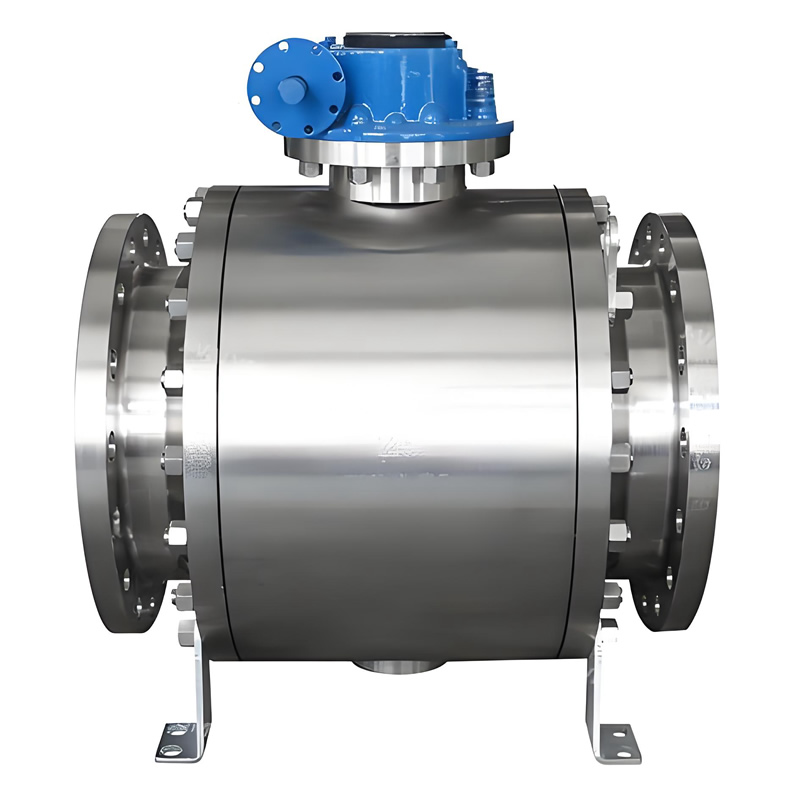
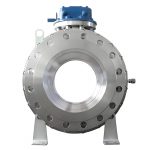
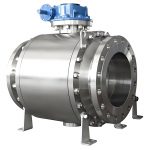
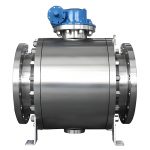
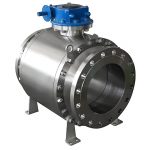
API 6D API 607 ASME B16.34 CE DN300 600LB Stainless Steel SS316/SS304 3PC Flange Trunnion Mounted Fire-Safe Ball Valve for Oil & Gas Petrochemical Applications
I. Product Overview
TIANYU 3PC (three-piece) flange trunnion mounted fire-safe ball valve is a high-performance fluid control component engineered for critical industrial scenarios where reliability, safety, and maintainability are non-negotiable. Designed to align with global industry standards—including API 6D (pipeline valves), API 607 (fire-test requirements for valves), and ASME B16.34 (valve dimensions & pressure-temperature ratings)—this valve integrates a trunnion-mounted (fixed-ball) structure, three-piece body design, and fire-safe sealing system to address the demands of harsh operating environments.
Constructed primarily from stainless steel SS316 (or SS304 for less aggressive media), the valve delivers exceptional corrosion resistance against acids, salts, hydrocarbons, and high-purity fluids. Its trunnion-mounted design supports the ball via upper and lower shafts (trunnions), distributing fluid pressure forces to robust bearings rather than relying on valve seats—enabling stable performance in high-pressure systems. The three-piece body configuration allows for in-line disassembly and maintenance without removing the valve from the pipeline, minimizing downtime for critical processes.
Certified to CE and ISO 9001 quality standards, this fire-safe valve is purpose-built for oil & gas transmission, petrochemical refining, chemical processing, and other industries where flammable or corrosive media are handled. Whether regulating crude oil flow in cross-country pipelines, controlling chemical feedstock in reactor systems, or managing high-purity fluids in food & pharmaceutical facilities, it balances operational precision, safety compliance, and long-term durability.
II. Important Attribute Specifications
A. Dimensional & Pressure-Temperature Parameters
Port Size: Spans DN50 to DN600 (2” to 24”), with a full-bore design as standard to minimize pressure drop (Cv values up to 1800 for DN600 models). The full-bore configuration also enables pipeline pigging (cleaning) in oil & gas applications.
Pressure Rating: Class 150 to Class 600 (equivalent to PN20 to PN100), with hydrostatic testing conducted at 1.5× rated pressure for the valve shell and 1.1× rated pressure for seats (per API 598) to ensure leak-tight integrity.
Temperature Range: Dependent on material and seal selection:
SS316/SS304 body/ball: -29℃ to 200℃ (standard);up to 450℃ with high-temperature fire-safe seals.
Fire-safe sealing system: Maintains integrity up to 750℃ during API 607 fire testing (30-minute exposure).
B. Material Composition
Valve Body (3PC): SS316 (ASTM A182 F316) or SS304 (ASTM A182 F304) stainless steel, offering corrosion resistance against chlorides, acids, and hydrocarbons. The three-piece segments are bolted together for disassembly.
Ball & Trunnions: Solid SS316 (ASTM A182 F316) ball, precision-ground to a spherical tolerance of ≤0.01mm. Trunnions (upper/lower shafts) are integral to the ball, machined from the same SS316 material and surface-hardened (HRC 30–35) to reduce bearing wear.
Fire-Safe Sealing System: Dual-layer design:
Primary seal: Reinforced PTFE (polytetrafluoroethylene) for bubble-tight shut-off (ANSI/FCI Class VI).
Secondary fire-safe seal: Expanded graphite + metal-to-metal contact (SS316 seat ring) to maintain sealing during fire events (compliant with API 607 7th Edition).
Valve Stem: SS316 (ASTM A182 F316) with an anti-blowout design, polished to Ra ≤0.4μm to minimize packing friction and fugitive emissions (compliant with ISO 15848-1 Class BH).
Flanges & Fasteners: Integral ASME B16.5 flanges (raised face, RF) machined from SS316/SS304. Fasteners (bolts/nuts) are ASTM A193 B8M (SS316) for corrosion resistance.
Gaskets: Spiral-wound (SS316/graphite, ASME B16.20) for leak-tight flange connections under pressure/temperature fluctuations.
C. Connection & Operational Features
Connection Type: Flange (ASME B16.5), compatible with standard pipeline flanges to simplify installation and retrofitting.
Operation Modes:
Manual: Worm gear operator (torque reduction 5–10×) for Class 300+ or DN200+ models; lever operator for smaller sizes.
Automated: Pneumatic (double-acting/spring-return, 4–8 bar air supply) or electric (4–20mA control signal, IP67 enclosure) actuators, mounted via ISO 5211 flanges.
Functional Attributes:
Trunnion-mounted (fixed-ball) structure for high-pressure stability.
Three-piece body for in-line maintenance.
Fire-safe design (API 607) for flammable media applications.
Bidirectional sealing (reliable shut-off in both flow directions).
Leakage Class: ANSI/FCI Class VI (bubble-tight) for standard service; Class IV for high-temperature fire-safe operation.
D. Certifications & Compliance
Design & Performance Standards: API 6D, API 607 (7th Ed.), ASME B16.34, ASME B16.5, API 598, ISO 6283 (Cv testing).
Quality & Safety Certifications: ISO 9001 (quality management), CE (PED 2014/68/EU), ATEX/IECEx (optional, for explosive atmospheres).
Environmental Compliance: ISO 15848-1 (fugitive emissions), REACH (EU chemical regulations).
A. 3PC Body Design: In-Line Maintenance Efficiency
The three-piece body configuration is a defining advantage for industrial operators: unlike one-piece or two-piece valves, which require removal from the pipeline for internal service, the TIANYU 3PC valve can be disassembled by unbolting its three segments. This allows technicians to access the ball, seat, and stem without disconnecting adjacent piping—reducing maintenance downtime by up to 70% in critical processes (e.g., petrochemical reactor feed lines, where unplanned shutdowns cost $10k+ per hour).
The bolted segments also enable easy replacement of worn components (e.g., seals, ball) without replacing the entire valve, lowering long-term maintenance costs. For facilities with limited space (e.g., offshore platforms), this design eliminates the need for heavy lifting equipment to remove large-diameter valves.
B. Trunnion-Mounted Structure: High-Pressure Stability
The trunnion-mounted (fixed-ball) design addresses a key limitation of floating-ball valves: in high-pressure systems (Class 300+), floating balls transfer pressure forces to the seats, increasing operational torque and accelerating seat wear. TIANYU’s trunnion design supports the ball via upper and lower shafts, directing pressure forces to robust bearings instead of the seals.
This structure reduces operational torque by 40–50% compared to floating-ball valves, enabling easier manual operation or smaller (lower-cost) actuators for automated models. In Class 600 DN300 applications (e.g., offshore oil wellheads), it maintains consistent sealing integrity over 10,000+ cycles—twice the service life of comparable floating-ball valves.
C. API 607 Fire-Safe Sealing: Critical Safety Assurance
For industries handling flammable media (oil, gas, chemicals), fire safety is non-negotiable. The TIANYU valve’s fire-safe system complies with API 607 7th Edition: during a 30-minute fire test (exposure to 750℃), the primary PTFE seal melts, but the expanded graphite secondary seal swells to fill gaps, while the metal-to-metal seat ring provides a backup barrier. Post-test leakage remains below API 607 limits, preventing flammable media escape and secondary explosions.
This feature is mandatory for many oil & gas and petrochemical applications (e.g., refinery distillation lines) and aligns with global safety regulations (e.g., OSHA in the U.S., ATEX in the EU).
D. Stainless Steel Construction: Corrosion Resistance & Cleanliness
SS316/SS304 materials deliver dual benefits: corrosion resistance and hygienic compatibility. SS316’s molybdenum content resists chloride-induced pitting (critical for coastal/offshore applications or seawater cooling systems), while its non-porous surface prevents media contamination—making it suitable for food & pharmaceutical facilities (compliant with FDA 21 CFR 177.2600).
In a coastal chemical plant test, SS316 valves showed no corrosion after 5 years of seawater service, while carbon steel valves failed within 18 months. For high-purity applications (e.g., pharmaceutical API manufacturing), the polished SS316 ball/stem eliminates dead spaces where bacteria or contaminants could accumulate.
IV. Manufacturing Process
A. Raw Material Inspection & Preparation
Quality control begins with rigorous raw material validation:
Stainless Steel Verification: SS316/SS304 bar stock undergoes spectral analysis (XRF) to confirm chemical composition (e.g., 16–18% Cr, 2–3% Mo for SS316) and ultrasonic testing (UT) to detect internal defects (porosity, cracks). Material Test Reports (MTRs) are generated for every batch.
Seal Material Testing: Reinforced PTFE is tested for hardness (Shore D 55–65) and thermal stability; expanded graphite is evaluated for expansion rate (≥200% at 750℃) to ensure API 607 compliance.
3PC Body Machining: SS316/SS304 bar stock is cut into three segments (two end caps, one middle body) and machined via 5-axis CNC centers. Flange faces are precision-machined to ASME B16.5 flatness (≤0.05mm/m) and surface finish (Ra ≤3.2μm) for proper gasket seating. The middle body’s trunnion bearing bores are honed to ±0.02mm tolerance to ensure ball alignment.
Ball & Trunnion Processing: The SS316 ball is turned, then ground with a spherical grinder to achieve a surface finish of Ra ≤0.2μm (critical for bubble-tight sealing). Trunnions are machined integrally with the ball, then heat-treated and polished to reduce bearing friction.
Seat Ring Manufacturing: SS316 seat rings are machined, then fitted with reinforced PTFE and expanded graphite layers via compression molding.
C. Assembly & Actuator Integration
Assembly is performed in a Class 10,000 cleanroom to prevent contamination:
Trunnion & Ball Installation: The ball (with integral trunnions) is inserted into the middle body, and bearings (PTFE-impregnated bronze) are pressed into the trunnion bores.
Seal & Body Assembly: Seat rings are installed in the end caps, then the three body segments are bolted together with controlled torque (per ASME B18.2.1) to ensure uniform seal compression.
Actuator Mounting: Manual/worm gear actuators are attached via ISO 5211 flanges, with laser alignment to ensure stem-trunnion coaxiality (runout ≤0.05mm). Automated actuators (pneumatic/electric) are calibrated to 4–20mA signals, with limit switches set to trigger at fully open/closed positions.
D. Quality Testing & Certification
Every valve undergoes multi-stage testing:
Hydrostatic Testing: Per API 598—shell test (1.5× rated pressure, 30 minutes) for body integrity; seat test (1.1× rated pressure, 15 minutes) for leak-tightness (≤1 bubble/minute for Class VI).
Fire Testing: Random samples undergo API 607 testing (30-minute 750℃ exposure + post-fire leakage assessment).
Operational Testing: 100 open-close cycles to verify torque consistency and actuation speed (3–5 seconds for pneumatic models).
Non-Destructive Testing (NDT): Liquid penetrant testing (PT) for flange welds; magnetic particle testing (MPI) for trunnions.
Post-test, each valve receives a unique serial number, and documentation (MTRs, test reports, certifications) is packaged with the unit.
V. Product Advantages
A. Reduced Maintenance Costs & Downtime
The 3PC body design cuts maintenance time by 70% compared to one-piece valves: in a refinery DN300 Class 600 application, technicians replaced worn seats in 2 hours (vs. 8 hours for a one-piece valve), avoiding $60k+ in lost production. The trunnion design also reduces seal wear, extending component life by 2–3× and lowering replacement part costs.
B. High-Pressure Stability & Low Torque
For Class 300+ systems, the trunnion design eliminates seat deformation (a common issue with floating-ball valves), maintaining consistent sealing over 10,000+ cycles. Lower operational torque reduces actuator size (and cost) by 30% for automated models, while enabling manual operation of large-diameter valves (e.g., DN600 Class 600) with a single technician.
C. Safety & Regulatory Compliance
API 607 fire-safe design and ANSI/FCI Class VI leakage ensure compliance with global safety regulations (OSHA, ATEX), avoiding fines of $50k+ for fugitive emissions or fire hazards. The anti-blowout stem design further mitigates risk by preventing stem ejection under pressure.
D. Corrosion Resistance & Hygienic Compatibility
SS316 construction enables service in corrosive environments (seawater, acids) and hygienic applications (food, pharmaceuticals), eliminating the need for multiple valve types across facilities. This versatility reduces inventory costs by 40% for multi-process plants.
VI. Product Applications
A. Oil & Gas Industry
Upstream Production: DN50–DN200 Class 600 valves control wellhead crude oil flow, with trunnion design handling high-pressure reservoir fluids and SS316 resisting sulfur-induced corrosion (compliant with NACE MR0175, optional).
Midstream Transmission: DN200–DN600 Class 300 valves regulate natural gas flow in cross-country pipelines, with full-bore design enabling pigging and fire-safe sealing mitigating pipeline leak risks.
Downstream Refining: DN100–DN300 Class 600 valves manage gasoline/diesel blending, with 3PC design enabling quick seal replacement during scheduled shutdowns.
B. Petrochemical & Chemical Industry
Petrochemical Reactors: DN50–DN200 Class 300 valves control feedstock (ethylene, propylene) flow, with SS316 resisting chemical corrosion and fire-safe design protecting against reactor fire hazards.
Chemical Processing: DN25–DN150 Class 150 valves handle acids (hydrochloric, sulfuric) and solvents (methanol), with Class VI leakage preventing environmental contamination.
C. Power Generation
Thermal Power Plants: DN100–DN300 Class 300 valves regulate steam condensate flow, with SS316 resisting corrosion from treated water and trunnion design handling cyclic pressure fluctuations.
Nuclear Power Plants: DN50–DN200 Class 600 valves control service water flow, with 3PC design enabling in-line maintenance (critical for limited-shutdown facilities).
D. Food & Pharmaceutical Industry
Food Processing: DN25–DN100 Class 150 valves manage high-purity water and food-grade fluids (juices, dairy), with SS316’s hygienic surface complying with FDA standards.
Pharmaceutical Manufacturing: DN15–DN50 Class 150 valves control API (active pharmaceutical ingredient) flow, with Class VI leakage preventing product contamination.
API 6D ASME B16.34 CE DN200/DN300/DN400 PN80 LF2 Carbon Steel Body 321 Stainless Steel Ball Full Welded Manual Stem Hard Seated Ball Valve is a premium high-pressure fluid control solution engineered for critical industrial applications, blending LF2 carbon steel’s structural strength with 321 stainless steel’s corrosion resistance and Stellite 6 hard seats’ durability. Its full welded design eliminates leak points, while the manual light stem ensures precise, reliable operation. Certified to API 6D, ASME, and CE standards, and backed by ISO 9001/API Q1 quality assurance, it excels in oil and gas transmission, petrochemical refining, and power generation. Fire-safe, low-emission, and maintainable, it delivers zero-leakage performance, regulatory compliance, and long-term value for large-flow, high-pressure pipeline systems worldwide.