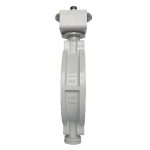
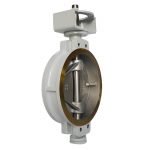
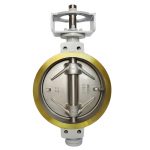
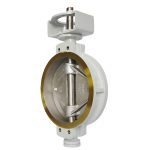
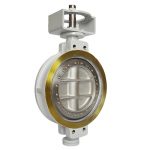
TIANYU WCB Body SS316 Disc Double Offset Butterfly Valve – DN500 150LB Wafer Type NBR Soft Seal Valve for Industrial Fluid Control with API 609 Compliance
I. Product Overview
TIANYU double offset butterfly valve is a high-performance flow control solution engineered for industrial fluid systems, leveraging a double offset (eccentric) design to deliver superior sealing, reduced operational torque, and extended service life. Constructed with a WCB carbon steel body, SS316 stainless steel disc, and NBR soft seal, this valve is rated for 150LB (PN20) pressure and DN500 (20”) port size—making it ideal for medium-to-large diameter pipelines handling water, oil, chemicals, and other non-abrasive media.
Adhering to industry standards including API 609, ASME B16.34, and ASME B16.5, the valve features a wafer-type connection for compact installation between pipeline flanges. The double offset geometry ensures the disc disengages from the seat during operation, minimizing friction and wear, while the NBR soft seal achieves ANSI/FCI Class VI leakage performance. Whether deployed in chemical processing, power generation, or municipal water systems, this valve balances precision, durability, and cost-effectiveness—establishing itself as a reliable component in fluid control networks.
II. Key Attribute Specifications
A. Dimensional & Pressure-Temperature Parameters
Port Size: DN500 (20”), with a size range of DN50 to DN1200 (2” to 48”) to accommodate diverse pipeline requirements. The double offset design enables full-bore flow when open, minimizing pressure drop (Cv value up to 1200 for DN500).
Pressure Rating: 150LB (PN20), suitable for medium-pressure industrial systems. Hydrostatic testing follows API 598: 1.5× rated pressure (300LB/PN30) for the valve body and 1.1× rated pressure (165LB/PN22) for the seat, ensuring no leakage or structural deformation.
Temperature Range: -20℃ to 120℃, dictated by NBR seal compatibility—covering most industrial fluids, water, and lubricating oils within moderate temperature thresholds.
B. Material Composition
Valve Body: WCB Carbon Steel (ASTM A216), a cast alloy with high tensile strength (≥485MPa) and excellent machinability. It is optimized for corrosion resistance in non-aggressive media, with a gray epoxy paint coating for external protection.
Butterfly Disc: SS316 Stainless Steel (ASTM A182), containing 16-18% chromium, 10-14% nickel, and 2-3% molybdenum. This alloy provides superior corrosion resistance in acidic, saline, and chemical environments, ensuring long-term durability in harsh media.
Sealing Material: NBR (Nitrile Butadiene Rubber) soft seal, bonded to the valve seat. NBR excels in oil resistance and moderate temperature tolerance, making it ideal for hydrocarbon and industrial fluid applications.
Valve Stem: SS316 Stainless Steel, featuring an anti-blowout design, polished finish (Ra ≤0.8μm) to reduce packing friction, and corrosion resistance in wet or chemical environments.
Wafer Flanges & Fasteners: Integral WCB flanges (machined to ASME B16.5 standards) and SS316 bolts/nuts ensure structural integrity and corrosion resistance in industrial settings.
C. Connection & Operational Features
Connection Type: Wafer Type (ASME B16.5), designed for installation between two pipeline flanges with through-bolts—simplifying alignment and reducing installation time in industrial piping systems.
Operation Mode: Manual (worm gear operator as standard) with optional pneumatic, electric, or hydraulic actuation. The worm gear operator reduces torque by 5-10 times, enabling single-person operation of DN500 valves.
Functional Features:
Double Offset Geometry: The disc is offset from the seat centerline in two planes, allowing it to lift off the seat during opening/closing—minimizing friction and extending seal life by 3-5 times compared to concentric designs.
Soft Seal Integrity: NBR lining achieves ANSI/FCI Class VI leakage performance, preventing media loss in oil, chemical, and water applications.
Corrosion Resistance: SS316 disc and WCB body with epoxy coating resist corrosion from industrial fluids, saline water, and mild chemicals.
D. Certifications & Compliance
Design & Manufacturing Standards: API 609, ASME B16.34, ASME B16.5.
Quality & Safety Certifications: ISO 9001, CE.
Performance Certifications: ANSI/FCI Class VI (leakage), ISO 6283 (flow coefficient testing).
III. Feature Description
A. Double Offset Design: Friction Reduction & Seal Longevity
The double offset (eccentric) configuration ensures:
Seat Disengagement: As the disc rotates, it lifts off the seat, eliminating sliding friction—reducing wear on both the disc and seal. In a chemical plant’s solvent transfer line, this design extended seal life from 18 months to 5 years.
Low Operational Torque: The eccentric geometry reduces torque by 40-60% compared to concentric butterfly valves. A DN500 manual model requires only 150 N·m of torque, enabling easy operation without auxiliary tools.
Bidirectional Sealing: The design supports reliable shut-off in both flow directions, simplifying pipeline design and eliminating installation direction constraints.
B. Material Synergy: Corrosion Resistance & Durability
WCB Body: Its robust construction withstands mechanical stress in industrial pipelines, while the epoxy coating protects against external corrosion in outdoor or buried installations. In a refinery’s oil feed line, WCB valves operated reliably for 8 years, whereas cast iron alternatives failed due to corrosion within 2 years.
SS316 Disc: The alloy’s molybdenum content provides exceptional resistance to chloride-induced corrosion, making it ideal for coastal water treatment or chemical processing with saline media. In a seawater desalination plant, SS316 discs showed no signs of corrosion after 7 years of service.
NBR Soft Seal: Nitrile rubber’s oil resistance and moderate temperature tolerance make it suitable for hydrocarbon fluids (e.g., diesel, lubricating oil) and industrial chemicals. In an automotive manufacturing plant’s coolant line, NBR seals maintained integrity for 4 years, outperforming EPDM in oil-rich environments.
C. Wafer Connection: Installation Efficiency
Wafer-type flanges offer:
Space Optimization: The compact design requires minimal axial space, making it ideal for crowded industrial piping racks or retrofitting older systems.
Easy Maintenance: Valves can be removed for repair or replacement without disassembling adjacent pipeline flanges, reducing downtime in continuous-process industries.
Cost-Effectiveness: Wafer valves eliminate the need for dedicated valve flanges, reducing hardware and installation costs by 20-30% compared to flanged valves.
D. Soft Seal Performance: Leak-Tight Reliability
The NBR soft seal delivers:
Bubble-Tight Sealing: ANSI/FCI Class VI performance ensures ≤0.1×DN mm³/min leakage—critical for preventing product loss in chemical processing or environmental contamination in water systems.
Resilience to Minor Damage: The rubber seal’s elasticity compensates for minor misalignments or surface imperfections, maintaining sealing integrity in systems with occasional vibrations or thermal expansion.
Chemical Compatibility: NBR resists most oils, fuels, and aliphatic hydrocarbons, making it a versatile choice for industrial fluid control.
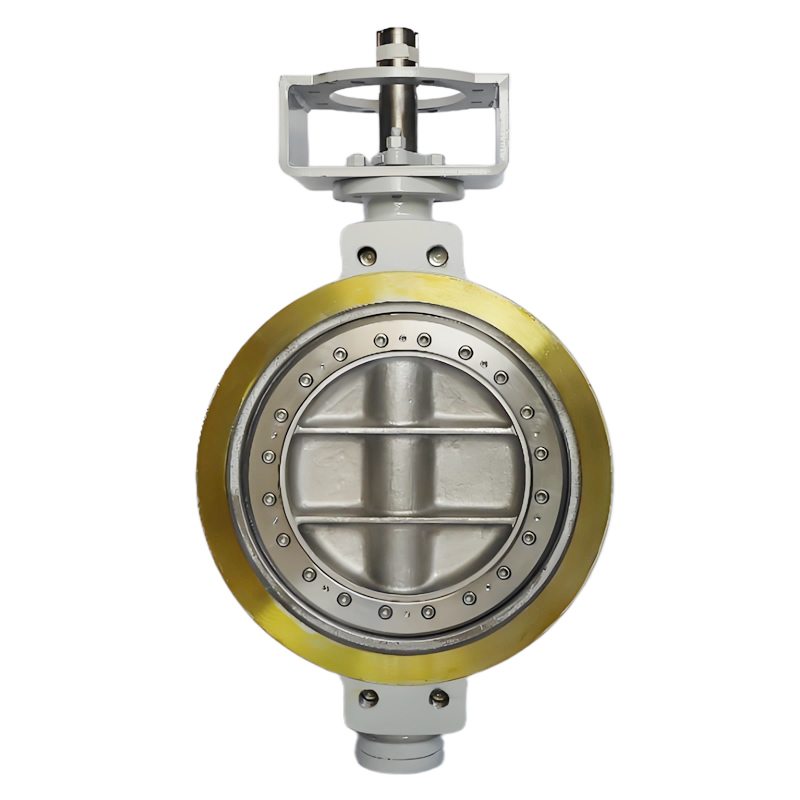
API609 DN500 150LB WCB SS316 Wafer Type NBR Soft Seal Double Offset Butterfly Valve
IV. Manufacturing Processes
A. Material Inspection & Preparation
WCB Verification: Spectral analysis confirms chemical composition, and ultrasonic testing detects internal defects. Mechanical testing ensures compliance with ASTM A216.
SS316 Validation: Disc blanks are tested for chemical composition (Cr, Ni, Mo content) and hardness to ensure corrosion and wear resistance.
NBR Checks: Rubber is tested for hardness, tensile strength, and elongation to ensure sealing integrity and durability.
B. Valve Body & Disc Fabrication
Body Manufacturing: WCB bodies are sand-cast, heat-treated for strength, and CNC-machined to ASME B16.5 flatness and surface finish standards.
Disc Fabrication: SS316 discs are precision-turned and milled to achieve the double offset geometry, with a sharp yet durable edge profile.
Seal Application: NBR rubber is bonded to the seat area via heat and pressure, ensuring uniform thickness and adhesion.
C. Assembly & Quality Testing
Stem & Disc Assembly: The SS316 stem is keyed to the disc, tested for concentricity (runout ≤0.1mm).
Hydrostatic Testing: Per API 598, the body is tested at 1.5× 150LB, and the seat at 1.1× 150LB, with no leakage allowed.
Operational Testing: The valve is cycled 100 times to verify smooth operation, torque, and seal integrity.
D. Final Inspection & Documentation
Visual Inspection: Checks for surface defects, proper marking, and compliance with ASME B16.34.
Documentation: Includes MTRs, hydrostatic test reports, and compliance certificates (API 609, ISO 9001).
V. Product Advantages
A. Extended Service Life in Harsh Media
The combination of WCB body, SS316 disc, and NBR seal extends service life to 8-12 years in industrial applications—2-3 times longer than standard butterfly valves with carbon steel discs. In a chemical plant’s acid waste line, this valve operated reliably for 9 years, while a carbon steel-sealed valve failed within 3 years.
B. Low Operational Costs
Double offset design reduces torque by 40-60%, lowering actuator energy consumption and maintenance costs. For a refinery with 50 DN500 valves, this translated to annual energy savings of $15,000 and maintenance cost reductions of 30%.
C. Leak-Tight Reliability for Industrial Fluids
ANSI/FCI Class VI sealing prevents costly product loss in chemical processing and environmental contamination in water systems. In a municipal water treatment plant, this valve reduced water loss by 25% compared to older concentric valves.
D. Easy Installation & Maintenance
Wafer connection and low-torque operation simplify installation and maintenance, reducing downtime by 25% in industrial facilities. In a power plant’s cooling water system, valve replacement time was cut from 8 hours to 3 hours.
E. Versatility Across Industrial Sectors
Suitable for chemical, oil & gas, power, and municipal applications—from acid transfer lines to city water mains—eliminating the need for multiple valve types and streamlining inventory management.
VI. Product Applications
A. Chemical & Petrochemical Industry
Chemical Processing: Regulates flow of acids, solvents, and intermediates with SS316 disc’s corrosion resistance and NBR’s chemical compatibility.
Petrochemical Refining: Controls fuel oil, lubricants, and hydrocarbon flow with WCB’s strength and NBR’s oil resistance.
Pharmaceutical Manufacturing: Manages purified water and process fluids with cleanable surfaces and leak-tight sealing.
B. Oil & Gas Industry
Upstream Production: Controls produced water and oil flow in wellhead systems with SS316’s corrosion resistance.
Midstream Transmission: Regulates pipeline flow of natural gas liquids with low-torque operation and bidirectional sealing.
Downstream Refining: Manages refinery process streams with WCB’s durability and NBR’s oil tolerance.
C. Power Generation
Thermal Power Plants: Regulates cooling water and steam condensate flow with WCB’s strength and NBR’s temperature tolerance.
Nuclear Power Plants: Controls service water flow with SS316’s radiation resistance and leak-tight sealing.
Renewable Energy: Manages biogas flow in anaerobic digesters with corrosion-resistant materials.
D. Municipal & Industrial Water Systems
Potable Water Distribution: Controls city water mains with leak-tight sealing and corrosion resistance.
Wastewater Treatment: Manages sewage and effluent flow with durable materials and easy maintenance.
Industrial Water Circulation: Regulates process water and cooling fluid flow in manufacturing facilities.
E. General Industrial Manufacturing
Automotive: Controls coolant and lubricant flow in assembly plants with NBR’s oil resistance.
Food & Beverage: Manages water and cleaning fluid flow with cleanable surfaces (optional EPDM seal for FDA compliance).
Mining: Regulates process water and slurry flow with robust WCB construction (optional hard seal for abrasive media).
VII. Customization Advantage
TIANYU Double Offset Butterfly Valve (DN500 150LB, WCB/SS316/NBR, wafer) delivers leak-tight, low-torque flow control for industrial fluids. Its double offset design, corrosion-resistant materials, and soft-seal integrity ensure reliability in chemical, oil & gas, and water systems.
Customize with 316L/2205 duplex steel for extreme corrosion, Viton/EPDM seals for specific media, electric/pneumatic actuation for automation, or higher pressure ratings (300LB+) for ultra-high-pressure applications. Tailor to your media, temperature, and operational needs for optimal performance and longevity.
API 6D ASME B16.34 CE DN200/DN300/DN400 PN80 LF2 Carbon Steel Body 321 Stainless Steel Ball Full Welded Manual Stem Hard Seated Ball Valve is a premium high-pressure fluid control solution engineered for critical industrial applications, blending LF2 carbon steel’s structural strength with 321 stainless steel’s corrosion resistance and Stellite 6 hard seats’ durability. Its full welded design eliminates leak points, while the manual light stem ensures precise, reliable operation. Certified to API 6D, ASME, and CE standards, and backed by ISO 9001/API Q1 quality assurance, it excels in oil and gas transmission, petrochemical refining, and power generation. Fire-safe, low-emission, and maintainable, it delivers zero-leakage performance, regulatory compliance, and long-term value for large-flow, high-pressure pipeline systems worldwide.