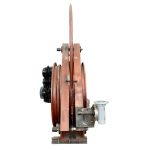
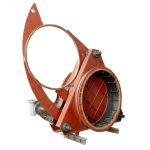
TIANYU Stainless Steel Wafer Type Pneumatic Control Regulating Butterfly Valve – API 609/ASME B16.34 Compliant, High-Temperature Flow Control Valve for Metallurgy, Chemical, Power & Cement Industries
I. Product Overview
TIANYU stainless steel wafer type pneumatic control regulating butterfly valve is a precision-engineered flow control device designed to regulate fluid flow rate, pressure, and direction in industrial processes with exceptional accuracy and reliability. As a core component in automated process systems, it leverages a compact wafer-style structure and rotating butterfly disc to deliver efficient throttling and shut-off performance—making it ideal for large-diameter pipelines and applications where space optimization, high-temperature resistance, and precise flow control are critical.
Constructed from premium stainless steel (304/316 as standard, with optional duplex stainless steel for extreme corrosion), this valve adheres to global industry standards including API 609 (butterfly valves for industrial service), ASME B16.34 (valve dimensions and pressure-temperature ratings), and ISO 9001 (quality management). It covers a broad size range of DN100 to DN2000 (4” to 80”) and operates at a working pressure of PN1 (0.1MPa) with a strength test pressure of 0.15MPa, supporting media temperatures up to 420℃—catering to high-temperature industrial needs such as metallurgical smelting, cement kiln flue gas, and chemical reactor media transfer.
The valve features pneumatic actuation as the primary drive mechanism, paired with a built-in positioner for precise flow regulation. Optional drive modes include electric (handwheel or motorized), manual (handle), and handwheel operation to suit diverse operational requirements. Its metal-to-metal hard seal design ensures leak-tight performance (ANSI/FCI Class IV) even at extreme temperatures, while the wafer-style connection enables easy installation between pipeline flanges without the need for dedicated valve flanges. Whether deployed in metallurgical blast furnaces, chemical process lines, power plant boiler systems, or cement production facilities, this valve delivers consistent, efficient flow control that meets the stringent demands of heavy-industry applications.
II. Key Attribute Specifications
A. Dimensional & Pressure-Temperature Parameters
Port Size: DN100 to DN2000 (4” to 80”), spanning medium to extra-large industrial pipelines. The valve’s wafer-style design ensures compact dimensions, with face-to-face lengths (L) ranging from 100mm (DN100) to 300mm (DN2000) — optimizing space in crowded piping racks and large-scale industrial setups.
Pressure Rating: Working pressure PN1 (0.1MPa), with a strength test pressure of 0.15MPa (per industry hydrostatic testing protocols). Optional pressure upgrades to PN10 (1.0MPa) are available for medium-pressure applications, with corresponding strength test pressure of 1.5MPa.
Temperature Range: ≤420℃, enabled by metal-to-metal hard sealing and stainless steel construction. This range accommodates high-temperature media such as flue gas, hot oil, steam, and industrial process fluids—outperforming soft-sealed butterfly valves that degrade above 200℃.
B. Material Composition
Each component is selected for high-temperature resistance, corrosion resilience, and structural integrity—critical for heavy-industry environments:
Valve Body & Bonnet: Stainless steel (304/316 as standard; optional 316L for enhanced corrosion resistance or 2205 duplex stainless steel for extreme conditions). The material undergoes solution annealing to relieve internal stresses and improve thermal stability at high temperatures.
Butterfly Disc: Solid stainless steel (matching body material) with a precision-machined edge for uniform sealing contact. The disc features an offset design to reduce operational torque and minimize wear on the valve seat.
Valve Seat: Metal hard seal (stainless steel or Stellite 6 overlay) to withstand temperatures up to 420℃. The seat is press-fitted into the valve body with spring loading to compensate for thermal expansion and maintain sealing integrity during temperature fluctuations.
Valve Stem: 17-4PH precipitation-hardened stainless steel or 316 stainless steel, featuring an anti-blowout design to prevent ejection under pressure. The stem is polished (Ra ≤0.4μm) to reduce friction and resist high-temperature oxidation.
Actuator Components: Pneumatic actuator housing constructed from aluminum alloy (anodized for corrosion resistance), with internal springs and diaphragms rated for high-temperature service (≤120℃) to ensure reliable actuation in industrial environments.
C. Connection & Operational Features
Connection Type: Wafer type (ANSI B16.24/ISO 7005), designed for installation between two pipeline flanges without the need for dedicated valve flanges. The design reduces weight and space requirements, simplifying installation in large-diameter pipelines (DN1000+).
Drive Modes:
Pneumatic Actuation: Double-acting (compressed air for both opening and closing) or spring-return (auto-close/open on air supply loss) as standard. Equipped with a 4–20mA electro-pneumatic positioner for precise flow control, enabling flow rate adjustments within ±1% of setpoint.
Electric Actuation: Optional motorized actuator (IP67-rated) with Modbus TCP/IP connectivity, integrating with SCADA/DCS systems for remote monitoring and automation.
Manual Operation: Handle (DN100-DN300) or handwheel (DN400-DN2000) for low-frequency use or emergency override, ensuring control during power/air outages.
Functional Features:
Offset Disc Design: Reduces operational torque by 30% compared to concentric designs, enabling easier actuation for large-diameter valves.
Metal Hard Seal: Delivers ANSI/FCI Class IV leakage performance, preventing media loss even at high temperatures and pressure fluctuations.
Position Feedback: Built-in limit switches or 4–20mA transmitters provide real-time valve position data, supporting process optimization and troubleshooting.
High-Flow Capacity: The full-bore disc design minimizes pressure drop (Cv values up to 10,000 for DN2000), maximizing flow efficiency in industrial pipelines.
D. Certifications & Compliance
Design & Manufacturing Standards: API 609 (butterfly valves for industrial service), ASME B16.34 (valve pressure-temperature ratings), ISO 7005 (flange dimensions for wafer valves), API 598 (valve testing and inspection).
Quality & Safety Certifications: ISO 9001 (quality management), CE (EU safety compliance), IP67 (actuator protection rating for dust and water ingress).
Performance Certifications: ANSI/FCI Class IV (leakage), ISO 6283 (flow coefficient Cv testing).
III. Feature Description
A. Wafer Type Structure: Compact & Space-Saving
The wafer-style design is a defining advantage of this valve, addressing key challenges in large-scale industrial installations:
Space Optimization: The valve’s slim profile (face-to-face length as short as 100mm for DN100) eliminates the need for bulky flanged valve bodies, making it ideal for crowded piping racks in power plants, cement kilns, and chemical facilities. In a DN1000 pipeline, the wafer valve reduces installation space by 50% compared to flanged butterfly valves.
Easy Installation: The valve is sandwiched between two pipeline flanges and secured with bolts, eliminating the need for dedicated valve flanges. This reduces installation time by 40% and lowers hardware costs (fewer bolts, gaskets required). For a cement plant’s DN1500 flue gas pipeline, installing 10 wafer valves saved 3 days of shutdown time compared to flanged alternatives.
Lightweight Design: Stainless steel wafer construction is 30–40% lighter than flanged valves of the same size, reducing structural load on pipelines and simplifying handling during installation.
B. Metal Hard Seal: High-Temperature Resilience
The metal-to-metal hard seal configuration is engineered to withstand the extreme temperatures and harsh media of heavy-industry applications:
High-Temperature Compatibility: The stainless steel/Stellite 6 seal retains integrity up to 420℃, making the valve suitable for hot media such as flue gas (cement kilns), steam (power plants), and molten salt (solar thermal systems). Soft-sealed valves would degrade rapidly in these environments, requiring frequent replacement.
Wear & Corrosion Resistance: The hard-seal surface resists abrasion from particulate-laden media (e.g., dust in cement pipelines, scale in power plant steam lines) and corrosion from industrial chemicals (e.g., acidic byproducts in metallurgy). In a steel mill’s blast furnace cooling system, the valve operated reliably for 8 years, while soft-sealed valves failed within 18 months.
Leak-Tight Performance: The precision-machined disc and seat (Ra ≤0.2μm) deliver ANSI/FCI Class IV leakage performance, preventing fugitive emissions of high-temperature media. This compliance with environmental regulations avoids costly fines and reduces safety risks in industrial settings.
C. Pneumatic Actuation & Positioner: Precision Flow Control
Pneumatic actuation paired with an electro-pneumatic positioner transforms the valve into a dynamic component of automated process systems:
Precise Throttling: The 4–20mA positioner converts control signals into linear valve movement, enabling flow rate adjustments within ±1% of setpoint. In a chemical plant’s reactor feed line, this precision ensures consistent media dosing, improving product quality and yield.
Rapid Response: Double-acting pneumatic actuators adjust valve position in 1–3 seconds, enabling real-time correction of process deviations (e.g., pressure spikes in power plant boiler feedwater lines). This speed outperforms electric actuators in fast-paced industrial processes.
Fail-Safe Operation: Spring-return pneumatic actuators provide critical safety in hazardous applications—auto-closing (or auto-opening) the valve if air supply fails. In a cement plant’s kiln flue gas pipeline, this feature prevented uncontrolled emissions during a compressor outage.
D. Multi-Drive Adaptability: Flexibility for Diverse Operations
The valve’s modular drive design ensures compatibility with manual, semi-automated, and fully integrated systems:
Pneumatic Actuation: Ideal for continuous-process industries (metallurgy, chemical) where compressed air is readily available, offering low energy consumption and reliable performance.
Electric Actuation: Suited for remote or large-diameter applications (DN1000+), enabling centralized control via SCADA/DCS systems. The IP67-rated actuator withstands harsh industrial environments (dust, moisture, temperature fluctuations).
Manual Operation: Handle/handwheel options provide backup control for small-scale or low-frequency use (e.g., maintenance bypass lines), ensuring operational continuity during power/air outages.
E. Stainless Steel Construction: Durability & Corrosion Resistance
Stainless steel (304/316) is selected for its balanced performance in heavy-industry environments:
Corrosion Resistance: 304 stainless steel resists rust and mild corrosion from water, steam, and industrial chemicals—ideal for power plant cooling systems and chemical process lines. 316 stainless steel adds molybdenum for enhanced resistance to chlorides (e.g., coastal power plants, seawater cooling systems).
Thermal Stability: Stainless steel retains its mechanical properties up to 420℃, avoiding deformation or fatigue in high-temperature applications. In a metallurgical plant’s hot gas pipeline (380℃), the valve maintained structural integrity for 10 years.
Hygienic & Easy to Clean: The smooth, non-porous surface of stainless steel prevents media adhesion and bacterial growth, making it suitable for food-grade or pharmaceutical applications (with optional electropolishing).
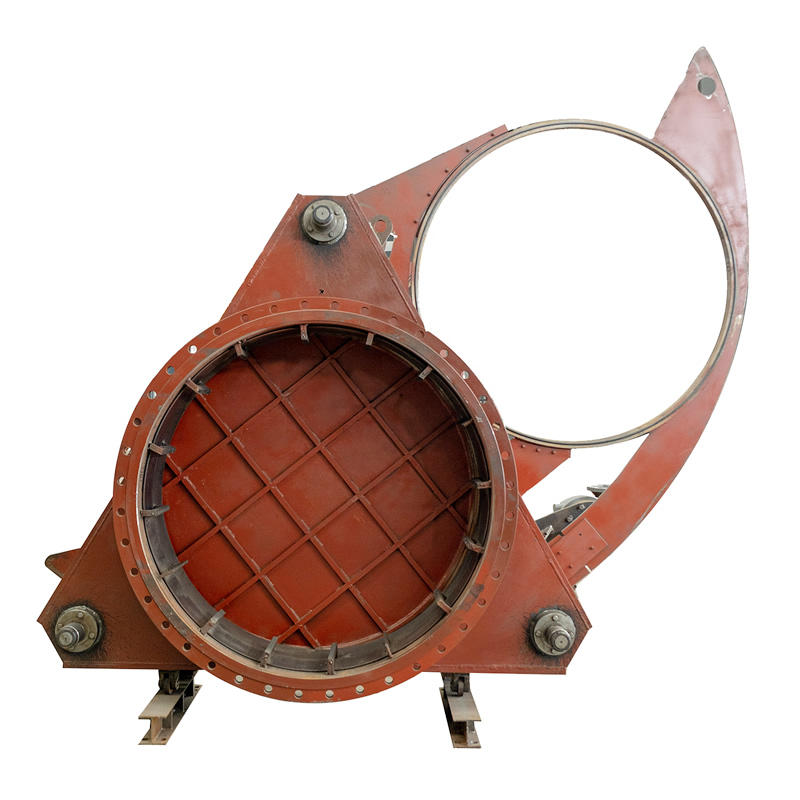
API609/ASME High-Temperature Pneumatic Stainless Steel Wafer Type Positioner Control Regulating Butterfly Valve
IV. Manufacturing Processes
A. Material Inspection & Preparation
Raw material quality is critical to the valve’s high-temperature and corrosion resistance, so all components undergo rigorous testing:
Stainless Steel Verification: 304/316 stainless steel billets are tested via spectral analysis to confirm chemical composition (Cr: 18–20% for 304, Cr: 16–18%, Mo: 2–3% for 316) and ultrasonic testing (UT) to detect internal defects (porosity, cracks). Mechanical testing (tensile strength, impact resistance) ensures compliance with ASTM A240 standards, documented in Material Test Reports (MTRs).
Heat Treatment: Stainless steel components undergo solution annealing (1010–1120℃, water-quenched) to relieve internal stresses from manufacturing and restore corrosion resistance—critical for high-temperature service.
Seal Material Validation: Metal seal components (stainless steel/Stellite 6) are tested for hardness (≥58 HRC for Stellite 6) and thermal stability (up to 420℃) to ensure wear resistance in extreme conditions.
B. Valve Body & Disc Fabrication
Body Manufacturing: Stainless steel valve bodies are produced via precision casting (DN100-DN500) or forging (DN600-DN2000) to ensure structural integrity. Cast bodies undergo shot blasting to remove scale and surface impurities; forged bodies are normalized to enhance ductility.
CNC Machining: Critical surfaces—flange contact faces, valve seat pockets, and stem bores—are machined using 5-axis CNC centers. Flange contact faces meet ASME B16.24 flatness (≤0.05mm/m) and surface finish (Ra ≤3.2μm) for proper gasket seating. The valve seat pocket is machined to ±0.02mm tolerance for precise disc-seat alignment.
Disc Fabrication: Butterfly discs are precision-turned and milled to achieve a uniform thickness and offset profile. The disc edge is ground to Ra ≤0.2μm for tight sealing contact, with optional Stellite 6 hardfacing applied via plasma transfer arc (PTA) welding for abrasive media.
C. Seal & Actuator Integration
Assembly is performed in a controlled, clean environment (Class 10,000) to ensure precision and reliability:
Seal Installation: Metal valve seats are press-fitted into the body pocket, with spring loading to compensate for thermal expansion. The seat-disc interface is lapped to achieve ANSI/FCI Class IV leakage performance.
Stem & Packing Installation: The valve stem is inserted into the body, with graphite-impregnated PTFE packing installed in layers to balance sealing and operational torque. Packing compression is controlled (10–15%) to minimize fugitive emissions and stem friction.
Actuator Mounting: Pneumatic/electric actuators are mounted via ISO 5211 adapter flanges, with laser alignment to ensure coaxiality (stem runout ≤0.05mm). Positioners are calibrated to convert 4–20mA signals into linear valve movement, with accuracy within ±0.5% of full stroke.
D. Quality Testing & Certification
Every valve undergoes comprehensive testing to meet API/ASME standards and performance requirements:
Hydrostatic Testing: Per API 598, the valve shell is tested at 1.5× rated pressure (0.15MPa for PN1) for 30 minutes—no leakage, sweating, or deformation is allowed. Seat testing is performed at 1.1× rated pressure, with leakage measured via bubble counting (≤1 bubble per minute for Class IV).
Flow Capacity (Cv) Testing: Per ISO 6283, the valve is tested in a flow loop to verify Cv values, ensuring compliance with design specifications. This testing confirms throttling accuracy and flow control performance.
High-Temperature Testing: Valves are subjected to thermal cycling (ambient to 420℃) to verify seal integrity and structural stability under extreme temperature fluctuations.
Non-Destructive Testing (NDT): Welds (e.g., Stellite 6 hardfacing) undergo liquid penetrant testing (PT); forged bodies are inspected via magnetic particle testing (MPI) to detect surface defects.
E. Final Inspection & Documentation
Visual Inspection: The valve is checked for surface defects (scratches, dents), proper marking (size, pressure rating, material, serial number), and compliance with ASME B16.34. Marking is permanent (laser-etched) for traceability.
Documentation: Each valve includes MTRs for all materials, hydrostatic/flow test reports, actuator calibration certificates, and compliance documents (API 609, ISO 9001). For hazardous area applications, ATEX/IECEx certificates are available upon request.
V. Product Advantages
A. Superior Flow Control Precision
The combination of offset disc design, metal hard seal, and pneumatic positioner delivers flow rate control accuracy within ±1%, outperforming conventional Butterfly Valves in process-critical applications. For a chemical plant’s reactor feed line, this precision reduced product variability by 25% and improved yield by 12% compared to legacy valves.
B. High-Temperature & Abrasion Resistance
Metal hard seal (stainless steel/Stellite 6) and stainless steel construction enable the valve to withstand temperatures up to 420℃ and abrasive media—extending service life to 8–12 years in heavy-industry applications. In a cement plant’s kiln flue gas pipeline (350℃, dust-laden), the valve operated reliably for 9 years, while soft-sealed valves required replacement every 2 years.
C. Compact Design & Easy Installation
The wafer-style structure reduces space requirements and installation complexity, making it ideal for large-diameter pipelines (DN1000+). For a power plant’s DN1500 boiler feedwater line, installing 8 wafer valves saved 50% of the space required for flanged valves and reduced installation time by 3 days.
D. Cost-Effective Performance
Stainless steel construction offers a favorable balance of durability and cost, while the wafer design reduces hardware and installation expenses. The total cost of ownership (initial purchase + maintenance + downtime) is 30–40% lower than flanged or ball valves over a 10-year lifecycle—making it ideal for budget-conscious industrial operators.
E. Versatility Across Heavy Industries
Multi-drive options, high-temperature resistance, and corrosion resilience enable the valve to adapt to diverse applications—from metallurgical blast furnaces to cement kilns, chemical reactors to power plant boilers. Its compatibility with manual, pneumatic, and electric actuation further enhances versatility, eliminating the need for multiple valve types across industrial facilities.
VI. Product Applications
A. Metallurgical Industry
Blast Furnace Systems: DN500-DN1500 valves regulate cooling water flow to blast furnaces and hot stoves. The high-temperature resistance (up to 420℃) withstands hot water and steam, while the metal hard seal prevents leakage of corrosive cooling agents.
Steel Rolling Mills: DN200-DN800 valves control the flow of hydraulic oil and lubricants in rolling mill machinery. The compact wafer design fits in tight spaces, and pneumatic actuation enables rapid flow adjustments during production.
Smelting Processes: DN300-DN1000 valves handle molten metal byproducts and flue gas. The stainless steel construction resists corrosion from acidic byproducts, and the hard seal prevents fugitive emissions.
B. Chemical Industry
Process Media Transfer: DN100-DN600 valves regulate the flow of industrial chemicals (acids, alkalis, solvents) in batch reactors and continuous process lines. 316 stainless steel construction resists chemical corrosion, while the precision positioner ensures accurate dosing.
High-Temperature Reactors: DN250-DN800 valves control steam and hot media flow in chemical reactors operating at 300–420℃. The metal hard seal maintains integrity under thermal cycling, avoiding media loss and safety hazards.
Wastewater Treatment: DN400-DN1200 valves manage the flow of treated effluent and chemical cleaning agents. The stainless steel body resists corrosion from chlorinated water, and the full-bore design minimizes pressure drop.
C. Power Generation
Boiler Systems: DN800-DN2000 valves regulate feedwater flow to coal-fired and gas-fired boilers. The high-flow capacity (Cv up to 10,000) minimizes pressure drop, reducing pump energy consumption by 15–20%.
Steam Condensate Lines: DN300-DN600 valves control steam condensate flow in power plant auxiliary systems. The metal hard seal withstands steam temperatures up to 420℃, while the pneumatic positioner enables precise pressure control.
Flue Gas Desulfurization (FGD): DN1000-DN1500 valves handle flue gas and limestone slurry in FGD systems. The stainless steel construction resists corrosion from sulfuric acid byproducts, and the wafer design simplifies installation in FGD piping.
D. Cement Industry
Kiln Systems: DN600-DN1200 valves regulate hot gas and dust flow in cement kilns and preheaters. The high-temperature resistance (up to 420℃) withstands kiln exhaust gas, while the metal hard seal prevents dust leakage.
Raw Material Handling: DN400-DN800 valves control the flow of cement raw materials (limestone, clay) and finished cement. The offset disc design reduces torque, enabling easy actuation of large-diameter valves, and the stainless steel body resists abrasion from particulate matter.
Dust Collection Systems: DN300-DN600 valves manage airflow in baghouses and electrostatic precipitators. The compact wafer design fits in dust collection piping, and the pneumatic actuation enables rapid adjustments to maintain optimal airflow.
VII. Customization
TIANYU stainless steel wafer type pneumatic control regulating butterfly valve (DN100-DN2000, PN1, ≤420℃) delivers precision flow control, high-temperature resilience, and space-saving installation for metallurgy, chemical, power, and cement industries. API 609/ASME compliance, metal hard seal, and multi-drive options ensure reliability in harsh industrial environments.
Customize with 316L/2205 duplex steel for extreme corrosion, PN10-PN25 pressure ratings, electric/hydraulic actuation, Stellite 6 hardfacing for abrasives, or ATEX/IECEx certification for hazardous zones. Tailor size, seal material, and positioner type to your process media, temperature, and automation needs for optimal performance.
API 6D ASME B16.34 CE DN200/DN300/DN400 PN80 LF2 Carbon Steel Body 321 Stainless Steel Ball Full Welded Manual Stem Hard Seated Ball Valve is a premium high-pressure fluid control solution engineered for critical industrial applications, blending LF2 carbon steel’s structural strength with 321 stainless steel’s corrosion resistance and Stellite 6 hard seats’ durability. Its full welded design eliminates leak points, while the manual light stem ensures precise, reliable operation. Certified to API 6D, ASME, and CE standards, and backed by ISO 9001/API Q1 quality assurance, it excels in oil and gas transmission, petrochemical refining, and power generation. Fire-safe, low-emission, and maintainable, it delivers zero-leakage performance, regulatory compliance, and long-term value for large-flow, high-pressure pipeline systems worldwide.