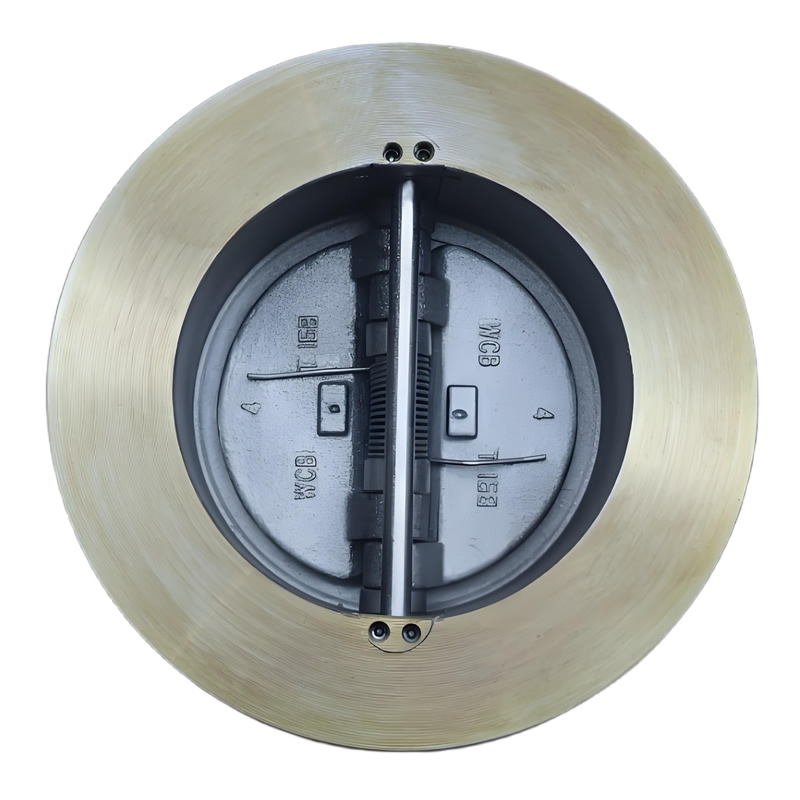
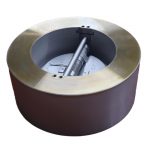
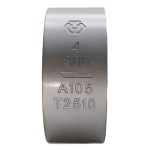
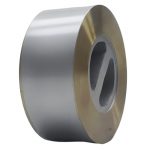
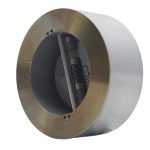
TIANYU 4” Class 300 A105 Dual-Disc Wafer Check Valve with Hard Seal: API/ASME Compliant, High-Pressure Flow Control Solution for Industrial Pipelines
I. Product Overview
TIANYU 4” Class 300 A105 dual-disc wafer check valve is a precision-engineered flow control device designed to prevent reverse flow in industrial pipelines, ensuring operational safety and process integrity. As a dual-disc (double-door) wafer check valve with hard (metal-to-metal) sealing, it combines compact design, low flow resistance, and robust sealing performance—critical for high-pressure applications in oil, gas, chemical, and power industries.
Constructed from A105 carbon steel (ASTM A105), a material renowned for its strength and cost-effectiveness in medium-to-high pressure services, this valve adheres to global standards including API 594, ASME B16.34, and ASME B16.5. Its wafer-style (lugless) flange connection allows for space-efficient installation between pipeline flanges, while the dual-disc design enables rapid, positive closure to prevent water hammer and 介质倒流 (media backflow). The hard-seal configuration (metal-to-metal sealing) ensures reliability in high-temperature, high-pressure, and abrasive media environments, making it a staple in process-critical systems where leakage or reverse flow could lead to equipment damage or safety hazards.
II. Key Attribute Specifications
A. Dimensional & Pressure-Temperature Parameters
Port Size: 4” (DN100), a widely adopted size in industrial pipelines that balances flow capacity and installation flexibility. Suitable for medium-scale process lines in refineries, chemical plants, and power generation facilities.
Pressure Rating: Class 300 (PN50), aligned with industrial medium-to-high pressure requirements. The valve undergoes hydrostatic testing at 1.5× rated pressure for the body and 1.1× rated pressure for the seal, ensuring structural integrity and leak-tight performance under operating conditions.
Temperature Range: -29℃ to 425℃, enabled by A105 carbon steel’s thermal stability and compatible hard-sealing materials (e.g., Stellite 6 for sealing faces). This range accommodates ambient media, moderately heated fluids, and high-temperature industrial applications like steam lines.
B. Material Composition
Valve Body & Discs: A105 carbon steel (ASTM A105), a forged carbon steel with tensile strength of 485–655MPa and yield strength ≥240MPa. It offers excellent machinability, weldability, and resistance to moderate corrosion, making it ideal for oil, gas, and chemical services.
Sealing Faces: Hardfaced with Stellite 6 (cobalt-chromium alloy) or equivalent, providing hardness ≥58 HRC, exceptional wear resistance, and chemical inertness to most industrial media.
Hinge Pin: Alloy steel (42CrMo or 17-4PH), precision-machined for strength and corrosion resistance, ensuring the dual discs pivot smoothly during operation.
Gaskets & Fasteners: Spiral-wound gaskets (stainless steel with graphite filler) for body-seal integrity; high-strength alloy steel fasteners (ASTM A193 B7) to maintain clamping force under pressure fluctuations.
C. Connection & Operational Features
Connection Type: Wafer (lugless) flange (ANSI B16.5), allowing direct installation between pipeline flanges. This design eliminates the need for separate valve flanges, saving space and reducing installation costs—ideal for retrofitting into existing systems.
Operation Mode: Automatic (non-actuated), relying on media pressure to open and gravity/spring force to close. The dual-disc design ensures rapid closure (≤1 second for full closure in typical flows), minimizing water hammer and reverse flow risks.
Safety Features: Hard-seal design ensures metal-to-metal sealing even in abrasive or high-temperature media; the dual-disc configuration distributes closing force evenly, reducing wear on sealing faces.
D. Certifications & Compliance
Industry Standards: API 594 (check valves), ASME B16.34 (valve dimensions), ASME B16.5 (pipe flanges), API 598 (valve testing).
Material Certifications: ASTM A105 (valve body), ASTM A193 (fasteners), ISO 9001 (quality management).
Regional Approvals: CE, ATEX (optional for hazardous environments), NACE MR0175 (optional for sour service).
III. Feature Description
A. Dual-Disc Design: Low Flow Resistance & Rapid Closure
The dual-disc (double-door) configuration is a hallmark of this valve, offering distinct advantages over single-disc or swing check valves:
Reduced Flow Resistance: The two discs open symmetrically, creating a near-full-bore flow path. This design reduces pressure drop by up to 30% compared to single-disc check valves, making it ideal for systems where energy efficiency is critical (e.g., pump discharge lines in water treatment plants).
Rapid, Positive Closure: When media flow reverses, the dual discs close simultaneously under gravity and reverse pressure, minimizing the time window for backflow. In a chemical reactor feed line, this rapid closure prevents catalyst-laden media from flowing back into upstream tanks, avoiding costly process contamination.
Balanced Closing Force: The dual-disc design distributes the closing force evenly across both sealing faces, reducing wear and extending seal life by 2–3 times compared to single-disc valves. In high-cycle applications (e.g., reciprocating pump discharge lines), this translates to lower maintenance costs and fewer unplanned shutdowns.
B. Hard-Seal Performance: Reliability in Harsh Environments
The metal-to-metal hard seal is engineered to withstand the toughest industrial conditions:
High-Temperature Tolerance: Stellite 6 sealing faces maintain integrity up to 425℃, making the valve suitable for steam lines in power plants or hot oil lines in refineries—applications where soft-sealed check valves would degrade rapidly.
Abrasive Media Resistance: The hardfaced sealing surfaces resist wear from particulate-laden media (e.g., slurry in mining operations or sand in natural gas pipelines). In a coal-fired power plant’s ash-handling system, the hard-seal valve operated reliably for 5 years, while a soft-sealed valve required monthly seal replacements.
Leak-Tight Sealing: The precision-ground metal-to-metal seal achieves ANSI/FCI Class IV leakage performance, ensuring minimal to no media loss. In a petroleum pipeline, this prevents fugitive emissions of hydrocarbons, supporting environmental compliance and safety.
C. Wafer Connection: Installation Flexibility & Space Efficiency
The wafer-style connection offers unmatched convenience for industrial installations:
Easy Installation: The valve is sandwiched between pipeline flanges and secured with bolts, eliminating the need for dedicated valve flanges. In a crowded refinery piping rack, this space-saving design allows installation where traditional flanged valves would not fit.
Retrofitting Simplicity: When upgrading an existing system, the wafer check valve can be installed without modifying pipeline flanges, reducing downtime and labor costs. For example, in a chemical plant’s retrofitting project, installing 20 wafer check valves saved 3 days of shutdown time compared to using flanged valves.
Lightweight & Cost-Effective: Wafer valves are lighter and require fewer materials than flanged valves, lowering shipping and installation costs. For large-scale projects (e.g., municipal water mains), this translates to significant cost savings across hundreds of valves.
D. A105 Carbon Steel Construction: Strength & Cost-Effectiveness
A105 carbon steel is the material of choice for medium-to-high pressure check valves, balancing performance and economics:
Mechanical Strength: A105’s tensile and yield strength exceed those of cast carbon steels (e.g., WCB), making it suitable for Class 300+ pressure ratings. In an offshore oil platform’s wellhead manifold, A105 valves withstand cyclic pressure loads without fatigue cracking.
Corrosion Resistance in Mild Environments: While not as corrosion-resistant as stainless steel, A105 performs well in non-corrosive or mildly corrosive media (e.g., oil, natural gas, and treated water). For applications with moderate corrosion risks, optional galvanizing or coating can enhance longevity.
Cost-Effectiveness: A105 is widely available and less expensive than stainless steel or alloy alternatives, making it ideal for large-scale projects where budget constraints exist without compromising performance.
A105 Verification: Raw material billets undergo spectral analysis to confirm chemical composition (C: 0.25–0.35%, Mn: 0.60–1.00%) and ultrasonic testing to detect internal defects (porosity, cracks). Mechanical testing (tensile, impact) ensures compliance with ASTM A105 standards.
Hardfacing Material Testing: Stellite 6 alloy is tested for chemical composition (Co: 50–60%, Cr: 25–30%) and hardness (≥58 HRC) via Rockwell testing, ensuring wear resistance meets industrial requirements.
B. Valve Body & Disc Fabrication
Forging/Casting: The valve body is produced via forging (preferred for A105 to ensure density) or sand casting. Forged bodies undergo normalizing (900–950℃, air-cooled) to relieve internal stresses and improve machinability.
Machining: CNC turning and milling centers shape the body, discs, and flange faces. The dual-disc sealing faces are precision-ground to a surface finish of Ra ≤0.8μm, ensuring uniform metal-to-metal contact. Flange dimensions are machined to ASME B16.5 standards, with flatness tolerance ≤0.05mm/m.
Hardfacing Application: Stellite 6 is applied to the disc sealing faces via plasma transfer arc (PTA) welding. The welded surface is then ground to restore flatness and achieve the required surface finish.
C. Assembly & Quality Testing
Component Assembly: The dual discs are mounted on the hinge pin, with precision bearings to ensure smooth pivoting. The body gasket and fasteners are installed, with torque applied per ASME B18.2.1 specifications to ensure uniform clamping.
Hydrostatic Testing: The valve undergoes shell testing at 1.5× Class 300 rated pressure (6.0MPa) and seat testing at 1.1× rated pressure (4.4MPa), with a 30-minute hold time. No leakage, sweating, or deformation is allowed.
Operational Testing: The valve is subjected to forward and reverse flow tests to verify opening pressure (≤1.5% of rated pressure for smooth operation) and closing tightness (ANSI/FCI Class IV).
Non-Destructive Testing (NDT): Critical welds (if any) undergo liquid penetrant testing (PT) to detect surface cracks; the hinge pin is inspected via magnetic particle testing (MPI) for structural integrity.
D. Final Inspection & Documentation
Visual Inspection: The valve is inspected for surface defects, proper marking (size, pressure rating, material, serial number), and compliance with ASME B16.34.
Documentation: Each valve is accompanied by a Material Test Report (MTR) for A105 steel, hydrostatic test report, and compliance certificates (API 594, ISO 9001).
V. Product Advantages
A. Operational Efficiency & Safety
The dual-disc design reduces flow resistance, lowering pump energy consumption by up to 30% in high-flow systems. Rapid closure prevents water hammer, a common cause of pipeline and equipment damage in industries like power generation and water treatment. In a municipal water pump station, this feature reduced maintenance costs from water hammer-related repairs by 40% annually.
B. Extended Service Life
Hard-seal (Stellite 6) and dual-disc design extend seal life by 2–3 times compared to soft-sealed or single-disc check valves. A105 steel’s mechanical strength ensures the valve withstands cyclic pressure loads without fatigue, making it suitable for 10,000+ operating cycles in refineries and chemical plants.
C. Installation & Maintenance Simplicity
Wafer connection eliminates the need for dedicated flanges, reducing installation time by 50% and saving space in crowded piping systems. The valve’s modular design allows for in-line maintenance (disc replacement without removing the body from the pipeline), minimizing downtime in continuous-process industries.
D. Cost-Effectiveness
A105 steel offers a favorable balance of performance and cost, making the valve an economical choice for large-scale projects. Its long service life and low maintenance requirements result in a total cost of ownership that is 30–40% lower than stainless steel alternatives in non-corrosive applications.
E. Versatility Across Industries
Suitable for oil, gas, chemical, power, water, and general industrial applications, the valve adapts to diverse media—from natural gas and steam to oil and treated water. This versatility eliminates the need for multiple valve types, streamlining inventory management and operational workflows.
VI. Product Applications
A. Oil & Gas Industry
Upstream Production: 4” Class 300 A105 check valves control flow in wellhead manifolds and production separators, preventing backflow of crude oil or natural gas into upstream equipment. The hard-seal design resists abrasion from sand and solids common in produced fluids.
Midstream Transmission: In pipeline pumping stations, the valve ensures flow moves in one direction, protecting pumps from reverse rotation and damage. Its low flow resistance maximizes pumping efficiency, reducing energy costs for long-distance oil/gas transmission.
B. Chemical Processing
Reactor Feed Lines: The dual-disc valve prevents corrosive or catalyst-laden chemicals from flowing back into feed tanks, avoiding batch contamination and costly process shutdowns. Hard-seal compatibility with aggressive media (e.g., acids, alkalis) makes it suitable for diverse chemical services.
Distillation Columns: Installed in overhead vapor lines, the valve prevents condensate from flowing back into the column, maintaining process temperature and pressure integrity.
C. Power Generation
Steam Turbine Auxiliaries: In boiler feedwater and condensate lines, the valve prevents steam or water from flowing back into pumps, protecting equipment from thermal shock and water hammer. The high-temperature tolerance (up to 425℃) suits steam service applications.
Cooling Water Systems: The valve controls flow in closed-loop cooling systems, preventing reverse flow that could disrupt heat exchange and damage chillers or heat exchangers.
D. Refining & Petrochemical
Product Pipelines: The valve ensures refined products (gasoline, diesel) flow unidirectionally in storage and distribution lines, preventing cross-contamination between product grades. Its hard-seal design resists degradation from hydrocarbon exposure.
Heater Treater Units: In crude oil heating systems, the valve prevents hot oil from flowing back into cold sections, maintaining process efficiency and preventing thermal stress on equipment.
E. Water & Wastewater Treatment
Municipal Water Mains: Installed in pump discharge lines, the valve prevents treated water from flowing back into reservoirs, ensuring consistent water pressure and protecting pumps from reverse rotation.
Wastewater Lift Stations: The valve controls flow in sewage pumping systems, preventing backflow of wastewater into lift stations during power outages or pump maintenance.
VII. Summary & Customization
TIANYU 4” Class 300 A105 dual-disc wafer check valve delivers low flow resistance, rapid closure, and hard-seal reliability for industrial medium-to-high pressure applications. Compliant with API/ASME standards, it combines A105 durability, dual-disc efficiency, and wafer connection convenience—ideal for oil, gas, chemical, and power sectors.
Customize with 304/316 stainless steel for corrosion resistance, Stellite 21/Inconel for extreme wear/corrosion, pressure ratings (150LB–600LB), or flanged/butt-weld connections. Tailor to your media (corrosive/abrasive), temperature, and installation needs for optimal performance.
API 6D ASME B16.34 CE DN200/DN300/DN400 PN80 LF2 Carbon Steel Body 321 Stainless Steel Ball Full Welded Manual Stem Hard Seated Ball Valve is a premium high-pressure fluid control solution engineered for critical industrial applications, blending LF2 carbon steel’s structural strength with 321 stainless steel’s corrosion resistance and Stellite 6 hard seats’ durability. Its full welded design eliminates leak points, while the manual light stem ensures precise, reliable operation. Certified to API 6D, ASME, and CE standards, and backed by ISO 9001/API Q1 quality assurance, it excels in oil and gas transmission, petrochemical refining, and power generation. Fire-safe, low-emission, and maintainable, it delivers zero-leakage performance, regulatory compliance, and long-term value for large-flow, high-pressure pipeline systems worldwide.