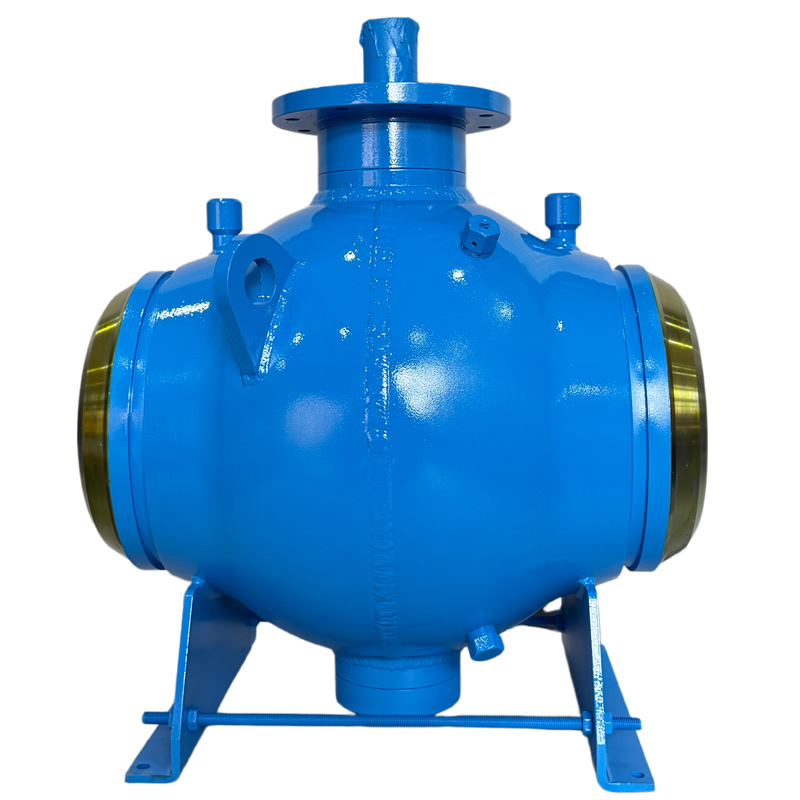
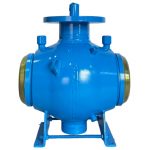
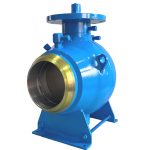
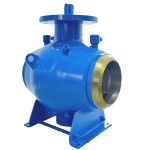
API 6D ASME B16.34 CE DN200/DN300/DN400 PN80 LF2 Carbon Steel Body 321 Stainless Steel Ball Full Welded Manual Stem Hard Seated Ball Valve
Product Attribute: Port Size: DN20~DN600 / 2”~24” Pressure Rating: PN16~PN160 / 150LB~2500LB Design Standards: API 6D, ASME B16.34, CE PED, GB/T 12224 Body Material: LF2, A105N, F22, F91 Ball Material: 321, 304, 316L, 2205 End Connections: Full Weld, Butt Weld, Hub Connection Actuation: Manual (Light Stem), Gear Operated, Pneumatic, Electric Sealing Type: Hard Seal (Metal-to-Metal) Test Standards: API 598, ASME B16.34, UT/RT Weld Inspection Compliance Certifications: ISO 9001, API Q1, CE PED, ISO 14001
API 6D ASME B16.34 CE DN200/DN300/DN400 PN80 LF2 Carbon Steel Body 321 Stainless Steel Ball Full Welded Manual Stem Hard Seated Ball Valve is a premium high-pressure fluid control solution engineered for critical industrial applications, blending LF2 carbon steel’s structural strength with 321 stainless steel’s corrosion resistance and Stellite 6 hard seats’ durability. Its full welded design eliminates leak points, while the manual light stem ensures precise, reliable operation. Certified to API 6D, ASME, and CE standards, and backed by ISO 9001/API Q1 quality assurance, it excels in oil and gas transmission, petrochemical refining, and power generation. Fire-safe, low-emission, and maintainable, it delivers zero-leakage performance, regulatory compliance, and long-term value for large-flow, high-pressure pipeline systems worldwide.
The TIANYU full welded ball valve is a high-performance fluid control component engineered for critical industrial pipeline systems, designed to deliver uncompromising isolation, pressure resistance, and long-term reliability in harsh operating environments. Available in nominal diameters of DN200, DN300, and DN400, this valve is optimized for large-flow pipeline applications, balancing robust structural integrity with efficient flow control capabilities. Rated for a pressure class of PN80, it operates reliably at a maximum working pressure of 8.0 MPa, making it ideal for high-pressure applications in oil and gas, petrochemical, and power generation industries where system integrity and leak prevention are non-negotiable.
The valve body is constructed from LF2 carbon steel (also known as A105N carbon steel), a premium material renowned for its exceptional mechanical strength, impact resistance, and high-temperature stability. Conforming to ASTM A105 standards, LF2 exhibits a minimum tensile strength of 485 MPa, a yield strength of 250 MPa, and excellent ductility, enabling it to withstand cyclic pressure fluctuations, thermal shocks, and mechanical stress in high-pressure pipeline systems. This material choice ensures the valve maintains structural integrity even in extreme operating conditions, including low temperatures (down to -29°C) and high-pressure environments, while its weldability facilitates the full welded connection design, eliminating potential leak points and enhancing overall system reliability.
Complementing the robust LF2 body, the valve ball is fabricated from 321 stainless steel (AISI 321), a titanium-stabilized austenitic stainless steel engineered for superior corrosion resistance and high-temperature performance. 321 stainless steel contains 17-19% chromium, 9-12% nickel, and titanium additions, which prevent carbide precipitation during welding and high-temperature service, eliminating the risk of intergranular corrosion. This material offers exceptional resistance to oxidation, pitting, and crevice corrosion, making it suitable for contact with crude oil, natural gas, steam, and corrosive process fluids. The ball is precision-machined to a spherical tolerance of ±0.005 mm and a surface finish of Ra ≤ 0.8 μm, ensuring optimal sealing performance with the hard seat assembly.
The valve features a full welded connection design, a critical advantage for high-pressure applications, as it eliminates the flanged joint’s potential leak points. The full welded construction creates a permanent, hermetic seal between the valve body and the pipeline, ensuring zero leakage even under extreme pressure and temperature conditions. This design also enhances the valve’s structural strength, making it suitable for buried pipeline systems and harsh outdoor environments where corrosion, vibration, and mechanical damage are common. The welded joints are inspected using non-destructive testing (NDT) methods to ensure weld integrity and compliance with industry standards.
Actuation is delivered by a manual light stem design, featuring a precision-machined stem that connects directly to the ball, enabling manual operation with minimal torque. The light stem design is compact and lightweight, while maintaining exceptional strength and rigidity to withstand high operating pressures. The stem is equipped with a positive-locking mechanism to prevent accidental operation, ensuring the valve remains in the desired position even under vibration or external forces. A visual position indicator is integrated into the stem assembly, providing clear, at-a-glance confirmation of the valve’s open/closed status, reducing the risk of operator error and enhancing operational safety.
The valve incorporates a hard-seated design, with seats fabricated from Stellite 6 overlay on 321 stainless steel, delivering a metal-to-metal seal that ensures reliable performance in high-temperature, high-pressure, and abrasive fluid applications. The hard seat assembly is engineered to withstand temperatures up to 427°C and maintain a tight seal compliant with ANSI/FCI Class IV, minimizing leakage and ensuring long-term service life even in harsh operating conditions. The metal-to-metal seal also provides fire-safe functionality, as it remains intact in the event of a fire, preventing catastrophic fluid release and minimizing fire propagation.
II. Design Features & Functional Advantages
The TIANYU DN200/DN300/DN400 PN80 full welded ball valve incorporates innovative design elements that elevate its performance, reliability, and operational efficiency beyond conventional ball valves, addressing the unique challenges of high-pressure, large-flow industrial applications.
At the core of its design excellence is the full welded connection construction, which eliminates the potential leak points associated with flanged connections. Unlike flanged valves, which rely on gaskets and bolts to maintain a seal, the full welded design creates a permanent, monolithic joint between the valve body and the pipeline, ensuring zero leakage even under extreme pressure (up to 8.0 MPa) and temperature fluctuations. This design also enhances the valve’s structural rigidity, making it resistant to vibration, mechanical shock, and external damage—critical for buried pipelines, offshore installations, and industrial environments with high levels of mechanical stress. The welded joints are precision-welded using TIG (Tungsten Inert Gas) welding techniques, ensuring consistent weld quality and integrity, with all welds inspected using ultrasonic testing (UT) and radiographic testing (RT) to detect any internal or surface defects.
API 6D ASME B16.34 CE DN200/DN300/DN400 PN80 LF2 Carbon Steel Body 321 Stainless Steel Ball Full Welded Manual Stem Hard Seated Ball Valve
The hard-seated design, featuring Stellite 6 overlay seats, delivers exceptional durability and sealing performance in harsh operating conditions. Stellite 6 is a cobalt-based alloy renowned for its high hardness (HRC 40-45), wear resistance, and high-temperature stability, making it ideal for hard seat applications. The seat overlay is applied using plasma spray or welding techniques, ensuring a uniform, high-quality bond with the 321 stainless steel seat base. The metal-to-metal seal between the 321 stainless steel ball and Stellite 6 seat maintains integrity even at high temperatures (up to 427°C) and high pressures, ensuring compliance with ANSI/FCI Class IV leakage standards. This hard-seated design also provides fire-safe functionality compliant with API 607 and API 6FA standards, as the metal-to-metal seal remains intact in the event of a fire, preventing the release of flammable or hazardous fluids and enhancing operational safety.
The 321 stainless steel ball is precision-machined to exceptional tolerances, ensuring optimal alignment with the hard seat assembly and smooth operation. The ball’s spherical surface is lapped and polished to a roughness of Ra ≤ 0.8 μm, reducing friction between the ball and seat, minimizing wear, and extending service life. The titanium stabilization of 321 stainless steel prevents carbide precipitation during welding and high-temperature service, eliminating the risk of intergranular corrosion—a common issue in stainless steel components used in high-temperature applications. This corrosion resistance ensures the ball maintains its structural integrity and sealing performance over extended service life, even in contact with corrosive process fluids.
The manual light stem design offers a balance of simplicity, reliability, and operational efficiency. The stem is precision-machined from 321 stainless steel, ensuring compatibility with the valve’s corrosion resistance requirements and providing exceptional strength and rigidity. The light stem design reduces the overall weight of the valve, making it easier to install and maintain, while the direct connection to the ball ensures responsive, precise operation with minimal torque. The stem is equipped with a multi-layer packing system, featuring graphite packing rings, to prevent fugitive emissions and ensure compliance with ISO 15848-1 standards for low-emission valves. The positive-locking mechanism on the stem prevents accidental operation, ensuring the valve remains in the desired position, while the visual position indicator provides clear feedback to operators, reducing the risk of human error.
The valve body’s internal geometry is optimized for minimal pressure drop and maximum flow efficiency. The full-bore flow path ensures unobstructed fluid flow, reducing turbulence and energy consumption in large-flow pipeline systems. The smooth internal surfaces of the LF2 body prevent debris accumulation, reducing the risk of clogging and ensuring consistent performance over time. The body’s robust construction, combined with the full welded design, enables it to withstand external loads, including soil pressure for buried pipelines and wind loads for above-ground installations, making it suitable for a wide range of installation environments.
Another key design feature is the valve’s maintainability, despite its full welded construction. The valve is engineered with a removable bonnet, allowing for easy access to internal components (ball, seats, stem) for maintenance, inspection, and replacement without removing the entire valve from the pipeline. This design reduces downtime and maintenance costs, making it an ideal choice for critical pipeline systems where operational continuity is essential. The stem packing is also accessible from the bonnet, enabling easy replacement of packing rings without disassembling the valve, further enhancing maintainability.
III. Manufacturing Process & Quality Assurance
The production of the TIANYU DN200/DN300/DN400 PN80 full welded ball valve adheres to the most rigorous manufacturing processes and quality control protocols in the industry, aligning with API 6D, ASME B16.34, and ISO 9001:2015 standards to ensure every valve meets or exceeds design specifications and global industry requirements. From raw material procurement to final factory testing, every step of the manufacturing process is controlled and documented, with a focus on precision, consistency, and reliability—critical for a valve designed for high-pressure, large-flow industrial applications.
Raw Material Procurement & Inspection
Raw materials for the valve—LF2 carbon steel billets and 321 stainless steel billets—are sourced exclusively from approved, ISO 9001-certified suppliers with a proven track record of producing high-quality materials for the oil and gas and petrochemical industries. All raw materials are accompanied by a mill test certificate (MTC) that verifies chemical composition, mechanical properties, and compliance with ASTM A105 (for LF2) and ASTM A240 (for 321 stainless steel). Upon receipt, the raw materials undergo rigorous incoming inspection in TIANYU’s state-of-the-art quality control laboratory, including:
Chemical composition analysis via optical emission spectroscopy (OES) to verify compliance with ASTM standards;
Mechanical property testing (tensile strength, yield strength, elongation, hardness) via universal testing machine (UTM) and Brinell hardness tester;
Non-destructive testing (NDT) including ultrasonic testing (UT) and magnetic particle testing (MPT) to detect internal and surface defects;
For 321 stainless steel, additional testing to verify titanium content and resistance to intergranular corrosion.
Any raw material that fails to meet the specified requirements is rejected and returned to the supplier, ensuring only high-quality materials are used in production.
Body & Ball Fabrication
The valve body is manufactured using a hot-forging process, where LF2 carbon steel billets are heated to high temperatures (1100-1200°C) and shaped under extreme pressure using precision dies. This process enhances material density, eliminates internal defects such as porosity or inclusions, and improves mechanical properties, including tensile strength and impact resistance. After forging, the body undergoes heat treatment, including normalization and tempering, to refine its microstructure and relieve internal stresses, ensuring consistent performance across the component. The body is then machined to precise dimensions using CNC lathes and milling machines, with critical surfaces such as the ball cavity, stem bore, and weld ends finished to a roughness of Ra ≤ 3.2 μm to ensure proper assembly and welding.
The 321 stainless steel ball is manufactured using a precision forging process, followed by CNC turning and milling to achieve the required spherical shape and dimensional accuracy. The ball is then lapped and polished to a surface finish of Ra ≤ 0.8 μm, ensuring optimal sealing performance with the hard seat assembly. After machining, the ball undergoes solution annealing heat treatment (1040-1100°C) followed by rapid quenching, which refines the microstructure and enhances corrosion resistance.
Seat & Stem Production
The hard seats are fabricated from 321 stainless steel bases with Stellite 6 overlay. The Stellite 6 overlay is applied using plasma spray welding, a process that ensures a uniform, high-quality bond with the base material. The overlay is then machined to precise dimensions to ensure a tight seal with the 321 stainless steel ball. The stem is machined from 321 stainless steel billets using CNC lathes, with critical surfaces such as the sealing area and thread finished to tight tolerances to ensure compatibility with the packing system and ball connection.
Welding & Assembly
The full welded connections are performed by certified welders using TIG welding techniques, which provide superior weld quality and minimal heat-affected zones. The welding process is controlled using automated welding equipment to ensure consistency and precision, with weld parameters (current, voltage, travel speed) monitored and documented in real time. After welding, the welds undergo non-destructive testing, including ultrasonic testing (UT) to detect internal defects and radiographic testing (RT) to verify weld penetration and integrity.
Valve assembly is performed in a controlled, clean environment to prevent contamination of internal components, with skilled technicians following detailed, step-by-step assembly work instructions. The assembly process involves:
Installing the hard seat assemblies into the valve body cavity;
Inserting the 321 stainless steel ball into the body, ensuring proper alignment with the seats;
Installing the stem through the bonnet packing and connecting it to the ball via a square drive or keyed connection;
Mounting the bonnet to the body and torquing the bonnet bolts to the specified value using a calibrated torque wrench;
Installing the stem packing system, including graphite packing rings and a packing gland, to ensure a leak-proof seal;
Attaching the manual light stem and position indicator, and calibrating the position indicator to align with the ball’s open/closed status;
Lubricating all moving parts with a high-performance, high-temperature grease compatible with the valve’s materials.
During assembly, critical dimensions and clearances are verified using precision measurement tools, including coordinate measuring machines (CMMs), dial indicators, and calipers, to ensure compliance with design specifications.
Factory Testing & Certification
Before leaving the factory, every TIANYU DN200/DN300/DN400 PN80 full welded ball valve undergoes a comprehensive series of performance tests in accordance with API 6D, API 598, and ISO 5208 standards, with all test results documented in a factory test certificate (FTC) provided with each valve. The testing program includes:
Shell Test: A hydrostatic pressure test conducted at 1.5 times the rated PN80 pressure (12.0 MPa) for a minimum of 30 seconds, to verify the body’s structural integrity and no visible leakage or deformation;
Seat Test (Hydrostatic): A hydrostatic pressure test of the seat assemblies at 1.1 times the rated pressure for both upstream and downstream flow directions, to verify compliance with ANSI/FCI Class IV leakage standards;
Seat Test (Pneumatic): A pneumatic pressure test at 0.69 MPa (100 PSI) to verify the metal-to-metal seal’s integrity in low-pressure applications;
Operational Test: A functional test of the manual light stem to verify smooth opening and closing, accurate position indication, and positive locking;
Fugitive Emission Test: A test of the stem packing system in accordance with ISO 15848-1, to verify emissions are below the specified limit (≤ 100 ppm for Class A);
Fire-Safe Test: A third-party fire test in accordance with API 607 and API 6FA to verify the metal-to-metal seal maintains integrity after fire exposure;
Weld Integrity Test: A re-test of the welded joints using UT and RT to confirm no post-assembly defects.
Only valves that pass all tests are certified and released for shipment, with the FTC including all test results, material certifications, and compliance standards for full traceability.
Quality Management System
TIANYU maintains a certified quality management system (QMS) compliant with ISO 9001:2015 and API Q1, the oil and gas industry’s premier quality standard for manufacturing facilities. The QMS covers all aspects of the manufacturing process, from raw material procurement to final delivery, with a focus on continuous improvement, customer satisfaction, and compliance with global industry standards. The QMS is supported by a team of experienced quality assurance (QA) engineers who conduct regular internal audits, process reviews, and supplier audits to ensure compliance, and a document control system that maintains all manufacturing, testing, and certification records for a minimum of 7 years—meeting the traceability requirements of the oil and gas industry.
IV. Application Scenarios & Industry Relevance
The TIANYU DN200/DN300/DN400 PN80 full welded ball valve is a versatile, high-performance fluid control solution designed to meet the demands of a wide range of industrial applications, with a particular focus on oil and gas (upstream, midstream, downstream), petrochemical, power generation, and pipeline infrastructure—where high-pressure reliability, zero leakage, and durability are critical. Its robust design, premium materials, and compliance with global industry standards make it a trusted choice for critical pipeline systems where operational safety, environmental protection, and minimal downtime are non-negotiable.
Oil & Gas Midstream (Transmission & Storage)
In the midstream oil and gas sector, including natural gas pipelines, crude oil transmission lines, and storage terminals, the valve is used for mainline isolation, block valve stations, and storage tank inlet/outlet control. The DN200/DN300/DN400 sizes are ideal for large-flow transmission pipelines, while the PN80 pressure rating handles the high operating pressures common in midstream applications (up to 8.0 MPa). The full welded design eliminates leak points, ensuring zero product loss and environmental protection—critical for cross-country pipeline systems. The hard-seated, fire-safe design enhances safety in block valve stations and storage terminals, while the 321 stainless steel ball’s corrosion resistance ensures compatibility with crude oil, natural gas, and produced water. The manual light stem design enables easy on-site operation, while the visual position indicator reduces the risk of operator error, making it suitable for remote pipeline locations.
Oil & Gas Downstream (Refining & Petrochemical)
In oil and gas downstream applications, including petroleum refineries and petrochemical plants, the valve is used for isolation and control of high-pressure process lines, reactor feed lines, and product transfer lines. The PN80 pressure rating handles the high pressures of refinery and petrochemical processing, while the LF2 body and 321 stainless steel ball resist corrosion from hydrocarbons, acids, and other process fluids. The hard-seated design withstands high temperatures (up to 427°C) common in refining processes, ensuring reliable sealing performance even in extreme conditions. The full welded design eliminates potential leak points, preventing the release of hazardous fluids and enhancing workplace safety. The valve’s maintainable design, with a removable bonnet, allows for easy maintenance and component replacement, minimizing downtime for critical process systems where production interruptions are costly.
Power Generation
In power generation facilities, including thermal power plants (coal, natural gas), combined cycle power plants, and nuclear power plants (non-nuclear service), the valve is used for isolation and control of high-pressure steam lines, feedwater systems, and fuel gas lines. The DN200/DN300/DN400 sizes are ideal for large-flow steam and feedwater systems, while the PN80 pressure rating handles the high operating pressures of these systems. The LF2 body’s high-temperature stability and 321 stainless steel ball’s corrosion resistance ensure compatibility with steam and feedwater, while the hard-seated design maintains a tight seal even at high temperatures. The full welded design eliminates leak points, preventing steam loss and ensuring efficient plant operation. The manual light stem design enables precise control, while the fire-safe feature enhances safety in boiler and turbine areas.
Pipeline Infrastructure (Buried & Offshore)
In buried pipeline systems, including water distribution, natural gas distribution, and industrial pipeline networks, the valve is used for isolation and control of large-flow lines. The full welded design provides exceptional resistance to soil pressure, corrosion, and mechanical damage, making it suitable for buried installations. The LF2 body’s corrosion resistance ensures long-term performance in underground environments, while the hard-seated design prevents leakage even in the presence of debris or sediment. The manual light stem design is accessible from above ground, enabling easy operation and maintenance without excavating the entire valve. In offshore applications, including FPSOs (Floating Production Storage and Offloading units) and offshore platforms, the valve’s robust construction and corrosion resistance make it suitable for harsh marine environments, with the full welded design eliminating leak points in high-vibration offshore conditions.
Chemical Processing & Specialty Chemicals
In chemical processing and specialty chemical manufacturing, the valve is used for isolation and control of high-pressure process lines handling corrosive and hazardous chemicals, including acids, bases, and solvents. The 321 stainless steel ball and Stellite 6 hard seats offer exceptional chemical resistance, while the LF2 body provides structural strength and durability. The full welded design eliminates potential leak points, preventing the release of toxic or flammable fluids and enhancing environmental protection. The hard-seated design withstands high temperatures and abrasive fluids, ensuring reliable performance in continuous process systems. The valve’s compliance with API and ASME standards ensures interoperability with standard industrial pipeline systems, making it a versatile choice for chemical processing applications.
The TIANYU DN200/DN300/DN400 PN80 full welded ball valve is a premium high-pressure fluid control solution engineered for critical industrial applications, blending LF2 carbon steel’s structural strength with 321 stainless steel’s corrosion resistance and Stellite 6 hard seats’ durability. Its full welded design eliminates leak points, while the manual light stem ensures precise, reliable operation. Certified to API 6D, ASME, and CE standards, and backed by ISO 9001/API Q1 quality assurance, it excels in oil and gas transmission, petrochemical refining, and power generation. Fire-safe, low-emission, and maintainable, it delivers zero-leakage performance, regulatory compliance, and long-term value for large-flow, high-pressure pipeline systems worldwide.