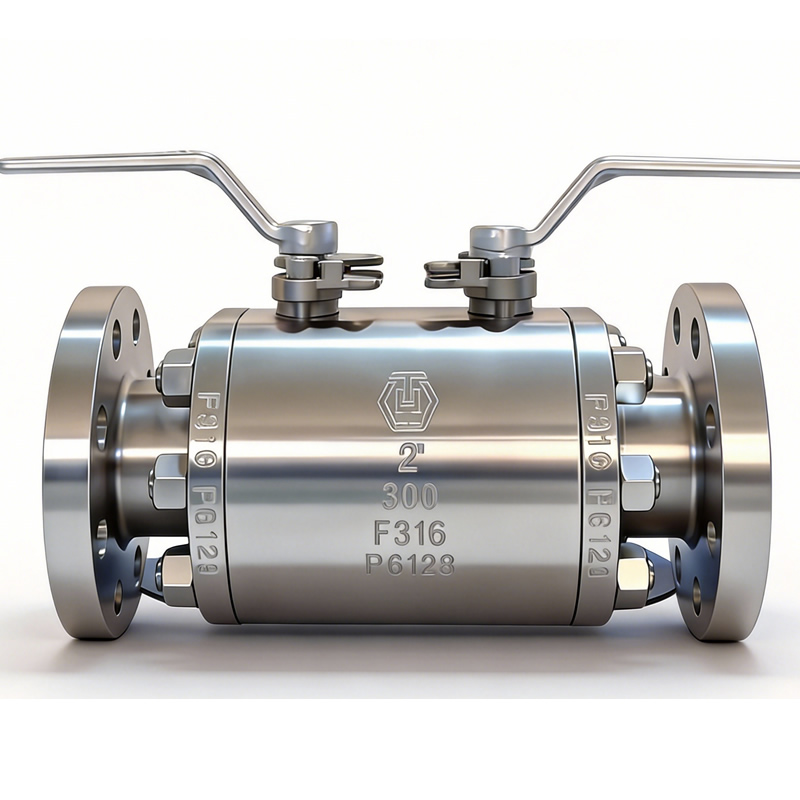
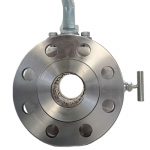
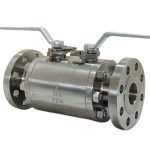
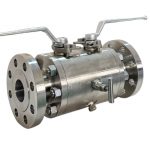
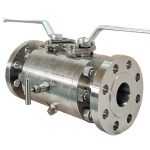
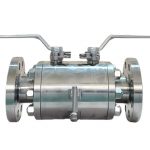
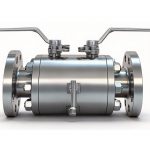
API 609 ASME CE DN50 300LB F316 Stainless Steel Body PEEK Soft Seated Flanged Connection Manual Operated DBB Double Block and Bleed Ball Valve
Product Attribute: Port Size: DN15~DN200 Pressure Rating: 150LB~2500LB Design Standards: API 609, ASME B16.34, CE PED, ISO 5208 Body Material: F304, F316, WCB, Duplex Stainless Steel Seat Material: PEEK, PTFE, EPDM, Stellite Overlay End Connections: Flanged, Threaded, Butt Weld Actuation: Manual Handle, Pneumatic, Electric Sealing Type: Soft Seal, Metal Seal (Optional) Design Type: DBB (Double Block and Bleed), Floating Ball Manufacturing Range: Compliant with Chinese industrial valve standards, covering diverse sizes, pressures and material configurations
The TIANYU DBB double block and bleed ball valve represents a specialized solution for critical fluid isolation and pressure management in process industries, engineered to deliver uncompromising safety and reliability in high-demand applications. Designed with a nominal diameter of DN50, this valve is optimized for medium-flow pipeline systems where precise isolation and controlled bleed-down are essential to maintenance efficiency and operational safety. Rated for a pressure class of 300LB, it operates reliably at pressures up to 5.17 MPa, making it ideal for oil and gas, chemical processing, and pharmaceutical applications where system integrity and leak prevention are non-negotiable.
The valve body is constructed from F316 (AISI 316) stainless steel, a premium alloy selected for its exceptional corrosion resistance, high-temperature stability, and mechanical strength. F316 contains 16-18.5% chromium, 10-14% nickel, and 2-3% molybdenum, forming a passive oxide layer that protects against oxidation, pitting, and crevice corrosion in aggressive environments, including exposure to saltwater, acids, and organic solvents. This material ensures the valve maintains structural integrity and performance over decades of service, even in harsh offshore or chemical processing conditions.
Complementing the robust body, the valve seat is fabricated from PEEK (Polyether Ether Ketone), a high-performance thermoplastic renowned for its exceptional chemical resistance, thermal stability, and low friction properties. PEEK retains its mechanical strength at temperatures up to 260°C, resists degradation from most acids, solvents, and hydrocarbons, and exhibits self-lubricating characteristics that reduce wear and ensure consistent sealing performance. The soft-seated design achieves bubble-tight shutoff, minimizing leakage to levels compliant with ANSI/FCI Class VI standards, which is critical for preventing product loss, environmental contamination, and safety hazards.
For seamless integration into pipeline systems, the valve features a flanged connection design compliant with ASME B16.5 standards. Flanged connections provide a secure, leak-proof interface, allowing for easy assembly and disassembly during maintenance or retrofitting. The standardized flange dimensions and bolt patterns ensure interoperability with existing infrastructure, reducing installation time and costs while ensuring compatibility with global piping systems.
Actuation is delivered by a precision-engineered manual handle, designed to provide intuitive, responsive control over valve positioning. The handle incorporates a positive-locking mechanism to prevent accidental operation, ensuring the valve remains in the desired position even under vibration or external forces. The ergonomic design reduces operator fatigue during frequent adjustments, while the compact footprint ensures compatibility with space-constrained installations.
II. Design Features & Functional Advantages
The TIANYU DN50 300LB DBB ball valve incorporates innovative design elements that elevate its performance, safety, and operational efficiency beyond conventional isolation valves.
At the core of its design is the double block and bleed (DBB) functionality, which enables simultaneous isolation of fluid flow from both upstream and downstream sources, while providing a dedicated bleed port to vent trapped pressure or fluid between the two isolation points. This eliminates the need for multiple valves to achieve isolation and bleed-down, reducing system complexity, installation costs, and potential leak points. The DBB design is critical for maintenance scenarios, allowing technicians to safely depressurize and drain sections of the pipeline without risk of cross-contamination or fluid release, enhancing workplace safety and compliance with industry regulations.
The soft-seated design, utilizing PEEK seats, ensures bubble-tight shutoff across the entire operating range. The seats are engineered to conform to the ball surface under pressure, creating a tight seal that minimizes leakage even at low pressures or with viscous fluids. PEEK’s self-lubricating properties reduce friction between the ball and seat, extending service life and ensuring smooth operation over thousands of cycles. Additionally, the seats are replaceable, allowing for easy maintenance and extending the valve’s service life without full replacement.
The valve body is manufactured using a hot-forging process, which enhances material density and mechanical properties, ensuring a uniform grain structure and resistance to deformation under pressure. The forging process also eliminates internal defects, such as porosity or inclusions, that could compromise structural integrity. The body’s streamlined internal geometry minimizes pressure drop and turbulence, optimizing flow efficiency and reducing energy consumption in high-throughput systems.
The manual handle incorporates a visual position indicator, providing clear, at-a-glance confirmation of the valve’s open/closed status. This reduces the risk of operator error and enhances safety by ensuring personnel can quickly verify valve position during maintenance or emergency response. The handle also features a compact, low-profile design that minimizes space requirements, making it suitable for installation in confined areas or on skid-mounted systems.
To address the risk of fire, a critical concern in oil and gas applications, the valve incorporates a fire-safe design compliant with API 607 and API 6FA standards. In the event of a fire, the PEEK seats may degrade, but the valve’s metal-to-metal backup seal ensures continued isolation of fluid flow, preventing catastrophic leakage and minimizing fire propagation. This design provides an additional layer of safety, ensuring the valve maintains integrity even under extreme thermal conditions.
The valve also features a bleed port with a threaded connection, allowing for the installation of a pressure gauge, relief valve, or drain line. This enables continuous monitoring of trapped pressure between the two isolation points, as well as controlled bleed-down of fluid during maintenance. The bleed port is positioned to ensure complete drainage of trapped fluid, reducing the risk of contamination or corrosion in the valve body.
III. Manufacturing Process & Quality Assurance
The production of the TIANYU DN50 300LB DBB ball valve adheres to rigorous manufacturing processes and quality control protocols, ensuring each unit meets or exceeds industry standards and customer expectations.
API 609 ASME CE DN50 300LB F316 Stainless Steel Body PEEK Soft Seated Flanged Connection Manual Operated DBB Double Block and Bleed Ball Valve
Body Fabrication
The valve body is manufactured using a hot-forging process, where F316 stainless steel billets are heated to high temperatures and shaped under extreme pressure using precision dies. This process enhances material density, eliminates internal defects, and improves mechanical properties, including tensile strength and impact resistance. After forging, the body undergoes heat treatment, including solution annealing and quenching, to refine its microstructure and relieve internal stresses, ensuring consistent performance across the component.
Seat Production
The PEEK valve seats are fabricated from high-grade PEEK resin, which is molded and machined to precise dimensions using CNC lathes and milling machines. The sealing surface is polished to a roughness of Ra ≤ 0.8 μm, ensuring a tight, leak-proof seal with the ball surface. Each seat undergoes dimensional inspection and material testing to verify compliance with chemical resistance and thermal stability specifications.
Assembly & Testing
The valve assembly process is conducted in a controlled, clean environment to prevent contamination and ensure precision alignment of components. Skilled technicians assemble the body, ball, seats, stem, and handle, following detailed work instructions and quality checklists. Critical assembly steps, such as stem alignment and seat adjustment, are verified using precision measurement tools, including coordinate measuring machines (CMMs) and dial indicators, to ensure compliance with design specifications.
Before leaving the factory, each valve undergoes a comprehensive series of performance tests in accordance with API 598 and API 609 standards:
Shell Test: A hydrostatic pressure test conducted at 1.5 times the rated pressure (7.76 MPa for 300LB valves) to verify the body’s structural integrity and resistance to leakage.
Seat Test: A pneumatic pressure test conducted at 1.1 times the rated pressure to ensure the seats provide a bubble-tight seal under both forward and reverse flow conditions.
Operational Test: A functional test of the manual handle to verify smooth opening, closing, and locking functionality, with accurate position indication.
Fire Test: A specialized test conducted in accordance with API 607 and API 6FA to evaluate the valve’s performance under simulated fire conditions, ensuring the metal-to-metal backup seal maintains isolation.
Bleed Function Test: A test to verify the bleed port’s ability to vent trapped pressure and fluid between the two isolation points, ensuring complete drainage and pressure relief.
Quality Management
TIANYU maintains an ISO 9001:2015 certified quality management system, governing all aspects of manufacturing from raw material procurement to final delivery. Raw materials, including F316 stainless steel and PEEK resin, are sourced from approved suppliers and undergo rigorous incoming inspection, including chemical analysis and mechanical testing, to ensure compliance with material specifications.
The company’s quality control laboratory is equipped with advanced testing equipment, including spectrometers, hardness testers, and pressure testing rigs, enabling real-time monitoring of material properties and product performance. A team of experienced quality assurance engineers conducts regular audits, process reviews, and non-destructive testing to identify and address potential issues before they impact product quality.
IV. Application Scenarios & Industry Relevance
The TIANYU DN50 300LB DBB ball valve is a versatile solution designed to meet the demands of a wide range of industrial applications where precise isolation, pressure management, and safety are critical.
Oil & Gas Production & Transmission
In oil and gas applications, including upstream production, midstream transmission, and downstream refining, the valve is used to isolate critical equipment, such as pumps, compressors, and meters, for maintenance and repair. The DBB functionality ensures safe depressurization of pipeline sections, reducing the risk of hydrocarbon release and environmental contamination. The F316 stainless steel body resists corrosion from sour gas and saltwater, making it suitable for offshore and onshore installations, while the fire-safe design enhances safety in high-risk environments.
Chemical Processing
In chemical processing plants, the valve is used to isolate process lines, reactors, and storage tanks, ensuring safe handling of corrosive or hazardous fluids. The PEEK seats resist degradation from acids, solvents, and hydrocarbons, maintaining reliable sealing performance even with aggressive chemicals. The DBB design allows for controlled bleed-down of trapped fluid, preventing cross-contamination between process streams and ensuring compliance with environmental regulations.
Pharmaceutical & Biotechnology
In pharmaceutical and biotechnology applications, the valve is used to isolate production equipment, such as bioreactors, filtration systems, and transfer lines, ensuring sterile operation and preventing product contamination. The F316 stainless steel body is compatible with clean-in-place (CIP) and steam-in-place (SIP) processes, while the PEEK seats provide bubble-tight shutoff to maintain sterile conditions. The manual handle allows for precise, hygienic operation, reducing the risk of human error in critical production steps.
Water Treatment & Desalination
In water treatment and desalination plants, the valve is used to isolate membrane systems, pumps, and chemical feed lines, ensuring efficient maintenance and preventing contamination of treated water. The F316 stainless steel body resists corrosion from chlorinated water and seawater, while the PEEK seats provide reliable sealing performance in high-flow, low-pressure applications. The DBB design allows for safe depressurization of membrane systems, reducing the risk of damage during maintenance.
Offshore & Marine Applications
In offshore and marine applications, including FPSOs (Floating Production Storage and Offloading units) and offshore platforms, the valve is used to isolate critical systems, such as firewater lines, fuel transfer systems, and hydraulic control lines. The F316 stainless steel body resists corrosion from saltwater and marine atmospheres, while the fire-safe design enhances safety in high-risk environments. The compact, low-profile handle is suitable for installation in space-constrained offshore modules.
V. Compliance & Certification
The TIANYU DN50 300LB DBB ball valve is designed and manufactured in compliance with a comprehensive set of international and industry standards, ensuring safety, performance, and interoperability with global pipeline systems.
International Standards
API 609: Specifies design, manufacturing, testing, and inspection requirements for ball valves, including DBB configurations, ensuring structural integrity and performance in critical applications.
API 598: Outlines pressure testing and inspection procedures for industrial valves, verifying leakage and performance criteria.
API 607 / API 6FA: Specifies fire-safe design and testing requirements for valves, ensuring performance under simulated fire conditions.
ASME B16.34: Specifies design, manufacturing, and testing requirements for valves for pressure piping applications, ensuring compliance with global piping standards.
ASME B16.5: Specifies dimensional requirements for flanged connections, ensuring compatibility with ANSI/ASME pipeline systems.
CE Marking: Confirms compliance with the European Union’s Pressure Equipment Directive (PED) 2014/68/EU, enabling marketing and use within the European Economic Area (EEA).
ANSI/FCI Class VI: Specifies leakage requirements for control valves, ensuring bubble-tight shutoff in critical applications.
Quality Certifications
TIANYU holds ISO 9001:2015 certification for its quality management system, demonstrating a commitment to consistent quality and continuous improvement. The company also maintains ISO 14001 (environmental management) and ISO 45001 (occupational health and safety) certifications, ensuring sustainable and safe manufacturing processes.
These certifications and compliance with international standards provide customers with confidence in the valve’s performance, reliability, and safety, making it a trusted choice for critical infrastructure projects worldwide.
API 6D ASME B16.34 CE DN200/DN300/DN400 PN80 LF2 Carbon Steel Body 321 Stainless Steel Ball Full Welded Manual Stem Hard Seated Ball Valve is a premium high-pressure fluid control solution engineered for critical industrial applications, blending LF2 carbon steel’s structural strength with 321 stainless steel’s corrosion resistance and Stellite 6 hard seats’ durability. Its full welded design eliminates leak points, while the manual light stem ensures precise, reliable operation. Certified to API 6D, ASME, and CE standards, and backed by ISO 9001/API Q1 quality assurance, it excels in oil and gas transmission, petrochemical refining, and power generation. Fire-safe, low-emission, and maintainable, it delivers zero-leakage performance, regulatory compliance, and long-term value for large-flow, high-pressure pipeline systems worldwide.