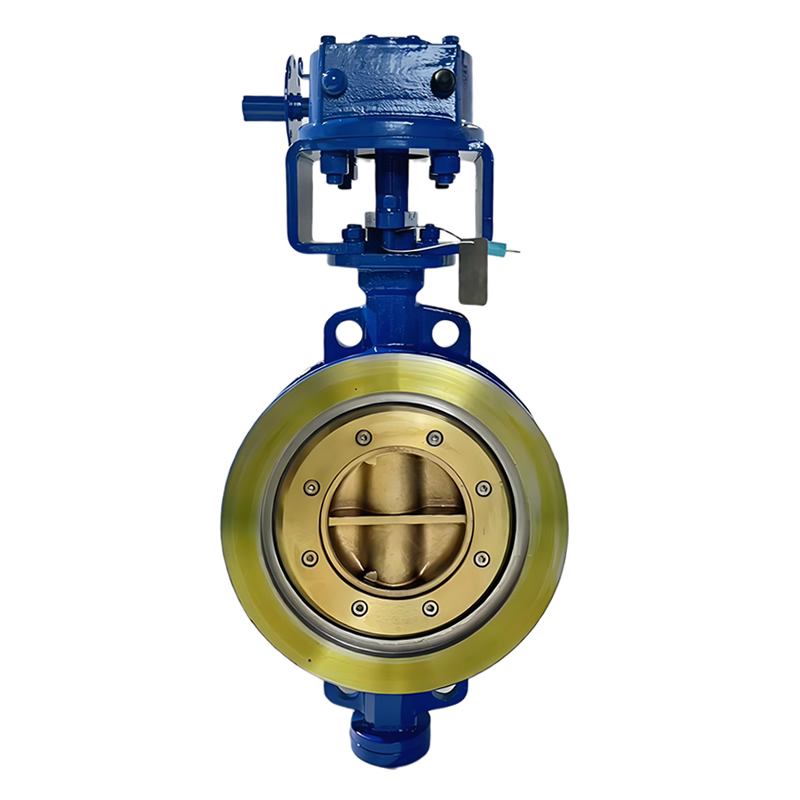
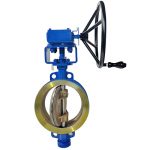
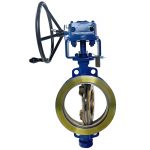
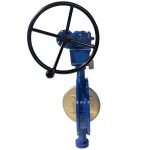
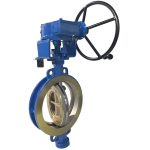
API 609 ASME B16.34 CE DN250 150LB WCB Body Aluminum Bronze Disc STL Seat Triple Offset Wafer Type Hard Seal Butterfly Valve for Oil & Gas Petrochemical Power Applications
I. Product Overview
TIANYU triple offset wafer-type hard seal butterfly valve is a high-performance flow control solution engineered to meet the rigorous demands of industrial sectors where high temperatures, abrasive media, and reliable sealing are non-negotiable. Designed in strict adherence to global standards—including API 609 (industrial butterfly valves), ASME B16.34 (valve dimensions & pressure-temperature ratings), and ASME B16.5 (flange specifications)—this valve integrates a triple offset (three-eccentric) structural design with a metal-to-metal (hard) seal system (aluminum bronze disc + STL valve seat, or “metal-to-metal” contact) to deliver exceptional durability and operational stability.
Constructed with a WCB carbon steel body (ASTM A216), aluminum bronze disc (ASTM B148 C95400), and STL (Stellite) alloy valve seat (ASTM A139), the valve is rated for 150LB (PN20) pressure and 10” (DN250) port size—though it scales to sizes from 2” (DN50) to 24” (DN600) and pressures up to 600LB (PN100). Its wafer-type connection ensures compact installation, while the triple offset geometry eliminates sliding friction between the disc and seat during operation—a defining advantage over concentric or double offset 蝶阀 in high-cycle, harsh-service applications.
Certified to CE, ISO 9001, and API 598 testing standards, this valve is purpose-built for scenarios like oil refinery high-temperature process lines, power plant steam systems, and petrochemical reactor feed lines. The “metal-to-metal” hard seal (dubbed “hard-to-hard” in industrial terminology) withstands temperatures up to 425℃, abrasive particulate media, and corrosive industrial fluids—making it a critical component in mission-critical systems where soft-seal valves fail prematurely.
II. Important Attribute Specifications
A. Dimensional & Pressure-Temperature Parameters
Port Size: Spans 2” to 24” (DN50 to DN600), with a full-bore design as standard to minimize pressure drop (Cv values up to 1800 for DN600 models). The full-bore configuration ensures compatibility with pipeline pigging (cleaning) in oil & gas transmission systems.
Pressure Rating: 150LB to 600LB (PN20 to PN100), aligned with ASME B16.34 pressure-temperature ratings for carbon steel components. Hydrostatic testing follows API 598 protocols: 1.5× rated pressure for the valve body (shell) and 1.1× rated pressure for the seat, with zero tolerance for leakage or structural deformation.
Temperature Range: -29℃ to 425℃, dictated by the thermal stability of the STL-aluminum bronze hard seal system. This range covers cryogenic industrial fluids, ambient process media, and high-temperature steam (common in power generation and refinery applications).
B. Material Composition
Valve Body: WCB Carbon Steel (ASTM A216 Grade WCB), a cast alloy with tensile strength ≥485MPa and yield strength ≥240MPa. It undergoes annealing heat treatment (850–900℃, slow-cooled) to reduce brittleness and relieve casting stresses, with an external blue epoxy coating (thickness ≥100μm) for corrosion protection in outdoor or humid environments.
Butterfly Disc: Aluminum Bronze (ASTM B148 Grade C95400), a copper-based alloy containing 8–12% aluminum, 4–6% iron, and 4–6% nickel. This material offers superior corrosion resistance (especially in seawater or saline media), high tensile strength (≥480MPa), and excellent wear resistance—ideal for abrasive or corrosive fluid service.
Valve Seat: STL (Stellite) Alloy (ASTM A139), a cobalt-chromium alloy (50–60% Co, 25–30% Cr) with a Rockwell hardness of ≥58 HRC. STL is renowned for its high-temperature stability, wear resistance, and resistance to galling—critical for maintaining a tight seal in metal-to-metal contact.
Valve Stem: 17-4PH Precipitation-Hardened Stainless Steel (ASTM A182), featuring tensile strength ≥1000MPa, an anti-blowout design, and a polished finish (Ra ≤0.4μm) to minimize friction with packing.
Connection & Fasteners: Wafer-type flange (ASME B16.5, raised face) machined into the WCB body; fasteners are ASTM A193 B7 alloy steel bolts and ASTM A194 2H nuts, selected for high tensile strength and vibration resistance.
C. Connection & Operational Features
Connection Type: Wafer Type (ASME B16.5), designed for installation between two pipeline flanges with through-bolts. This configuration reduces axial space requirements by 30% compared to flanged valves—ideal for compact industrial piping racks.
Operation Modes:
Manual: Worm gear operator (standard for sizes 8” and larger) to reduce torque by 5–10×, enabling single-person operation. Lever operators are available for smaller sizes (2”–6”).
Pneumatic: Double-acting (compressed air for open/close) or spring-return (auto-fail-safe position on air supply loss) actuators, with 4–8 bar air supply and cycle times of 3–5 seconds for DN250 models.
Electric: Quarter-turn electric actuators (IP67 enclosure) with 4–20mA control signals, compatible with SCADA/DCS systems for remote monitoring and automation.
Functional Attributes:
Triple Offset Geometry: Three distinct eccentricities (valve stem offset, disc offset, seat angle offset) ensure the disc disengages from the seat before rotating, eliminating sliding friction.
Hard Seal Performance: Metal-to-metal (STL seat + aluminum bronze disc) sealing delivers ANSI/FCI Class IV leakage performance (≤0.1×DN mm³/min for gas).
Fire-Safe Design: Compliant with API 607 (7th Edition), with the metal-to-metal seal maintaining integrity during a 30-minute fire test (750℃ exposure).
Anti-Static Device: Conductive spring between the disc, stem, and body to dissipate static charges (resistance ≤10Ω), critical for flammable media applications.
D. Certifications & Compliance
Design & Performance Standards: API 609, ASME B16.34, ASME B16.5, API 598 (testing), API 607 (fire safety).
Quality & Safety Certifications: ISO 9001 (quality management), CE (PED 2014/68/EU), ATEX/IECEx (optional, for explosive atmospheres).
Environmental Compliance: ISO 15848-1 (fugitive emissions, Class BH), REACH (EU chemical regulations).
III. Feature Description
A. Triple Offset Geometry: Friction Elimination & Seal Longevity
The triple offset design is the core of the valve’s performance, addressing a key limitation of concentric and double offset butterfly valves: sliding friction between the disc and seat during operation. The three eccentricities work in tandem:
Valve Stem Offset: The stem is positioned off-center from the valve’s centerline, creating a cam-like motion as the stem rotates.
Disc Offset: The disc is mounted off-center from the stem, ensuring it lifts away from the seat as the stem turns.
Seat Angle Offset: The seat is machined at a slight angle (typically 3–5°) to the valve’s centerline, completing the disc-seat disengagement.
This combination means the disc makes only point contact with the seat at the fully closed position—there is no sliding or rubbing during opening/closing. In a refinery’s 10” (DN250) 150LB high-temperature steam line, this design extended seal life from 18 months (double offset soft-seal valve) to 8 years—reducing maintenance frequency and downtime.
The geometry also reduces operational torque by 40–60% compared to concentric valves. A 24” (DN600) 600LB model requires only 250 N·m of torque (via worm gear operator), enabling manual operation without specialized equipment—a critical advantage for remote pipeline sections.
B. Metal-to-Metal (Hard) Seal: Harsh-Service Resilience
The “hard-to-hard” seal system (STL seat + aluminum bronze disc) is engineered for scenarios where soft-seal valves (e.g., EPDM, PTFE) fail:
High-Temperature Tolerance: STL retains its hardness (≥58 HRC) up to 425℃, while aluminum bronze maintains structural integrity at these temperatures. This makes the valve suitable for high-temperature steam (power plants), heated crude oil (refineries), and industrial process fluids.
Abrasive Media Resistance: The hard surfaces resist wear from particulate-laden media, such as natural gas with sand particles (oil & gas transmission) or mineral slurry (mining). In a coal-fired power plant’s ash-handling system, the valve withstood abrasive wear for 5 years—compared to 6 months for a soft-seal alternative.
Corrosion Compatibility: Aluminum bronze resists corrosion in seawater, saline fluids, and mild acids, while STL is immune to most industrial corrosives. This makes the valve ideal for coastal oil platforms or chemical processing lines handling chlorinated fluids.
Fire-Safe Reliability: Unlike soft-seal valves (which melt in fires), the metal-to-metal seal complies with API 607—maintaining leakage below 0.1×DN mm³/min after 30 minutes of 750℃ exposure. This is mandatory for facilities operating under OSHA or ATEX safety regulations.
C. WCB Body: Durability in High-Pressure Environments
WCB carbon steel is the material of choice for the valve body due to its balance of strength, cost, and thermal stability:
High-Pressure Strength: WCB’s tensile strength (≥485MPa) enables it to withstand pressures up to 600LB (PN100), making it suitable for mid-to-high-pressure industrial systems. In a petrochemical reactor feed line (300LB), the WCB body maintained structural integrity through 10,000+ pressure cycles.
Thermal Stability: Annealed WCB retains its mechanical properties up to 425℃, matching the temperature range of the hard seal system. It does not soften or deform under high-heat conditions—unlike low-grade cast iron.
Corrosion Protection: The external blue epoxy coating resists rust and environmental degradation in outdoor installations (e.g., pipeline valves exposed to rain or salt spray). For extreme corrosive environments (e.g., offshore), an optional PTFE lining can be applied to the body interior.
D. Wafer Connection: Compact Installation & Cost Efficiency
The wafer-type connection offers practical advantages for industrial operators:
Space Savings: Wafer valves require 30% less axial space than flanged valves, making them ideal for crowded piping racks (e.g., refinery process units) or retrofits into existing pipeline systems with limited clearance.
Installation Speed: The valve is clamped between two pipeline flanges with through-bolts, eliminating the need for dedicated valve flanges. This reduces installation time by 25% compared to flanged valves—critical for time-sensitive shutdowns.
Cost Reduction: Wafer valves are 20–30% less expensive than flanged valves (due to reduced material and machining costs), while maintaining the same pressure rating and sealing performance.
API 609 ASME CE DN250 150LB WCB Body Aluminum Bronze Disc STL Seat Triple Offset Wafer Type Hard Seal Butterfly Valve
IV. Manufacturing Process
A. Material Inspection & Preparation
Quality control begins with rigorous validation of raw materials to ensure compliance with ASTM/API standards:
WCB Body Verification: WCB castings undergo spectral analysis (XRF) to confirm chemical composition (C: 0.25–0.35%, Mn: 0.60–1.05%) and ultrasonic testing (UT) to detect internal defects (porosity, cracks). Mechanical testing (tensile strength, impact resistance) ensures compliance with ASTM A216, documented in Material Test Reports (MTRs).
Aluminum Bronze Disc Testing: C95400 disc blanks are tested for aluminum, iron, and nickel content (via XRF) and hardness (Brinell ≥160 HB) to confirm wear resistance. Salt spray testing (ASTM B117) verifies corrosion resistance in saline environments.
STL Seat Validation: STL alloy is tested for cobalt and chromium content (XRF) and Rockwell hardness (≥58 HRC). A bond test confirms the STL layer adheres to the seat substrate (WCB or stainless steel) with a shear strength of ≥50MPa.
Stem & Fastener Testing: 17-4PH stem blanks undergo tensile strength testing (≥1000MPa), while ASTM A193 B7 bolts are tested for yield strength (≥620MPa) to ensure load capacity.
B. Valve Body & Disc Fabrication
WCB Body Machining: WCB castings are first shot-blasted to remove surface scale, then machined via 5-axis CNC centers. The wafer flange faces are precision-machined to ASME B16.5 flatness (≤0.05mm/m) and surface finish (Ra ≤3.2μm) to ensure proper gasket seating. The stem bore and seat pocket are honed to ±0.02mm tolerance to align with the triple offset geometry.
Aluminum Bronze Disc Processing: C95400 bar stock is cut to size, then turned and milled to the triple offset disc profile via CNC lathes. The disc’s sealing surface is ground to a Ra ≤0.2μm finish to ensure uniform contact with the STL seat. Post-machining, the disc undergoes stress-relief heat treatment (300–350℃, 2 hours) to reduce internal stresses.
STL Seat Manufacturing: The seat substrate (WCB or 316 stainless steel) is machined to the angled offset profile, then STL alloy is applied via plasma transfer arc (PTA) welding. The welded seat is ground to a Ra ≤0.2μm finish and lapped (paired with an aluminum bronze disc) to ensure a tight metal-to-metal seal.
C. Assembly & Actuator Integration
Assembly is performed in a Class 10,000 cleanroom to prevent contamination of sealing surfaces:
Stem & Disc Assembly: The 17-4PH stem is inserted into the body, then the aluminum bronze disc is keyed to the stem. The stem packing (graphite-impregnated PTFE) is installed in layers (5–7 layers) with controlled compression (10–15%) to balance sealing and torque.
Seat & Body Assembly: The lapped STL seat is pressed into the body’s seat pocket, with a preload applied to ensure initial sealing. The triple offset geometry is verified via coordinate measuring machine (CMM) to confirm the disc disengages from the seat during rotation.
Actuator Mounting: Worm gear/pneumatic/electric actuators are attached via ISO 5211 flanges, with laser alignment to ensure the actuator’s drive shaft is coaxial with the valve stem (runout ≤0.05mm). This alignment prevents premature wear and ensures smooth actuation. For automated actuators, limit switches and positioners are calibrated to provide accurate position feedback.
D. Quality Testing & Certification
Every valve undergoes multi-stage testing to meet API/ASME standards:
Hydrostatic Testing (API 598):
Shell Test: 1.5× rated pressure (e.g., 22.5MPa for 600LB) for 30 minutes, with no leakage, sweating, or deformation.
Seat Test: 1.1× rated pressure (e.g., 16.5MPa for 600LB) for 15 minutes, with leakage measured via bubble counting (≤1 bubble/minute for ANSI/FCI Class IV).
Operational Testing: 100 open-close cycles to verify torque consistency, actuation speed (3–5 seconds for pneumatic models), and disc-seat disengagement.
Fire Testing (API 607): Random samples undergo 30-minute exposure to 750℃ propane flames, followed by a seat test to confirm post-fire leakage compliance.
Non-Destructive Testing (NDT):
Liquid Penetrant Testing (PT): For the body, disc, and seat to detect surface cracks.
Magnetic Particle Testing (MPI): For the stem and fasteners to ensure structural integrity.
Fugitive Emissions Testing (ISO 15848-1): The stem and body-bonnet joint are tested for methane emissions, meeting Class BH standards (≤100 ppmv).
Post-test, each valve receives a unique serial number, and documentation (MTRs, test reports, certifications) is packaged with the unit for traceability.
V. Product Advantages
A. Extended Service Life & Reduced Maintenance Costs
Seal Longevity: The triple offset design + metal-to-metal seal extends service life to 8–12 years (vs. 1–3 years for soft-seal valves). For a refinery with 50 DN250 150LB valves, this translates to $400k+ in annual savings from reduced seal replacements and downtime.
Minimal Wear: No sliding friction between the disc and seat eliminates premature wear, reducing the need for unplanned maintenance. In a power plant’s steam system, this cut maintenance visits from 4 per year to 1 every 3 years.
Low Replacement Costs: The valve’s modular design (replaceable disc/seat) means worn components can be swapped without replacing the entire valve—reducing material costs by 50%.
B. Harsh-Service Compatibility
High-Temperature Resilience: Operates up to 425℃, making it suitable for high-temperature steam, heated crude oil, and industrial process fluids—applications where soft-seal valves degrade rapidly.
Abrasive Media Resistance: The hard seal withstands particulate-laden media (e.g., sand, ash), eliminating the need for expensive lined valves (e.g., ceramic-lined) in many scenarios.
Corrosion Protection: Aluminum bronze and STL resist corrosion in seawater, saline fluids, and mild acids—ideal for offshore, chemical, and coastal applications.
C. Operational & Installation Efficiency
Low Torque: The triple offset design reduces operational torque by 40–60%, enabling smaller (lower-cost) actuators for automated models. A DN600 600LB valve uses a 300 N·m actuator (vs. 500 N·m for a double offset valve).
Compact Installation: Wafer connection saves 30% of axial space, making it ideal for crowded piping racks or retrofits into existing systems.
Fast Installation: Wafer design reduces installation time by 25% compared to flanged valves, critical for time-sensitive shutdowns.
D. Safety & Regulatory Compliance
Fire-Safe Design: API 607 compliance mitigates fire-related risks, avoiding fines of $50k+ for non-compliance with OSHA/ATEX regulations.
Anti-Static Protection: Dissipates static charges, eliminating spark risks in flammable media applications (e.g., natural gas transmission).
Leakage Control: ANSI/FCI Class IV sealing prevents fugitive emissions of flammable or toxic media, aligning with EPA Methane Rules and EU Industrial Emissions Directive.
VI. Product Applications
A. Oil & Gas Industry
Upstream Production: 2”–12” (DN50–DN300) valves control wellhead fluid flow, with aluminum bronze discs resisting corrosion from saline produced water. The fire-safe design protects against wellhead fire hazards.
Midstream Transmission: 10”–24” (DN250–DN600) valves regulate natural gas/oil flow in cross-country pipelines, with the full-bore design enabling pigging and the hard seal withstanding sand particles.
Downstream Refining: 8”–20” (DN200–DN500) valves manage high-temperature steam and heated crude oil flow in distillation units, with the triple offset design reducing maintenance in high-cycle service.
B. Petrochemical & Chemical Industry
Petrochemical Reactors: 6”–16” (DN150–DN400) valves control feedstock flow (e.g., ethylene, propylene) at high temperatures (300–400℃), with the hard seal resisting chemical corrosion.
Chemical Processing: 4”–12” (DN100–DN300) valves handle chlorinated fluids and mild acids, with aluminum bronze discs preventing corrosion.
Polymer Production: 8”–20” (DN200–DN500) valves regulate high-temperature polymer melt flow, with the hard seal withstanding abrasive particulate content.
C. Power Generation
Thermal Power Plants: 10”–24” (DN250–DN600) valves control high-temperature steam flow (400–425℃) in boiler and turbine systems, with the hard seal outperforming soft-seal valves in high-cycle service.
Nuclear Power Plants: 6”–16” (DN150–DN400) valves manage service water flow, with the fire-safe design complying with nuclear safety standards.
Coal-Fired Power Plants: 8”–20” (DN200–DN500) valves handle ash-laden cooling water, with the hard seal resisting abrasive wear.
D. Metallurgy & Mining
Metallurgical Furnaces: 6”–16” (DN150–DN400) valves control high-temperature cooling water flow (200–300℃), with the WCB body withstands thermal stress.
Mining Operations: 4”–12” (DN100–DN300) valves regulate mineral slurry flow, with the hard seal resisting abrasive particle wear.
E. Municipal & Industrial Heating
City Central Heating: 8”–20” (DN200–DN500) valves control high-temperature steam flow (150–250℃) in district heating systems, with the compact wafer design fitting in underground piping vaults.
Industrial Boiler Systems: 6”–12” (DN150–DN300) valves manage boiler feedwater and steam flow, with the hard seal ensuring long-term reliability.
TIANYU’s triple offset hard-seal butterfly valve delivers long-lasting sealing, high-temp resilience, and low operational costs for harsh industrial systems. Customize it with duplex steel body for extreme offshore corrosion, Inconel disc for ultra-high temps (up to 500℃), or higher pressure ratings (up to 600LB) for heavy-duty service. Opt for explosion-proof pneumatic/electric actuators for hazardous zones, or RTJ wafer connections for tight high-pressure sealing. These tweaks align the valve with your specific media, pressure, and space needs—boosting durability and operational efficiency.
API 6D ASME B16.34 CE DN200/DN300/DN400 PN80 LF2 Carbon Steel Body 321 Stainless Steel Ball Full Welded Manual Stem Hard Seated Ball Valve is a premium high-pressure fluid control solution engineered for critical industrial applications, blending LF2 carbon steel’s structural strength with 321 stainless steel’s corrosion resistance and Stellite 6 hard seats’ durability. Its full welded design eliminates leak points, while the manual light stem ensures precise, reliable operation. Certified to API 6D, ASME, and CE standards, and backed by ISO 9001/API Q1 quality assurance, it excels in oil and gas transmission, petrochemical refining, and power generation. Fire-safe, low-emission, and maintainable, it delivers zero-leakage performance, regulatory compliance, and long-term value for large-flow, high-pressure pipeline systems worldwide.