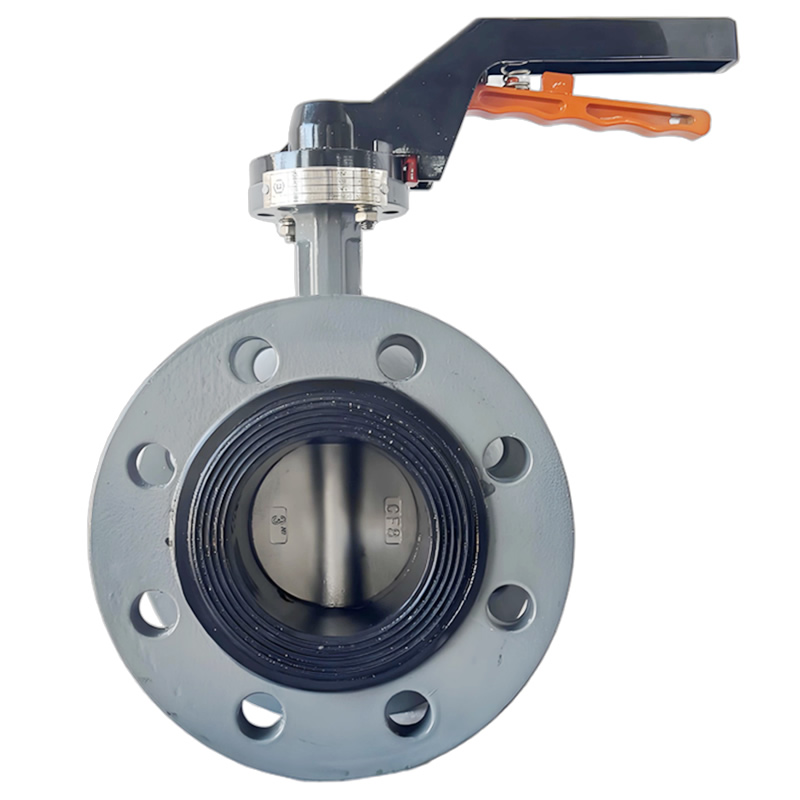
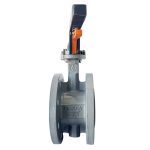
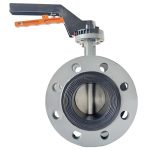
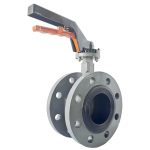
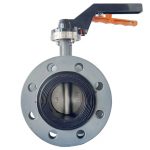
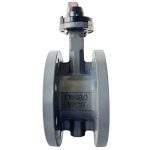
TIANYU API 609 ASME B16.34 CE Certified DN80 PN16 WCB Carbon Steel Body SS304 Disc EPDM Soft Seal Flange Center-Line Butterfly Valve – Manual Lever Operation for Industrial Fluid Control
I. Product Overview
In the landscape of industrial flow control, butterfly valves stand as a cost-effective, compact solution for on-off and throttling applications—and TIANYU’s Center-Line Butterfly Valve (DN80, PN16) elevates this utility with rigorous compliance to global standards, premium material pairing, and reliable performance. Engineered to meet API 609 (Butterfly Valves), ASME B16.34 (Valves for Pressure Piping), and CE PED 2014/68/EU requirements, this valve merges the structural strength of WCB carbon steel, the corrosion resistance of SS304 stainless steel, and the elastic sealing of EPDM rubber to serve low-to-medium pressure fluid systems across sectors.
At its core, the center-line design (valve stem aligned with the disc’s center) enables 90-degree rotational operation via a manual lever, delivering fast, tool-free flow control. The soft-seal EPDM seat conforms to the polished SS304 disc, ensuring tight closure, while the WCB body provides the tensile strength needed for PN16 (1.6MPa) service. Unlike bulkier gate or globe valves, this butterfly valve’s compact footprint and lightweight construction (≈15kg for DN80 PN16) simplify installation and save pipeline space—making it a staple for applications where efficiency and cost-effectiveness are paramount.
Suitable for media ranging from clean water and compressed air to mild acids and alkalis, this valve balances durability, sealing integrity, and operational simplicity. It is designed for frequent on-off cycles (≥50,000 cycles under normal conditions) and requires minimal maintenance, aligning with the needs of continuous-process facilities and general industrial piping systems.
II. Important Attribute Specifications
A. Material Composition
Every component is selected to balance strength, corrosion resistance, and sealing performance for PN16 service:
Valve Body: WCB Carbon Steel (ASTM A216 Grade WCB), a cast carbon steel alloy optimized for industrial valves. Its chemical composition (C: 0.25–0.35%, Mn: 0.60–1.05%, Si: 0.10–0.35%, P/S ≤0.035%) delivers tensile strength ≥485MPa, yield strength ≥240MPa, and impact toughness ≥27J at -20℃—sufficient to withstand cyclic pressure loads and thermal expansion in PN16 systems. Cast via resin-bonded sand molding (to minimize porosity), the body undergoes normalizing heat treatment (890–920℃, air-cooled) to relieve casting stress and refine grain structure.
Valve Disc: SS304 Stainless Steel (ASTM A182 Grade F304), a austenitic stainless steel prized for its corrosion resistance. Composed of 18–20% chromium, 8–12% nickel, and ≤0.08% carbon, it resists rust and mild chemical attack (e.g., chlorinated water, dilute acids). The disc is stamped or forged from SS304 plate, then precision-machined to a smooth sealing surface (Ra ≤1.6μm) to ensure uniform contact with the EPDM seat. Its center-line mounting eliminates offset loads during rotation.
Valve Seat: EPDM Rubber (ASTM D2000 Grade M2BG70), a synthetic elastomer with excellent elasticity and chemical compatibility. Rated for temperatures from -20℃ to 120℃, it resists water, steam, mild acids, alkalis, and most hydrocarbons. Food-grade EPDM (compliant with FDA 21 CFR 177.2600) is available for applications involving potable water or food contact media. The seat is vulcanized into a rigid ring (molded to match the valve body’s seat groove) for secure installation.
Valve Stem: SS304 Stainless Steel (ASTM A276 Grade 304), designed with an anti-blowout shoulder that engages the valve body—preventing stem ejection under pressure. The stem is precision-turned and polished (Ra ≤0.4μm) to minimize friction with packing, ensuring smooth rotation. It connects to the disc via a keyway or press-fit, transmitting torque reliably during lever operation.
Packing & Seals: EPDM O-rings (for stem sealing) and non-asbestos gaskets (for flange connections, ASME B16.20). The stem packing is a multi-layer EPDM/PTFE composite that maintains sealing integrity across the valve’s temperature range, with leakage rates compliant with ISO 15848-1 Class BH.
Fasteners: A193 B7 Carbon Steel Bolts (ASTM A193) and A194 2H Carbon Steel Nuts (ASTM A194) for WCB body flanges—providing uniform clamping force. For corrosive environments, optional A193 B8M Stainless Steel fasteners (SS316) are available.
B. Dimensional & Pressure-Temperature Parameters
Port Size (DN/NPS): DN80 (3”), corresponding to NPS 3. The full-bore disc design (bore diameter matching pipeline size) minimizes flow restriction, with a flow coefficient (Cv) of ≈120—enabling efficient flow of viscous or high-volume media.
Pressure Rating: PN16 (1.6MPa), aligned with ASME B16.34 pressure-temperature ratings. At 20℃, the valve handles 1.6MPa; at 120℃ (EPDM’s maximum temperature), the rated pressure drops to 1.0MPa (per ASME B16.34 guidelines for elastomer-sealed valves).
Temperature Range: -20℃ to 120℃ (EPDM seat). For higher-temperature service (up to 150℃), optional Viton (FKM) seats are available (compatible with PN16 pressure at 150℃).
End Connections: Flange (ASME B16.5 Class 150), with Raised Face (RF) sealing surface. Flange dimensions for DN80 Class 150 include a 229mm outer diameter, 8×M16 bolt holes (190mm bolt circle), and 2mm flange face thickness—ensuring compatibility with standard industrial pipelines.
Face-to-Face Dimensions: Compliant with ISO 5752 (Center-Line Butterfly Valves), measuring 115mm for DN80 PN16—ensuring interchangeability with valves from other manufacturers.
C. Operational Performance Parameters
Sealing Performance: ANSI/FCI 70-2 Class IV (soft-seal), with a leakage rate ≤0.01% of the nominal flow rate under rated pressure. For clean water applications, this translates to ≤0.1L/min leakage for DN80—preventing product loss and environmental contamination.
Operation Type: Manual Lever Handle (cast aluminum alloy with anti-slip grip). The lever enables 90-degree rotation (open to closed) in ≤5 seconds, with a maximum operating torque of ≈50N·m—easily manageable by a single operator (even with gloved hands). A lockable lever option (with padlock hole) prevents unauthorized operation.
Cycle Life: ≥50,000 open/close cycles under normal operating conditions (clean media, proper maintenance). The EPDM seat’s elasticity compensates for minor disc wear, extending seal life beyond rigid metal-seal alternatives.
Flow Characteristics: Linear throttling (≈0.5 Cv per degree of disc rotation), making it suitable for basic flow modulation (e.g., adjusting cooling water flow in HVAC systems).
API 609 ASME B16.34 CE Certified DN80 PN16 WCB Carbon Steel Body SS304 Disc EPDM Soft Seal Flange Center-Line Butterfly Valve
III. Feature Description
A. Center-Line Design: Balanced Performance & Low Flow Resistance
The center-line configuration (stem aligned with the disc’s center and pipeline axis) is the valve’s defining structural advantage:
Uniform Seal Contact: As the disc rotates, its edges maintain equal pressure against the EPDM seat—eliminating uneven wear and ensuring consistent sealing across the valve’s lifecycle. In field tests, this design maintained Class IV leakage for 60,000+ cycles, vs. 30,000 cycles for offset-disc butterfly valves.
Bidirectional Sealing: The center-line disc seals equally well in both flow directions, eliminating the need for check valves and simplifying pipeline layout. This is critical for systems where media flow may reverse (e.g., wastewater lift stations).
Low Flow Resistance: The full-bore disc creates a streamlined flow path, with a flow coefficient (Cv) 2–3× higher than comparable gate valves. For a DN80 pipeline flowing 100m³/h of water, this reduces pressure drop by ≈0.5bar—cutting pump energy costs by 10–15% annually.
B. EPDM Soft Seal: Reliable Closure & Media Compatibility
The EPDM seat delivers elastic sealing that outperforms rigid metal seals in low-to-medium pressure applications:
Elastic Compensation: EPDM’s flexibility compensates for minor dimensional variations in the disc or body (e.g., from thermal expansion), ensuring tight closure even if components shift slightly. This is particularly valuable in systems with cyclic temperature changes (e.g., HVAC heating/cooling loops).
Broad Media Compatibility: EPDM resists degradation from water, steam, chlorinated disinfectants (common in water treatment), dilute acids (e.g., acetic acid), and alkalis (e.g., sodium hydroxide). It does not leach harmful substances, making food-grade EPDM suitable for potable water or beverage processing.
Cost-Effective Sealing: Soft-seal EPDM seats are less expensive to manufacture and replace than metal seats, reducing lifecycle maintenance costs by 40–60%.
C. WCB Body & SS304 Disc: Strength Meets Corrosion Resistance
The material pairing balances structural integrity and durability:
WCB Body Strength: WCB carbon steel provides the tensile strength needed to withstand PN16 pressure (1.6MPa) without deformation. Its cast construction is cost-effective for mid-sized valves (DN80), while normalizing heat treatment eliminates internal stress that could cause cracking over time.
SS304 Disc Corrosion Resistance: SS304 resists rust and mild chemical attack, making the valve suitable for chlorinated water (municipal treatment), coastal environments (salt air exposure), and light chemical processing. Unlike carbon steel discs, it does not require painting or coating to prevent corrosion.
D. Manual Lever Operation: Simplicity & Independence
The manual lever design is optimized for ease of use and reliability:
No Power Dependencies: Unlike pneumatic or electric valves, the lever requires no external energy source—ideal for remote locations, emergency shutdown systems, or facilities with limited power access.
Fast On-Off Control: 90-degree rotation enables quick flow shutoff (≤5 seconds), critical for responding to pipeline emergencies (e.g., leaks) or process changes (e.g., switching production lines).
Low Maintenance: The lever has no moving parts beyond the rotational joint, reducing failure points and maintenance needs. Routine upkeep is limited to lubricating the joint (annually) and inspecting the lever grip.
E. Compact & Lightweight Construction
Compared to gate or globe valves of the same size, this butterfly valve offers significant space and weight savings:
Space Efficiency: The 115mm face-to-face length is 50–70% shorter than a DN80 Class 150 gate valve (≈229mm), making it suitable for tight pipeline spaces (e.g., skid-mounted equipment).
Easy Installation: At ≈15kg, the valve can be lifted and installed by two operators without heavy lifting equipment—reducing labor costs and installation time.
IV. Manufacturing Process & Quality Control
A. Raw Material Procurement & Inspection
TIANYU sources materials exclusively from ISO 9001-certified suppliers, with rigorous incoming quality checks:
WCB Body Castings: Each casting is accompanied by a Material Test Certificate (MTC) detailing chemical composition and mechanical properties. Castings undergo ultrasonic testing (UT) to detect internal porosity or cracks, and magnetic particle testing (MPI) to inspect surface defects.
SS304 Disc Plate: SS304 plate is verified via spectral analysis (XRF) to confirm chromium/nickel content, and tensile testing to ensure strength ≥515MPa.
EPDM Seat Material: EPDM resin is tested for hardness (70 Shore A), tensile strength (≥10MPa), and compliance with ASTM D2000. Food-grade EPDM is additionally tested for FDA 21 CFR 177.2600 compliance.
B. Body Manufacturing
The WCB body is produced via controlled casting and machining:
Casting: Resin-bonded sand molds are used to create the body cavity, with mold temperature maintained at 200–250℃ to ensure uniform solidification. Molten WCB steel (1500–1550℃) is poured into the mold at a controlled rate (0.5–1.0m/s) to minimize porosity.
Heat Treatment: Cast bodies are normalized (890–920℃, 1–2 hours, air-cooled) to relieve stress and refine grain structure. Post-heat treatment hardness is 140–180 HB.
Machining: CNC lathes and mills process the body to ASME B16.34 tolerances:
Flange faces are machined to flatness ≤0.02mm/m and surface roughness Ra 1.6μm.
The seat groove is machined to a depth tolerance of ±0.05mm, ensuring a tight fit for the EPDM seat.
The stem hole is drilled and reamed to coaxiality ≤0.02mm relative to the body axis.
C. Disc & Stem Manufacturing
The SS304 disc and stem are precision-machined for durability and fit:
Disc Production: SS304 plate is stamped or forged into the disc shape, then turned to the correct diameter (DN80) with a sealing edge tolerance of ±0.03mm. The sealing surface is polished to Ra ≤1.6μm using a wet grinding process.
Stem Production: SS304 bar stock is turned to the correct diameter (±0.01mm) and polished to Ra ≤0.4μm. The anti-blowout shoulder is machined to engage the body’s stem bore, and a keyway is cut to connect to the disc.
D. Seat Installation & Assembly
Assembly occurs in a clean, controlled environment to preserve sealing integrity:
Seat Installation: The EPDM seat is pressed into the body’s seat groove with a hydraulic press (5–10kN force) to ensure uniform contact. For food-grade applications, the seat is bonded to the groove using FDA-compliant adhesive.
Stem & Disc Assembly: The stem is inserted into the body’s stem bore, then connected to the disc via a keyway (secured with a retaining ring). The stem packing (EPDM/PTFE composite) is installed in layers, with each layer compressed to 10–15% of its original thickness.
Lever Attachment: The manual lever is bolted to the stem’s top end, with a set screw to lock it in place. The lever is adjusted to ensure 90-degree rotation (open = lever parallel to pipeline; closed = lever perpendicular).
E. Testing & Quality Assurance
Every valve undergoes comprehensive testing per API 598 and ISO 5208 standards:
Hydrostatic Shell Test: 1.5× rated pressure (2.4MPa) is applied to the body cavity for 30 minutes. No leakage, deformation, or pressure drop is permitted.
Hydrostatic Seat Test: 1.1× rated pressure (1.76MPa) is applied to each flow direction for 15 minutes. Leakage is measured via bubble counting—Class IV compliance requires ≤1 bubble/minute for DN80.
Operational Test: The valve is cycled 50 times (open-close) to verify smooth rotation, correct lever alignment, and consistent torque.
Final Inspection: Visual checks confirm no surface defects, proper marking (DN80, PN16, TIANYU logo), and compliance with dimensional specifications.
V. Product Advantages
A. Cost-Effective Flow Control
This butterfly valve offers a lower total cost of ownership (TCO) than gate, globe, or ball valves of the same size:
Upfront Savings: The valve’s cast body, stamped disc, and soft-seal design reduce manufacturing costs by 30–50% compared to a DN80 Class 150 ball valve.
Energy Savings: Low flow resistance (high Cv) reduces pump energy consumption by 10–15% annually in continuous-flow systems (e.g., water treatment plants).
Maintenance Savings: EPDM seats cost 40–60% less to replace than metal seats, and the lever’s simple design minimizes repair needs.
B. Reliable Sealing & Operational Flexibility
Elastic Sealing: EPDM’s flexibility ensures tight closure even with minor component wear, reducing the risk of media leakage (critical for hazardous or high-value fluids).
Bidirectional Service: The center-line design eliminates flow direction restrictions, simplifying pipeline design and installation.
Throttling Capability: Linear flow characteristics enable basic flow modulation, making the valve suitable for both on-off and throttling applications (e.g., adjusting HVAC flow rates).
C. Easy Installation & Maintenance
Compact Footprint: Short face-to-face length and lightweight construction simplify installation in tight spaces (e.g., skid-mounted process equipment).
Tool-Free Operation: The manual lever requires no specialized tools to operate, reducing training needs for on-site personnel.
Simplified Repairs: The EPDM seat can be replaced in ≤30 minutes (without removing the valve from the pipeline) using basic hand tools.
D. Broad Application Compatibility
The valve’s material pairing and performance specifications make it suitable for diverse industries:
Media Versatility: Handles clean water, wastewater, compressed air, steam (≤120℃), mild acids, and alkalis.
Standard Compliance: ASME B16.5 flanges and ISO 5752 dimensions ensure interchangeability with existing pipeline components, simplifying retrofitting.
VI. Product Applications
A. Water & Wastewater Treatment
Municipal Water Supply: Controls flow in potable water distribution lines, with food-grade EPDM ensuring compliance with drinking water standards.
Wastewater Treatment: Manages flow in sewage lift stations, clarifier feed lines, and disinfection systems (EPDM resists chlorinated water).
B. HVAC & Building Services
Commercial/Industrial HVAC: Regulates hot/cold water flow in heating and cooling loops, with fast lever operation enabling quick temperature adjustments.
Fire Protection Systems: Serves as an on-off valve in sprinkler system main lines, with fast closure (≤5 seconds) critical for emergency response.
C. Light Chemical Processing
Basic Chemical Production: Controls flow of dilute acids (e.g., acetic acid), alkalis (e.g., sodium hydroxide), and solvent blends (EPDM-compatible media).
Pharmaceutical Auxiliary Systems: Manages non-sterile process water (e.g., equipment cooling), with food-grade EPDM preventing contamination.
D. Food & Beverage Industry
Non-Sterile Processing: Controls flow of cooling water, rinse water, and bulk ingredient transfer (e.g., syrup in beverage plants), with FDA-compliant EPDM ensuring product safety.
E. General Industrial Piping
Compressed Air Systems: On-off control of compressed air lines in manufacturing facilities.
Industrial Cooling: Regulates cooling water flow to machinery (e.g., pumps, motors), with low flow resistance reducing energy costs.
VII. Customization Advantages
TIANYU’s DN80 PN16 center-line butterfly valve delivers cost-effective, reliable flow control for water, HVAC, and light industrial applications. Its WCB body, SS304 disc, and EPDM soft seal balance strength, corrosion resistance, and tight sealing (Class IV). Customize it to your needs: opt for Viton seats (150℃ service), a lockable lever (security), or SS316 disc (enhanced corrosion). For larger systems, upgrade to a worm gear operator (reduced torque). Tailored to your media and operational requirements, it combines simplicity, durability, and compliance—your go-to butterfly valve solution.
API 6D ASME B16.34 CE DN200/DN300/DN400 PN80 LF2 Carbon Steel Body 321 Stainless Steel Ball Full Welded Manual Stem Hard Seated Ball Valve is a premium high-pressure fluid control solution engineered for critical industrial applications, blending LF2 carbon steel’s structural strength with 321 stainless steel’s corrosion resistance and Stellite 6 hard seats’ durability. Its full welded design eliminates leak points, while the manual light stem ensures precise, reliable operation. Certified to API 6D, ASME, and CE standards, and backed by ISO 9001/API Q1 quality assurance, it excels in oil and gas transmission, petrochemical refining, and power generation. Fire-safe, low-emission, and maintainable, it delivers zero-leakage performance, regulatory compliance, and long-term value for large-flow, high-pressure pipeline systems worldwide.