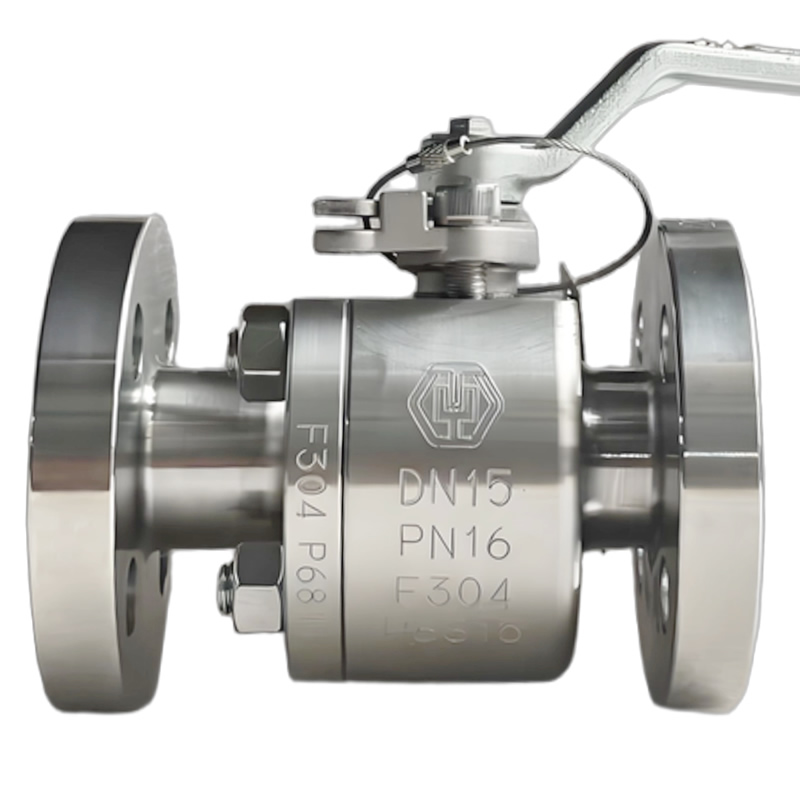
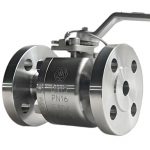
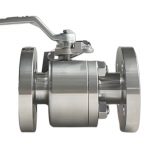
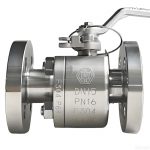
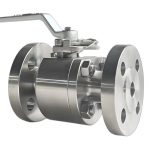
TIANYU API 608 ASME B16.34 CE Certified DN15 PN16 SS304 Stainless Steel Floating Ball Valve – PTFE Soft Seal Flange Connection Manual Lever Operation for Food Beverage Water Treatment Light Industrial Applications
I. Product Overview
In the landscape of small-bore industrial fluid control, floating ball valves emerge as a compact, cost-effective solution for on-off flow regulation—and TIANYU’s DN15 PN16 SS304 Floating Ball Valve elevates this utility with rigorous compliance to global standards, hygienic material pairing, and reliable performance. Engineered to align with API 608 (Steel Ball Valves for Petroleum, Petrochemical and Allied Industries), ASME B16.34 (Valves, Flanges, Fittings and Gaskets for Pressure Piping), and CE PED 2014/68/EU requirements, this valve merges the corrosion resistance of SS304 stainless steel, the chemical inertness of PTFE soft sealing, and the simplicity of manual lever operation to serve low-to-medium pressure systems across hygiene-critical and light industrial sectors.
At its core, the floating ball design (where the ball is unsupported by trunnions, relying on media pressure to seal against the seat) is optimized for small diameters like DN15: it eliminates bulky support components, reducing the valve’s footprint and manufacturing cost while maintaining tight sealing integrity. The all-SS304 wetted components (body, ball, stem) resist rust and mild corrosion, making it suitable for potable water, food-grade media, and light chemical applications, while the PTFE valve seat delivers bubble-tight closure (ANSI/FCI Class VI) to prevent product contamination or fluid loss.
The manual lever handle enables 90-degree on-off control in seconds, requiring no external power—ideal for small-scale equipment, laboratory setups, or remote pipeline branches where automation is unnecessary. Its flange connection (ASME B16.5 Class 150) ensures compatibility with standard industrial piping, while the compact face-to-face dimension (aligned with API 608) simplifies retrofitting into existing systems. As a workhorse for small-bore flow control, this valve balances hygiene, durability, and operational simplicity to meet the demands of diverse low-volume applications.
II. Important Attribute Specifications
A. Material Composition
Every component is selected to prioritize corrosion resistance, sealing integrity, and compatibility with hygiene-critical or mild industrial media:
Valve Body & Ball: SS304 Stainless Steel (ASTM A182 Grade F304), a austenitic stainless steel widely recognized for its balanced mechanical and corrosion-resistant properties. Its chemical composition is strictly controlled: Chromium (18–20%), Nickel (8–12%), Carbon (≤0.08%), Manganese (≤2.00%), Phosphorus (≤0.045%), Sulfur (≤0.030%). This formulation delivers a tensile strength of ≥515MPa, yield strength of ≥205MPa, and elongation of ≥40%—sufficient to withstand PN16 pressure loads and cyclic thermal expansion. The body and ball are produced via cold forging (for DN15, a process that ensures dense, defect-free material) to eliminate porosity common in casting, then precision-machined to ensure dimensional accuracy.
Valve Seat: PTFE (Polytetrafluoroethylene, ASTM D4894), a fluoropolymer prized for its chemical inertness and low friction. The seat is manufactured from FDA 21 CFR 177.1550-compliant resin, ensuring it is non-toxic and safe for direct contact with food, beverages, and potable water. PTFE exhibits resistance to nearly all non-oxidizing acids, alkalis, solvents, and hydrocarbons, with a continuous operating temperature range of -20℃ to 150℃. The seat is molded into a rigid ring (matching the valve body’s seat groove) to ensure secure installation and uniform contact with the ball.
Valve Stem: SS304 Stainless Steel (ASTM A276 Grade 304), designed with an anti-blowout shoulder that engages the valve body’s bonnet bore. This feature prevents the stem from being ejected under excessive media pressure—a critical safety requirement for pressure-containing equipment. The stem is precision-turned to a diameter tolerance of ±0.01mm, then polished to a surface roughness of Ra ≤0.4μm to minimize friction with the packing assembly, ensuring smooth rotation during lever operation.
Packing & Seals: PTFE-impregnated graphite packing, a multi-layer assembly that provides leak-tight sealing around the stem while maintaining compatibility with hygiene-critical media. The packing is compressed to 10–15% of its original thickness during assembly to balance sealing performance and operational torque. Flange gaskets comply with ASME B16.20, utilizing non-asbestos fiber-reinforced PTFE for environmental compatibility and reliable sealing between the valve and pipeline flanges.
Fasteners & Handle: Flange fasteners (bolts and nuts) are manufactured from SS304 Stainless Steel (ASTM A193 Grade B8 and ASTM A194 Grade 8), ensuring corrosion resistance in washdown or humid environments. The manual lever handle is cast from aluminum alloy (ASTM B108) with a black anodized finish and an orange anti-slip grip, designed to withstand repeated use and provide secure handling even with gloved hands.
B. Dimensional & Pressure-Temperature Parameters
Port Size (DN/NPS): DN15 (1/2”), configured as a full-port (bore diameter equal to the nominal pipe size). This design minimizes pressure drop across the valve, with a flow coefficient (Cv) of approximately 15—sufficient to handle low-to-medium flow rates (e.g., 15m³/h of water) without restricting system performance. The full-port bore also facilitates easy cleaning, a critical feature for hygiene-critical applications like food processing.
Pressure Rating: PN16 (1.6MPa), aligned with ASME B16.34 pressure-temperature ratings for stainless steel valves. At 20℃ (ambient temperature), the valve is rated for a maximum working pressure of 1.6MPa; at the upper temperature limit of the PTFE seat (150℃), the rated pressure is reduced to 1.0MPa (per ASME B16.34 guidelines for elastomer-sealed valves).
Temperature Range: -20℃ to 150℃ (continuous operation with PTFE seat). For applications requiring lower temperatures (down to -40℃), an optional FKM (Viton) seat is available; for higher temperatures (up to 200℃), PFA (perfluoroalkoxy alkane) seats can be specified (both maintaining FDA compliance where required).
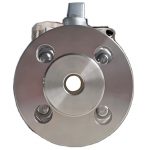
End Connection: Flange (ASME B16.5 Class 150), with a Raised Face (RF) sealing surface. The flange dimensions for DN15 Class 150 are standardized: outer diameter of 95mm, bolt circle diameter of 60.3mm, 4×M10 bolt holes, and a flange thickness of 12.7mm. This ensures compatibility with standard industrial pipeline flanges, eliminating the need for custom adapters.
Face-to-Face Dimensions: Compliant with API 608, measuring 90mm for DN15 Class 150. This short face-to-face length is 30–40% more compact than comparable globe valves, making the valve suitable for installation in tight spaces (e.g., inside equipment skids or laboratory fume hoods).
C. Operational Performance Parameters
Sealing Performance: ANSI/FCI 70-2 Class VI (bubble-tight sealing), the highest standard for soft-seal valves. For liquid media, the leakage rate is limited to ≤0.1×DN mm³/min—translating to ≤1.5mm³/min for DN15. This level of sealing ensures no product loss, no contamination of process media, and compliance with hygiene standards (e.g., HACCP for food processing).
Operating Torque: Approximately 15N·m for DN15 PN16, a torque level that can be easily managed with a single hand (even with protective gloves). The low torque is enabled by the PTFE seat’s self-lubricating properties, which reduce friction between the ball and seat during rotation.
Cycle Life: ≥50,000 open/close cycles under normal operating conditions (clean media, proper maintenance). The PTFE seat’s elasticity compensates for minor wear on the ball’s sealing surface, extending the valve’s service life beyond rigid metal-seal alternatives.
Switch Time: ≤3 seconds for a full 90-degree rotation (open to closed), enabling rapid response to process changes or emergency shutdowns. The lever’s design provides clear visual confirmation of valve position: parallel to the pipeline = open; perpendicular = closed.
API 608 ASME CE Certified DN15 PN16 SS304 Stainless Steel PTFE Soft Seal Flange Floating Ball Valve
III. Feature Description
A. Floating Ball Design: Optimized for Small-Bore Applications
The floating ball configuration is the defining structural feature of this valve, tailored to the needs of DN15-scale flow control:
Self-Sealing Mechanism: Unlike trunnion-mounted ball valves (which require fixed supports for the ball), the floating ball relies on media pressure to press the ball against the outlet-side valve seat. This eliminates the need for upper and lower trunnions, reducing the valve’s complexity, weight, and manufacturing cost—critical advantages for small-bore, low-cost applications.
Compact Footprint: The absence of trunnion supports allows the valve to maintain a short face-to-face length (90mm for DN15), making it suitable for installation in tight spaces (e.g., between equipment components or in laboratory setups where space is limited).
Bidirectional Sealing: The floating ball design enables reliable sealing in both flow directions, eliminating the need for check valves and simplifying pipeline layout. This is particularly valuable in systems where media flow may reverse (e.g., small-scale recirculation loops in food processing).
B. All-SS304 Wetted Components: Hygiene & Corrosion Resistance
The use of SS304 stainless steel for all media-contacting parts (body, ball, stem) delivers two key benefits:
Hygienic Compatibility: SS304 is non-toxic, non-reactive, and easy to clean—making it suitable for food, beverage, and potable water applications. The polished surface (Ra ≤0.8μm) of the wetted components prevents media adhesion and bacterial growth, ensuring compliance with FDA and HACCP standards.
Corrosion Resistance: SS304 resists rust and degradation from mild corrosive media, including chlorinated water (municipal water supplies), dilute acetic acid (food processing), and sodium bicarbonate solutions (industrial cleaning). This eliminates the need for frequent valve replacement due to corrosion, reducing lifecycle costs.
C. PTFE Soft Seal: Bubble-Tight Closure & Chemical Inertness
The PTFE valve seat is a critical component for ensuring reliable performance in hygiene-critical and light industrial applications:
Bubble-Tight Sealing: Class VI sealing prevents even minute leaks, protecting high-value media (e.g., specialty food ingredients) from loss and ensuring pure media (e.g., lab reagents) remain uncontaminated.
Chemical Compatibility: PTFE is inert to nearly all non-oxidizing media, making the valve suitable for handling water, air, food-grade oils, dilute acids, and weak alkalis. This versatility eliminates the need for multiple valve types across different process lines.
Low-Friction Operation: PTFE’s self-lubricating properties reduce operating torque, enabling easy manual lever operation even for users with limited physical strength.
D. Manual Lever Operation: Simplicity & Reliability
The manual lever handle is designed for ease of use and minimal maintenance:
Power-Independent Control: Unlike pneumatic or electric valves, the lever requires no external energy source—ideal for remote locations, laboratory setups, or small-scale systems where power access is limited.
Intuitive Operation: The 90-degree rotation provides clear, immediate visual confirmation of valve position, reducing the risk of human error (e.g., leaving the valve partially open). The anti-slip grip ensures secure handling even in wet or greasy environments (common in food processing).
Low Maintenance: The lever has no moving parts beyond the rotational joint, eliminating the risk of actuator failure or electrical component malfunction. Routine maintenance is limited to lubricating the joint (annually) and inspecting the grip for wear.
E. Standardized Design: Interchangeability & Easy Installation
The valve’s compliance with global standards ensures it can be seamlessly integrated into existing systems:
Flange Compatibility: ASME B16.5 Class 150 flanges match standard pipeline components, eliminating the need for custom fabrication or adapters.
Face-to-Face Interchangeability: API 608-compliant dimensions mean the valve can replace existing ball valves from other manufacturers without modifying the pipeline layout.
Regulatory Compliance: CE PED certification ensures the valve meets European safety standards for pressure-containing equipment, while FDA compliance enables use in food and beverage applications worldwide.
IV. Manufacturing Process & Quality Control
A. Raw Material Procurement & Inspection
TIANYU maintains strict control over raw material sourcing to ensure consistent quality:
SS304 Procurement: SS304 billets and plate are sourced exclusively from ISO 9001-certified suppliers, with each batch accompanied by a Material Test Certificate (MTC) detailing chemical composition, mechanical properties, and heat treatment history.
Material Verification: Incoming SS304 components undergo spectral analysis (XRF) to confirm compliance with ASTM A182/A276 standards. Tensile and impact tests are performed on sample specimens to verify mechanical properties (e.g., tensile strength ≥515MPa).
PTFE Validation: PTFE resin is tested for purity (≥99.5% PTFE), tensile strength (≥20MPa), and compliance with FDA 21 CFR 177.1550. Resin batches that fail any test are rejected to prevent contamination risks.
Non-Destructive Testing (NDT): Forged SS304 body and ball components undergo ultrasonic testing (UT) to detect internal defects (e.g., cracks, inclusions) and magnetic particle testing (MPI) to inspect surface flaws. Only defect-free components proceed to machining.
B. Forging & Machining
The manufacturing process for DN15 components prioritizes precision and consistency:
Cold Forging: SS304 billets are cold-forged into body and ball blanks using a 500-ton hydraulic press. Cold forging (performed at room temperature) ensures a dense, uniform grain structure, enhancing mechanical strength and corrosion resistance compared to casting. The forging ratio is maintained at ≥3:1 to eliminate internal voids.
CNC Machining: Blanks are processed on 5-axis CNC lathes and mills to meet ASME B16.34 dimensional tolerances:
Valve Body: The flange faces are machined to a flatness tolerance of ≤0.02mm/m and a surface roughness of Ra ≤1.6μm. The seat groove is machined to a depth tolerance of ±0.02mm to ensure a tight fit for the PTFE seat.
Ball: The ball is precision-ground to a spherical accuracy of ≤0.005mm, with the sealing surface lapped to a roughness of Ra ≤0.4μm to ensure uniform contact with the PTFE seat. The full-port bore is machined to match the DN15 pipeline diameter.
Stem: The stem is turned to a diameter tolerance of ±0.01mm, with the anti-blowout shoulder machined to engage the body’s bonnet bore. The surface is polished to Ra ≤0.4μm to minimize packing friction.
C. Surface Treatment & Passivation
To enhance corrosion resistance and hygiene compatibility:
Passivation: SS304 components undergo nitric acid passivation (per ASTM A967) to form a protective chromium oxide layer on the surface. This layer prevents rust and bacterial adhesion, critical for hygiene-critical applications. Passivation is followed by thorough rinsing with deionized water to remove acid residues.
Polishing: Wetted surfaces (body cavity, ball, stem) are polished to a roughness of Ra ≤0.8μm using a multi-step process: rough grinding to remove machining marks, fine grinding to refine the surface, and final polishing with food-grade abrasives to ensure hygiene.
D. Assembly & Comprehensive Testing
Assembly and testing are performed in a Class 10,000 cleanroom to maintain hygiene and sealing integrity:
Component Cleaning: All parts (body, ball, stem, seat, packing) are cleaned in an ultrasonic bath with food-grade detergent, then rinsed with deionized water and dried in a HEPA-filtered oven. This eliminates oil, debris, and metal particles that could contaminate process media.
Seat Installation: The PTFE seat is pressed into the body’s seat groove using a hydraulic press (5kN force) to ensure uniform contact. For food-grade applications, the seat is bonded to the groove using FDA-compliant adhesive.
Stem & Ball Assembly: The stem is inserted into the body’s bonnet bore, then connected to the ball via a keyway (secured with a stainless steel retaining ring). The multi-layer packing assembly is installed around the stem, with each layer compressed to the specified torque to balance sealing and operational torque.
Lever Attachment: The aluminum lever is bolted to the stem’s top end, with a set screw to lock it in place. The lever is adjusted to ensure a full 90-degree rotation (open = lever parallel to the pipeline; closed = lever perpendicular).
Testing adheres to API 598 (Valve Inspection and Testing) and ISO 5208 (Industrial Valves—Pressure Testing of Valves) standards:
Hydrostatic Shell Test: 1.5× rated pressure (2.4MPa) is applied to the valve body cavity for 30 minutes. No leakage, deformation, or pressure drop is permitted.
Hydrostatic Seat Test: 1.1× rated pressure (1.76MPa) is applied to each flow direction for 15 minutes. Leakage is measured via the bubble method (submerging the valve in water), with Class VI compliance requiring ≤1 bubble per minute.
Operational Test: The valve is cycled 50 times (open-close) to verify smooth rotation, consistent torque, and correct lever alignment.
Hygiene Validation (Food-Grade Units): Sample valves undergo swab testing for bacterial contamination (E. coli, Salmonella) after assembly. No contaminants are permitted.
E. Final Inspection & Packaging
Before shipment:
Visual Inspection: Each valve is inspected for surface defects (scratches, dents), proper polishing, and correct marking (DN15, PN16, TIANYU logo, standard certifications). Valves with surface scratches deeper than 0.05mm are rejected (scratches can trap bacteria).
Documentation: Each valve is shipped with a Documentation Package including a Material Test Report (MTR) for SS304 components, a Hydrostatic Test Certificate, an FDA Compliance Certificate (for food-grade units), and a CE PED Declaration of Conformity.
Hygienic Packaging: Valves are wrapped in food-grade polyethylene film, with flange ends capped with sterile plastic protectors to prevent contamination during transportation. The package is labeled with handling instructions (e.g., “Keep Clean”) to ensure hygiene is maintained until installation.
V. Product Advantages
A. Hygienic & Corrosion-Resistant Performance
The all-SS304 wetted components and FDA-compliant PTFE seat make the valve ideal for hygiene-critical applications:
Food & Beverage Compatibility: SS304’s non-toxic, easy-to-clean surface and PTFE’s food-safe certification ensure compliance with FDA and HACCP standards, eliminating the risk of product contamination.
Corrosion Resistance: SS304 resists rust and mild chemical attack, extending the valve’s service life to 8–10 years in typical applications (vs. 3–5 years for carbon steel valves). This reduces replacement costs and unplanned downtime.
B. Bubble-Tight Sealing & Product Protection
Class VI soft-seal performance delivers tangible benefits for high-value or sensitive media:
No Product Loss: For expensive ingredients (e.g., specialty food additives) or rare lab reagents, zero leakage ensures full utilization of materials, reducing operational costs.
Contamination Prevention: In pure water or sterile media systems, tight sealing prevents external contaminants (e.g., dust, bacteria) from entering the pipeline, maintaining process integrity.
C. Easy Operation & Minimal Maintenance
The manual lever design and simple floating ball structure minimize operational complexity:
No Training Required: The lever’s intuitive 90-degree operation means on-site personnel can use the valve without specialized training, reducing labor costs.
Low Maintenance Needs: With no actuators, sensors, or electrical components, maintenance is limited to annual packing inspection and occasional lever lubrication. PTFE seat replacement (when needed) can be completed in ≤30 minutes using basic hand tools.
D. Cost-Effective & Space-Saving
The valve’s design and manufacturing process deliver a low total cost of ownership:
Upfront Savings: The floating ball design is 20–30% less expensive to manufacture than trunnion-mounted valves, making it a cost-effective choice for small-bore applications.
Space Efficiency: The short face-to-face length (90mm) saves pipeline space, enabling installation in tight equipment skids or laboratory setups where larger valves would not fit.
E. Versatile Application Compatibility
The valve’s material and performance specifications make it suitable for diverse low-bore use cases:
Media Versatility: Handles water, air, food-grade oils, dilute acids, and weak alkalis—eliminating the need for multiple valve types across different process lines.
Standard Compliance: Global certifications (API, ASME, CE, FDA) ensure the valve can be used in applications worldwide, from North American food plants to European laboratory facilities.
VI. Product Applications
A. Food & Beverage Industry
Small-Scale Ingredient Transfer: Controls flow of syrups, juices, and specialty additives in boutique beverage or confectionery production lines. The SS304+PTFE pairing ensures no flavor contamination or product loss.
Packaging Line Branches: Regulates flow to individual filling heads in small packaging systems (e.g., craft beer bottling lines). The fast switch time enables rapid line changes.
Cleaning Systems: Manages flow of CIP (Clean-in-Place) solutions in small processing equipment, with the polished SS304 surface facilitating thorough cleaning.
B. Water Treatment & Potable Water
Residential/Commercial Water Supply: Serves as a branch valve in potable water distribution systems (e.g., apartment building plumbing, office kitchenettes). The SS304 construction prevents rust from leaching into drinking water.
Pure Water Equipment: Controls flow in reverse osmosis (RO) systems or laboratory water purification units, with Class VI sealing ensuring water purity is maintained.
C. Light Industrial & Chemical Processing
Laboratory Reagent Handling: Regulates flow of dilute acids, alkalis, and solvents in research laboratories. The manual lever enables precise control, while PTFE compatibility prevents reagent degradation.
Electroplating Auxiliary Lines: Manages flow of mild cleaning solutions in small electroplating setups. SS304 resists corrosion from weakly acidic cleaning fluids.
D. HVAC & Building Services
Small HVAC Systems: Controls water flow in window AC units or compact heating systems. The compact design fits inside equipment casings.
Compressed Air Branches: Regulates flow to individual tools in small workshop compressed air systems. The fast switch time enables quick tool changes.
VII. Customization Advantages
TIANYU’s DN15 PN16 SS304 floating ball valve delivers reliable, hygienic flow control for small-bore applications like food processing, water treatment, and labs. Its all-SS304 construction resists corrosion, PTFE soft seal ensures Class VI tightness, and manual lever enables power-free, intuitive operation. Customize it to your needs: opt for SS316 (enhanced corrosion for saltwater), PFA seats (higher temps), or threaded connections (compact setups). Tailored to your media and space requirements, it balances hygiene, durability, and cost-effectiveness—your go-to small-bore valve solution.
API 6D ASME B16.34 CE DN200/DN300/DN400 PN80 LF2 Carbon Steel Body 321 Stainless Steel Ball Full Welded Manual Stem Hard Seated Ball Valve is a premium high-pressure fluid control solution engineered for critical industrial applications, blending LF2 carbon steel’s structural strength with 321 stainless steel’s corrosion resistance and Stellite 6 hard seats’ durability. Its full welded design eliminates leak points, while the manual light stem ensures precise, reliable operation. Certified to API 6D, ASME, and CE standards, and backed by ISO 9001/API Q1 quality assurance, it excels in oil and gas transmission, petrochemical refining, and power generation. Fire-safe, low-emission, and maintainable, it delivers zero-leakage performance, regulatory compliance, and long-term value for large-flow, high-pressure pipeline systems worldwide.